Wendy's Prison

– 4 min read
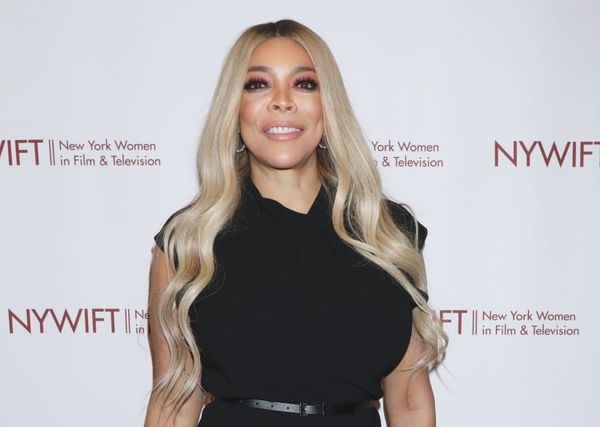
Wendy Williams is speaking out after being placed into a court-ordered financial guardianship in 2022. Yesterday, she spoke candidly about her current circumstances on The Breakfast Club with, Charlemagne tha God, an industry peer of hers for about 20 years. Despite the two once having a tense and bitter feud, they recently reconnected, which sparked her appearance on the show after Charlemagne concluded that she sounded fine when they spoke over the holiday season.
During her interview, Wendy slammed claims that she is impaired. She told The Breakfast Club hosts that she is ‘trapped’ in a conservatorship and compared having to spend multiple birthdays alone to ‘emotional abuse’.
“I am not cognitively impaired, but I do feel like I am in prison,” she said during the interview. She went on to add that at the age of 60, she is “in this place where the people are in their 90s and their 80s and their 70s”.
Wendy had her niece, Alex, on the call with her, who supported her claims, saying:
“She’s sitting in that room that she’s sitting in, she’s there every day, all hours of the day, every week, every month, she’s not getting proper sunlight. I went to New York in October to visit her. And the level of security and the level of questions that there were in terms of, ‘Who am I? Why am I here? What’s the purpose?’ I mean, it was absolutely just horrible.”
After revealing some of the damning details about her conservatorship, which include the fact that she does not have access to her phone, only a device where she can make calls but not receive them, no access to her laptop, or doctors of her choice and that she only has $15 to her name, fans online have been hashtagging #FreeWendy. Someone even started a petition on Change.org calling for the her to be released from her conservatorship.
The calls from fans for change have been around since she stopped appearing on her daily talk show in early 2022, but ramped up again after hearing Wendy speak yesterday and coming to the very obvious conclusion that she is not nearly as bad as media reports have made her out to be. She still has her wits, sanity and certainly her signature sense of humour about her.
Fans are directing a lot of their outrage over Wendy’s conservatorship at Sabrina Morrissey, the woman at the centre of the controversy, who has legal guardianship. This X user’s post suggesting a white woman is stealing a Black woman’s money got over 1,000 reshares.
Sabrina is currently being countersued by A&E for allegedly attempting to ‘silence’ criticism brought to the forefront by the production of a documentary about Wendy’s conservatorship and condition. Last November, the network had this to say about Sabrina’s lawsuit:
“It was only when Morrissey realized that the documentary would question the quality of her own guardianship of Williams that Morrissey suddenly decided to try to ensure the documentary would never be released. It appears that Morrissey is misusing her position as a guardian of [Williams] to silence criticism of her controversial and failed administration of [the guardianship].”
Several fans online are drawing comparisons between Wendy’s current circumstances and the conservatorship that Britney Spears was in between 2008 and 2021. And despite a few differences in their cases, like their age, and the fact that Wendy’s court-appointed guardian is not a relative, as was the case for Britney, fans insist that there are a lot of very problematic similarities, highlighting the many issues that exist when it comes to conservatorships.
Besides the lack of access to their own money and other liberties, perhaps one of the most dangerous and alarming similarities in their cases is that as soon as each woman was able to speak freely, many came to the realization their conditions were not nearly as bad as media reports made them out to be. Sure, perhaps some treatment may be required, either by a medical or mental health professional, but how would anyone stripped of their liberties respond to being, as Wendy calls it, imprisoned?
In 2021, Britney fans flocked to the courthouse and followed her case closely online to lend their support to the star as she told the court that she was ‘sick of being taken advantage of’ and that she felt forced to stay in a mental health facility against her will. The general consensus was that she did have the capacity to think and speak for herself and was not in need of being in a conservatorship, from which she was ultimately freed. And people are optimistic that perhaps that’s what might unfold in the case of Wendy, considering the amount of support and publicity she’s getting, and there are now calls for people to be just as loud in their support for Wendy as they were in their support for Britney.
Not everyone is rushing to it though. Over the years, her talk show has inflicted serious pain on people in the industry, and while she has certainly had receipts on a lot of fellow celebrities, some of her more egregious claims caused a lot of damage that could be deemed irreversible. Still, whether someone supports Wendy in her current circumstances or not is a personal choice, but her situation is a call to explore whether conservatorships have any place in our society.
One of the widely shared sentiments following the A&E and Lifetime documentary about Wendy was that it had exploited her. It showed her in her most vulnerable state, and I wrote about the significance of that here. There was confusion among fans over why her family would agree to it. But you’ll recall, prior to Britney’s conservatorship being dissolved, the Framing Britney Spears documentary also did a lot to build momentum for the movement in favour of her release. That documentary also had its critics but, ultimately, it took what was a mostly grassroots effort to the mainstream so that by the time Britney spoke for herself in court, public sentiment had swung in her favour beyond her fans.
As A&E and Lifetime are highlighting, the documentary about Wendy points out that everything from Wendy’s erratic speech, mood swings and showing signs of an alcohol relapse were all indications that she was being exploited, not by the production company, by her conservatorship and the very people and systems helping to enforce it.