Lupita Nyong’o reflects on her post-Oscar career

– 5 min read

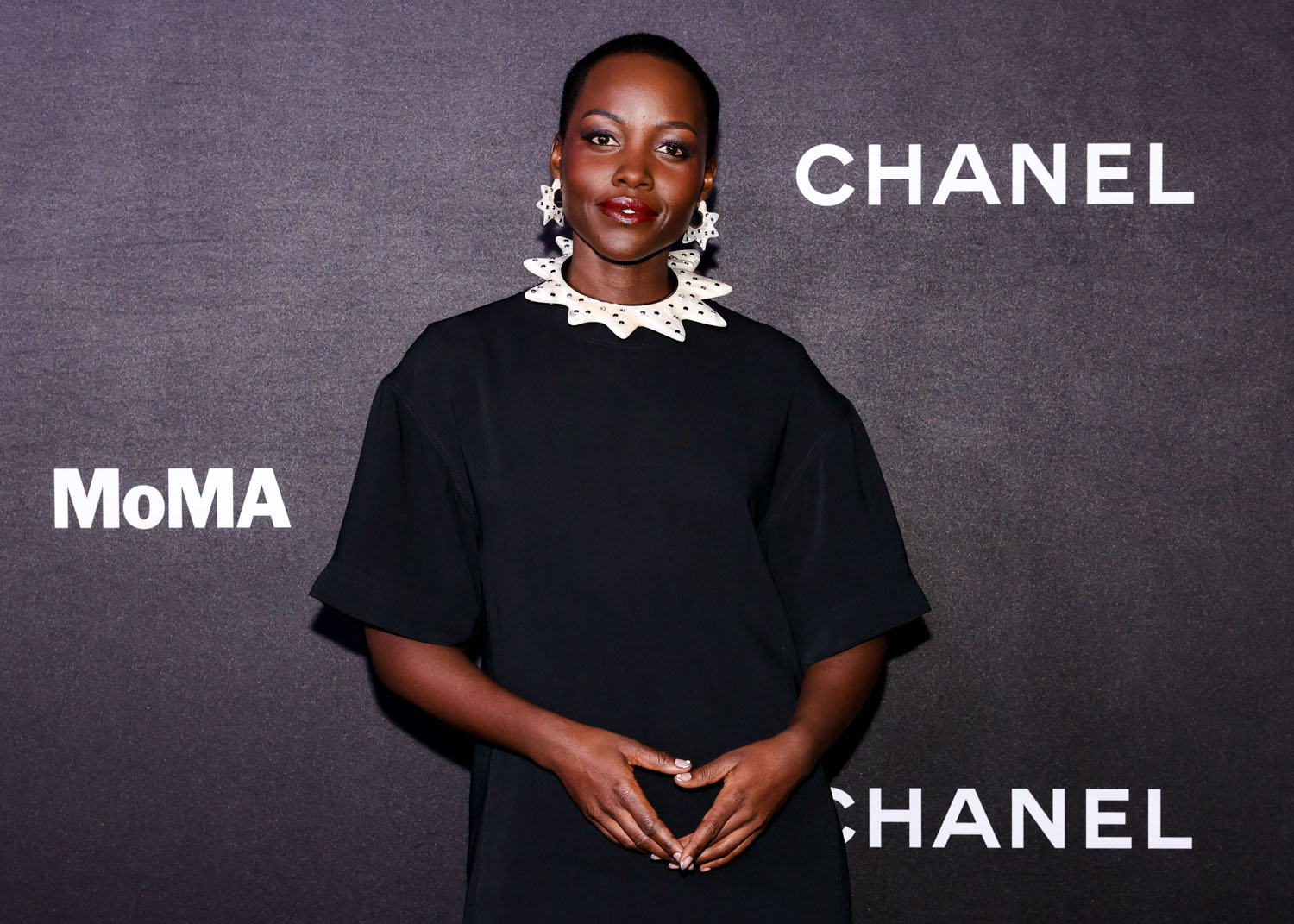
In a recent interview with CNN’s Inside Africa, Lupita Nyong’o opened up about her career after her 2014 Best Supporting Actress Oscar win for her role in 12 Years a Slave. Despite initially assuming that the Oscar would land her a wide range of roles, she said instead, she became the go-to for films that needed to depict an enslaved woman or a Black woman in duress.
"After I won that Academy Award, you'd think, 'I'm gonna get lead roles here and there. They're like, 'Oh, Lupita, we'd like you to play another movie where you're a slave, but this time you're on a slave ship.' Those are the kind of offers I was getting in the months after winning my Academy Award."
In addition to these types of roles being sent her way, Lupita said she became the subject of think-pieces about whether her career was just beginning, or whether it was over before it even started – and she felt that much of those pieces were shaped by racism and colourism. But some of them were just reflecting the sad truth about Hollywood’s track record when it comes to Black women to not being able to maintain their momentum after an Oscar win, citing the careers of people like Whoopi Goldberg.
Lupita shared that she refused to take roles that continued to perpetuate stereotypes about Black and African women, and revealed that she was willing to work less:
"If that means I work one job less a year to ensure that I'm not perpetuating the stereotypes that are expected of people from my continent, then let me do that."
Naturally, this has breathed new life into a conversation that never really dies out. So many Black Hollywood stars have spoken about this very issue – the narrow space carved out for women like Lupita, and the scope of roles available to them, which is in part why Black actors don’t experience the same success white actors seem to after an Oscar win. The weight of the award is something Oscar winner Halle Berry addressed on a few different occasions in the past.
“What does the award really mean? Because I can tell you, I have the award. But did it really change my career? Did it make my journey indelibly easier? No, in some ways it made it harder because now I had this award and there was so much expected of me. I had to live up to this thing,” she said during an appearance on Sway in the Morning.
Halle added that she got her award because she took risks and there was no one pressuring her. But after winning the award, there was a lot of pressure. She described there being a certain ‘type’ of movie or role she needed to play, one deemed ‘Academy Award worthy’. But years after the Oscars were called out over #OscarsSoWhite, there is evidence that the needle has only moved marginally. Couple that with an already limited pool of roles available for Black people, particularly Black women in Hollywood, what does all of this mean for Black actors?
It’s something Octavia Spencer touched on when she won the Oscar for Best Supporting Actress in The Help. In 2012 while at TIFF, Octavia spoke to Vulture about Smashed, the film she accepted right before her Oscar win and began working on immediately following it. She was asked if she had the feeling that her career was going to shift during filming:
“No, the reality for me was that I thought my phone would be ringing a lot, and it wasn’t. And this project came along, and it was a great film, and it was [prior to] the success of The Help. Now, looking back, they get huge kudos from me. So no, because my phone wasn’t ringing off the hook, I didn’t feel like anything was changing.”
And when the interviewer reminded her that her phone must have started ringing because of the projects she had coming up, she reminded him that both of the projects he was referring to came before her win.
“I don’t want to sound as if [I’m complaining]. The reality is that there are so few roles out there for women and for women of color, and I’m a character actor, this I know. And I’m getting to see more of the roles that are out there, but there aren’t many. And zilch have been studio movies. Zilch. So my challenge and my opportunity now is to take the opportunity to create my own work. I’m fine with that.”
The glaring omission from this conversation is of course the success Lupita had in Black Panther as the female lead, after winning an Oscar. Had it not been for Chadwick Boseman’s death, she would have co-led that franchise as the Queen of Wakanda. But after his passing, she missed out on playing out what would’ve been the biggest role she’d land after that Oscar win.
Maybe some people read into that and think it undermines her stance, but personally, I think that nuance further illuminates what she’s saying. Because, as I mentioned, with there already being such limited roles for Black actors in Hollywood, there is almost a need for an entire ecosystem that supports the roles Black actors get. If one thing is out of place in that ecosystem, or in this case, a death occurs, it’s not as easy for actors like Lupita to bounce back, to fill the void, or even to find some supporting role that keeps the calendar full. The question we need to be asking is whether it’s the same case for white actors.
Someone on X pointed out that Margot Robbie and Lupita both made their way into the limelight around the same time. Within five years, Lupita had the one lead and three supporting roles, while Margot got five leads, one of them being in a franchise. And I think that speaks to the ease in which white actors can move through Hollywood, trusted by production heads and casting directors to be a reliable lead the audience will see themselves in. That’s just not a comfort that Black actors have.
So what is the cost of this? From an actor’s perspective, it’s exactly what Lupita and Halle are describing. The loss of creative autonomy replaced with more prescriptive roles. Accepting less work, even if there is no desire to work less. And from an audience perspective, it means the loss of stories told by incredibly talented stars. And for Black audiences, especially, it costs us visibility. A loss of seeing people that look like us in places we need to see it the most.
Going back to what Octavia said to the reporter all those years ago, two things stand out to me about what she’s saying. The first is that it is very similar to what Lupita is echoing more than a decade later. And the second is that she ‘doesn’t want to sound’ as if she’s complaining. Sadly, this is a universal thought that Black women have regardless of industry or career path, and I think that’s why so many people are applauding Lupita for naming and shaming the powerful industry that knowingly or unknowingly is trying to keep her small.
Because it’s a departure from just accepting what comes to us in the name of ‘representation’, instead being more selective about what she wants to represent. We know we should just be happy to have a seat at the table. And I think for a lot of us, we are. We’re thrilled to be here. But Lupita is reminding us all that we can want those things and want to be here on our own terms, too.