Reckoning with America’s Next Top Model
– 6 min read
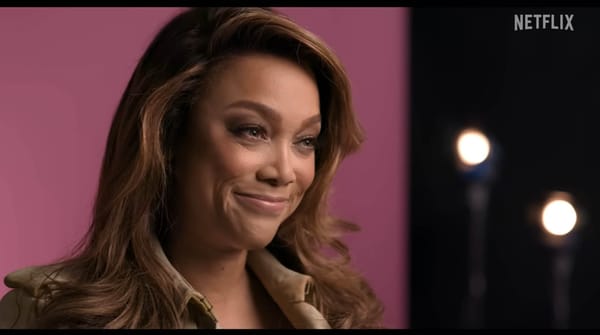
One week after its release, reaction is still pouring in online about Reality Check: America’s Next Top Model, which, as I wrote about here, finally got the Netflix treatment in the form of a three-part documentary. And while it was initially teased as an in-depth look into the infamous though once revered and widely-watched show which got spin offs all over the world, viewers were left with more questions than answers.
Despite the involvement of the show’s main personalities – people like network producer Ken Mok, judges Jay Manuel and Miss Jay Alexander, photographer Nigel Barker and of course, Tyra Banks herself – many audience members are not convinced that the level of transparency and accountability matched the atrocities former cast members spoke out about with sincerity and vulnerability.
In my prior piece where I discussed the initial reaction to the trailer for the documentary, I noted that Tyra has been credited with defending plus-sized models like Toccara Jones against an outrageous Janice Dickenson in a well-known clip after she made disparaging remarks about Toccara. In 2021, Toccara defended Tyra amid threats of her being cancelled during the great COVID rewatch era. The particular issue she spoke up on was the fact that the models weren’t paid, save for a measly $40 per diem rate, which she says was fair given they were in a contest.
Cycle 3 winner Eva Marcille has also given credit to Tyra for helping her kickstart her success. But on a recent Good Morning America appearance, even she says she was ‘gobsmacked’ by the revelations.
The revelations she’s describing came from past cast members like Ebony Haith, Dani Evans, Keenyah Hill and Shandi Sullivan. They all appeared on camera to recall their experiences – and to say they were unpleasant is an understatement.
Cycle one star Ebony Haith revealed that she had been outed as a lesbian on the show unexpectedly. Despite her willingness to be open about it on the show, in 2002, as a Black woman in New York, this put her in a compromising and dangerous situation. She then went on to be painted as angry and aggressive. During the documentary, she also recalled dealing with hairstylists not trained in dealing with Black hair, being left with bald spots and being called “ashy” by people who worked with her on set.
This pushed her to start using a deeper moisturizer, which the other women in the house complained about. But when she responded to their complaints, it was edited in a way that fed into the trope of her being an angry Black woman - a catch 22 Black women in reality TV settings often find themselves in. But also, a very ironic experience to be having given the lead of the show was a Black woman herself.
"It took me a long time to really heal fully over the misdirection of my character and the truth of who I truly am," she told PEOPLE.
Then there’s Dani Evans, who won cycle 6. She described participating in the show as a way of leaving her small town in Arkansas. Despite being lauded by the judges for her beauty, Tyra advised her to fix the gap in her two front teeth, saying she wouldn’t get booked and that she was ‘unmarketable’ until it was closed.
Dani described being sent to a dentist alongside another castmate, Joanie, who had even more extensive cosmetic, but not orthodontic, work done. And while Dani accepted some of the recommendations, she refused to get the gap fixed because she felt like it made her who she was. At her next judging, she was given the ultimatum of getting it fixed or going home, so she agreed to partially close it. A few cycles later, a white model with a gap was touted for being ‘different’ and did not have to have it closed. Tyra was asked about this during the documentary and had this to say:
“That was between a rock and a hard place for me. Because there were agents who would tell me, 'She will not work with those teeth. It’s just not going to happen.' That’s what they told me. And again, I could’ve just been quiet and let them handle it, but hindsight is 20/20 for all of us. It just so happens that a lot of things that are 20/20 for me happened in front of the world."
It’s this kind of skirting that makes Tyra’s appearance in the documentary feel a bit condescending. Because if her goal was truly to fight back against the machine of the modelling industry, which she stated numerous times throughout the documentary, a great way to do that would’ve been to allow this model with an atypical physical feature the chance to keep it. Instead, she’s making it about hindsight.
And it's this kind of hypocrisy that has viewers so unconvinced. Because while you advocate for bigger bodies (sometimes), you also help enforce other harmful beauty standards in the modelling industry. And not only that, you gave an ultimatum to someone who was not in a position to advocate for themselves.
So what about the women who did advocate for themselves? Women like Keenyah Hill, who channelled her inner Tyra and stopped a shoot over the discomfort she felt when a man she was shooting with repeatedly hit on her and ultimately became erect during the photoshoot and moaned in her ear? Again, Tyra dismissed these claims, brushing them off as being out of her jurisdiction.
It's the same road she took when confronted about what happened with Shandi Sullivan. During the cast trip to Milan, an inebriated Shandi was filmed being taken advantage of by one of the guys who had earlier taken the women around on mopeds. She revealed in the documentary that she was ‘blacked out’.
Shandi’s request to leave the show went unmet, and she was forced to film the phone call she made to her partner to inform him of what had happened. She said that as she lay there in the fetal position on the floor after the most devastating phone call she’d ever made, the cameramen apologized for having to film it and left the room.
And all of these examples are outside of the awful, insensitive and racist photoshoots. From cosplaying as homeless people to appearing in blackface to enacting crime scenes that, given the life experiences of some models were extremely triggering, the creative direction on some of these was appalling and unjustifiable.
Having written extensively about the ‘reality reckoning’ that we’ve seen at play in recent years, what makes this particular case different is how dated the show is. We look at the atrocities we’ve seen on shows like Vanderpump Rules, Southern Charm and Real Housewives of New York and for the most part, we’re judging these shows in the same era and with the same lens in which we originally watched them. But the question this documentary begs is whether we can we look at a show from the early 2000s with a modern-day lens and truly come to a fair assessment?
To me, the answer is yes. Because what is wrong with the show in 2026 was also wrong in the early 2000s – and Tyra et al knew that. But they sat there in that documentary and shifted blame to “higher ups” and even the audience itself, saying we wanted that. And they completely ignored the fact that even back then, there was still outrage, it just wasn’t nearly as loud as it is today because of social media.
What I got from Tyra’s constant passing of the buck was that she was hiding the fact that she was making a killing by turning a blind eye to what was wrong, because salacious paid. According to a 2008 report by The Hollywood Reporter, Tyra was raking in an annual salary of $18 million during her time as executive producer and host of the show. When you’re earning that kind of money, I imagine you’ll do whatever it takes to keep the money coming in.
I hope that in some way, this was healing for the women who participated, and even for the women that didn’t. But the key issue remains, as this article highlights, is how to this day, Tyra remains very accepting of the credit for the show’s success, both from a ratings perspective and on the idea that she changed representation in the industry. But she refuses to take meaningful accountability for the ways in which the show failed the women who are still reeling from the negative impact ANTM had on their lives.