Tyler, the Creator's problematic digital past

– 6 min read
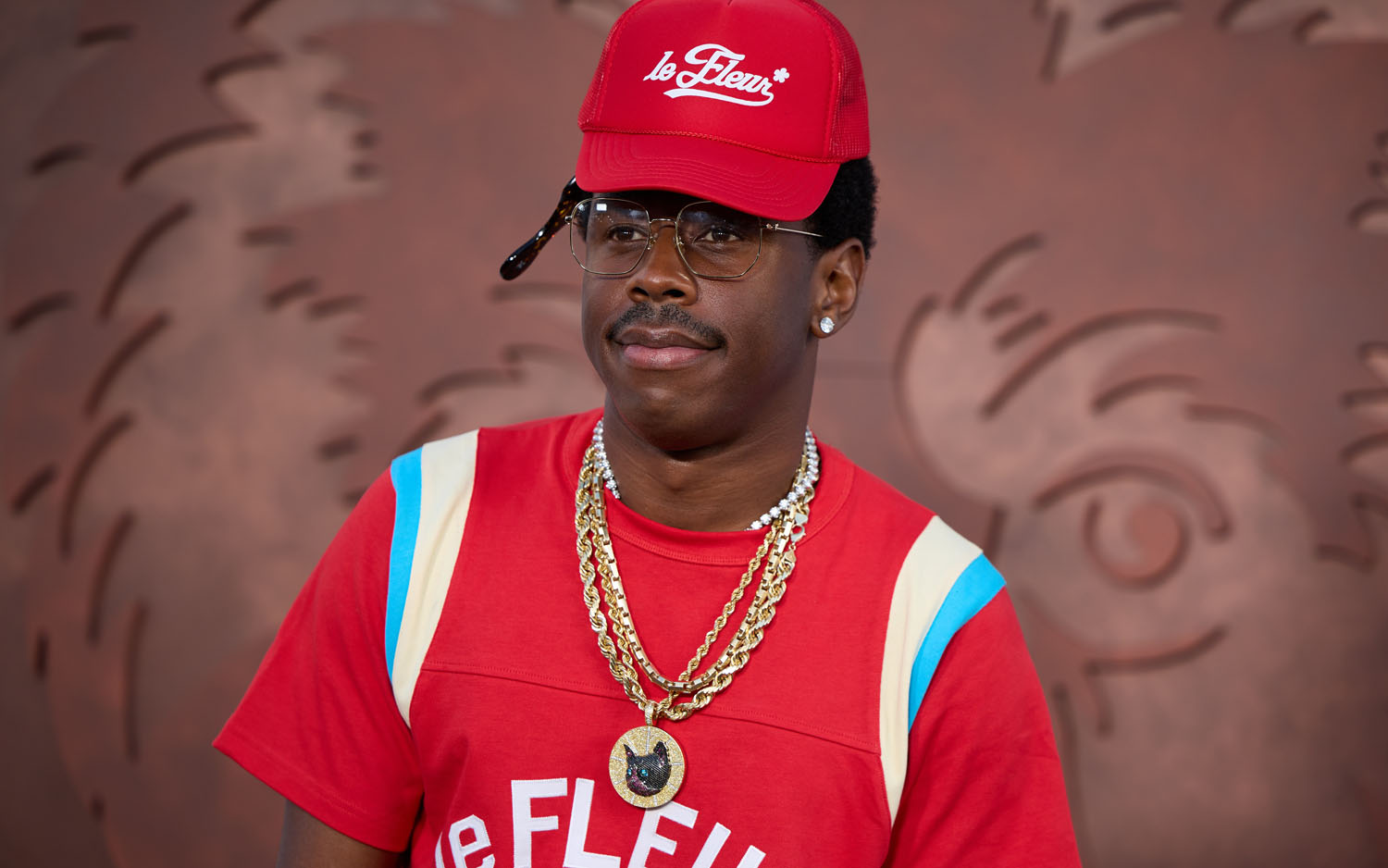
When Tyler, The Creator paid homage to R&B singer D’Angelo after his recent passing, he probably didn’t do it to result in controversy.
— T (@tylerthecreator) October 14, 2025
In a series of subsequent tweets, he shared links to D’Angelo’s music, song titles and memories of listening to his music in third grade.
Racist trolls then flooded the comment section of his tribute posts, with many clearly unaware of who D’Angelo was and some even mocking his passing, prompting outrage among social media users. But in a strange twist, some of the trolls are believed to be members of Tyler’s white fanbase.
While the comments in question seem to have been mostly removed – or perhaps just drowned out by people sharing opposite sentiments - they were under the post long enough and were heinous enough to have caused a stir online, attracting attention from different media outlets.
But things took another turn when Tyler himself liked a post about his fanbase’s hate for Black music and their refusal to engage with Black art meaningfully. It sparked a conversation about the role an artist plays in who consumes their art and how they curate or appeal to their fanbase, where we draw the line on past problematic behaviour and whether it’s possible to forgive an artist for their past transgressions.
On platforms like X and TikTok, the conversation became increasingly nuanced. Long-time fans of Tyler shared their reflections on how he ended up in the situation of grieving a musician that he felt deeply influenced his music, only to have that influence be largely unrecognized by the very people who listened to his songs. But moreover, the role he played in his own backlash– which many people agree this is indicative of.
This TikTok creator and a self-proclaimed ‘lover’ of Tyler, The Creator, shared her take, which, in sum, is one that urges Tyler to not be ‘delusional’ about the recent hoopla. She said his past track record of trash-talking Black people and pricing his Black fans out of his concerts has led him to exactly the spot he has found himself in in recent days.
“You built your entire fanbase brick by brick, essentially with self-hate, with being self-ashamed of being Black and trying to disassociate your Blackness and associating and pandering to the white community which has grown to be the biggest Tyler fans,” she said.
Not to get technical, but there are a ton of factors that go into determining how much a ticket to any given concert might cost. Between the management team, the promoter, the venue and ticketing platforms, there are a lot of stakeholders involved and it’s not entirely accurate to place that squarely on him. But her other points ring true.
When it comes to Tyler’s seemingly deliberate curation of his fanbase, she’s not lying. X users flooded the platform with anecdotes or second-hand experiences in which Tyler was clearly isolating his Black listeners. Some pointed to problematic lyrics of his, like the line in his 2013 song “Tamale”, where he calls Spike Lee the n-word (with the hard r), along with a slew of other super questionable bars. Some pointed to his infamous interview with Larry King where he asserted the n-word wasn’t offensive because ‘people give words power’. And others recalled instances where Black fans were ignored at airports, while he did meet and greets with white fans instead.
But the picture painted by screenshots of Tyler’s social media activity in the 2010s paints an even darker picture. He made merch that featured a racist caricature from the 1900s. He appeared in a photo wearing full KKK gear, hood and everything, with a noose around his friend, seated beside him. There was also this photo of him in whiteface doing a Nazi salute. He also offered extremely disturbing commentary in the aftermath of the deaths of Trayvon Martin and Mike Brown.
And just when you thought it couldn’t get worse, Tyler’s problematic past extends far beyond just racist lyrics. For years, he was notorious for his anti-Black-woman rhetoric, which many women are speaking out about and the real-life impact they experienced in recent days. He also has a proven track record of very disturbing misogynistic tweets and lyrics. As far back as 2010 and 2011, he had a series of tweets asserting he was going to engage in sexual acts with Selena Gomez and Victoria Justice, who, at the time, was a minor.
In his 2021 song “Manifesto”, he kind of addressed his past behaviour, saying he apologized to Selena in person, but to this day there’s no record of him apologizing to Victoria. And there is no record of him apologizing for the horrible things he said about Black women. For a lot of fans, the “apology through song” thing rings hollow. This user described it as ‘cheap’, and says he needs to ‘denounce his past anti-Blackness with his chest.’
This brings me to where we draw the line on an artist’s past problematic behaviour, particularly in an age where there will not be future generations that do not grow up online. And for the ones that have already, what we’re seeing with Tyler is not uncommon. According to the Financial Post, 86% of Canadian companies say they would fire employees for inappropriate social media posts. We’ve seen people be kicked off of Love Island and other reality shows over past tweets, FFS. But when you’re not really representing a company or vying for a spot in the villa, what does being held accountable even look like?
The simple answer is often to ‘hit them where it hurts’. But Tyler, The Creator, by way of venturing into fashion in addition to his music, has secured his spot as a multi-millionaire. So an album boycott isn’t going to do the damage necessary to make a point. In fact, the TikTok user I referenced earlier pointed out that despite his latest album Don’t Tap The Glass earning him his fourth No. 1 on the Billboard 200 albums chart, it didn’t land the way his past albums did with his white fans, largely because he is departing from his typical schtick and this one actually leans more into his Blackness.
Based on the chatter I’ve seen online lately, people seem to want an apology. People want him to address his past problematic sentiments and take accountability. Whatever growth he is trying to insinuate he’s experienced is falling flat because it needs to be accompanied with an apology.
The significance of the apology is something that author John Gibaud explored in a piece he published in The Cupola, entitled The Non-Apology of Tyler, The Creator. In his piece, he analyzes whether Tyler has successfully fulfilled the steps, requirements and functions of a public apology. And according to John – and countless others – he simply has not.
Yet there are people coming to his defence. Particularly the early listeners who recognize that Tyler was bullied for being Black and suggest his internalized anti-Blackness seeped out in his music. And others feel that Tyler spoke to a part of their identity and evolution that was largely invisible and unacknowledged not only by the general public, but by most mainstream artists. And while others are extending grace on the point that he was young, it’s important to consider something John mentions in his piece which reads:
“Whether or not teenage decisions are worthy of consideration in certain cases is debatable, but the persistence required to write, produce, and release two full length albums is questionable to ignore.”
John is absolutely correct. At some point, you have to look at the patterns and efforts that went into sustaining the messages he was putting out. And Tyler’s disturbing 2011 tweets about R. Kelly’s crimes being ‘swagged out’ weren’t ‘typical teenage behaviour’, he was 20 years old glorifying sexual encounters with children.
So where do we draw the line when it comes to accepting the problematic pasts of celebrities? Particularly when they’re as problematic as we’ve seen with Tyler, The Creator?
In journalism school, my classmates and I were taught that ‘the apology needs to be just as loud as the offence’. And based on that principle, it’s fair to say that Tyler’s apology is mute and virtually non-existent. First because he hasn’t offered one up – except to Selena Gomez. And the fact that she is the only person to have received an apology from him is another story in and of itself. But second, because in comparison to the offence, the offences, I should say, were so consistent.
He contributed to the anti-Black narrative that dominated social media in the early 2010s. He negatively informed the self-esteem and self-perception of Black women online, empowering and informing the abuse they faced in digital spaces. So if we really want to know whether we can move past the damage and the pain he inflicted on the Black people he harmed, and namely the Black women he harmed, we ought to follow their lead on this one.