Tyla’s Discernment

– 6 min read
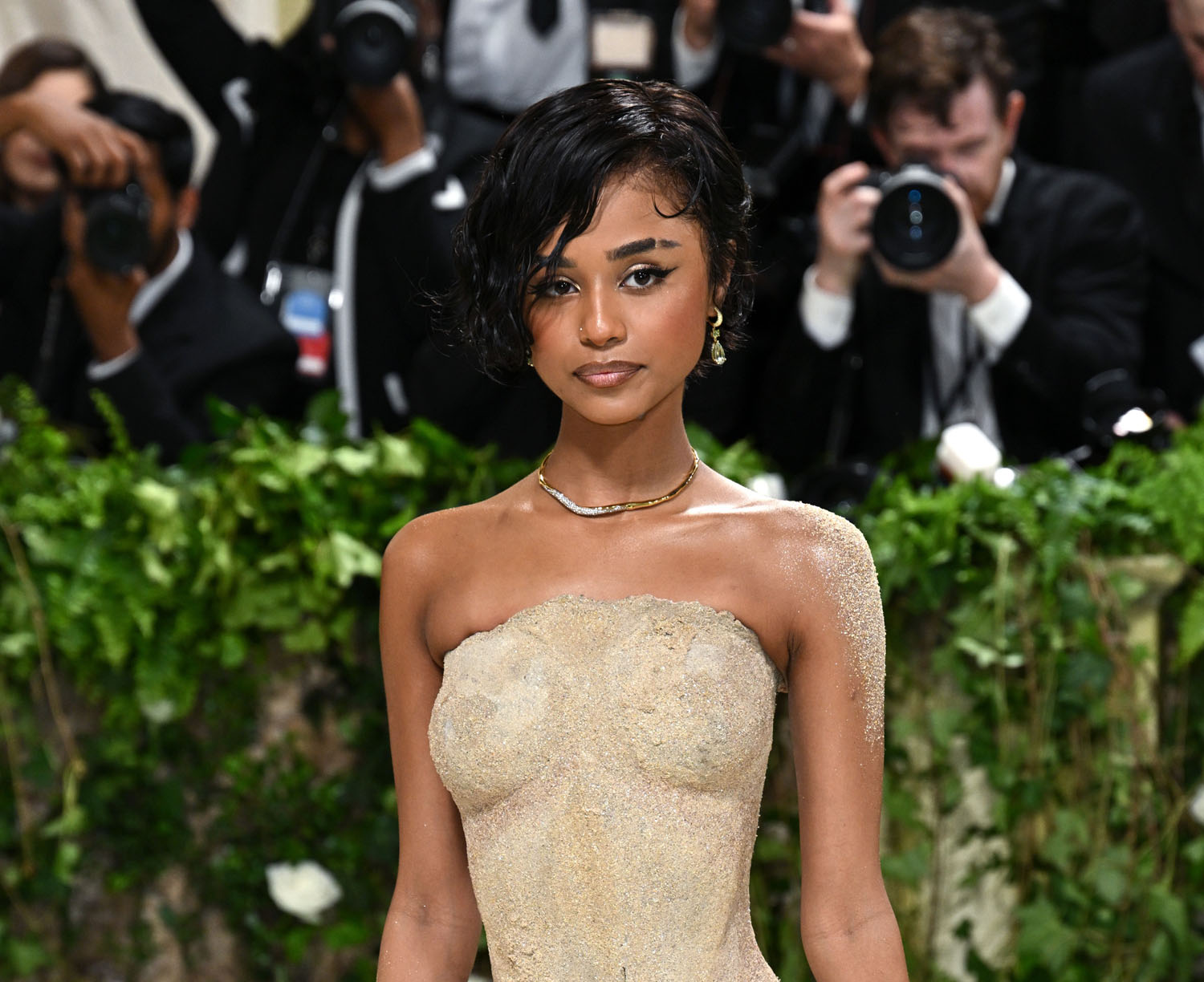
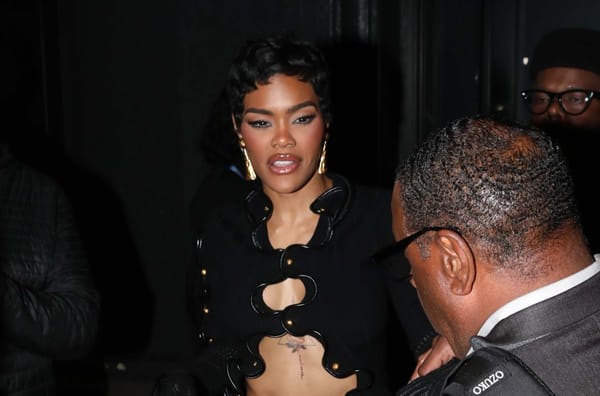
Tyla is speaking up after a 28-second clip of her remaining completely silent when she was asked a question about race on The Breakfast Club went viral. It happened on Thursday’s episode of the show, as Charlamagne asked her to “school him” on debates being had about her ethnicity.
@breakfastclubam asked #tyla about the “coloured” vs. black woman debate she remained silent and her team quickly hopped in. #browngirlgrinding #bgg pic.twitter.com/FAUqSRHNSj
— BROWN GIRL GRINDING⭐️ (@LorenLorosa) June 13, 2024
As you can hear, “Can we not, por favor?” an off-screen voice from one of her PR people quickly chimed in as Tyla looked away from Charlamagne. “Next one, please.”
When the clip started making the rounds on social media, people began demanding further explanation, suggesting that in the past, she’s shied away from, or denied her blackness. In response to those demands and the activity on the clip, she shared this statement:
— Tyla (@Tyllaaaaaaa) June 13, 2024
To be clear, Tyla has discussed race previously, on several occasions. And perhaps most famously in a 2020 TikTok where she declared she was a “coloured” South African woman and divulged some information about her heritage and cultural practices.
@hernametyla #celebratemzansi let’s see you guys join the challenge💕 #african #heritageday #heritagemonth #africa
♬ Pata Pata - Miriam Makeba
When the video made its way to the feeds of people in America, where the word “coloured” comes with a completely different connotation than it does in her homeland of South Africa, it generated a ton of chatter online.
In South Africa, the term “coloured” is used to describe people who have mixed ethnicity. But “colored” in America is a racist term used to describe or identify Black people. And it dates back to the Jim Crow era. In this interview with Cosmopolitan, Tyla discussed how “messy” the conversation surrounding race can get. She also remarked that it’s the “perfect time” to be having conversations about race. But if the timing is so perfect, why did she stay silent when she was probed by Charlamagne?
In my defence of Charlamagne, the conversation itself, not the way he tried to initiate it, but the conversation he was trying to start, is fair, though it’s possible her team made it explicitly clear that race was off limits, not uncommon ahead of interviews like these. But I highly doubt that was the case. I think it was just a game time decision for Tyla to not respond.
But it does make sense that he would want to go there, for a few reasons. First, she has lent her voice to that discussion in the past. It’s not like he was asking her about something she’s never spoken about before. Second, there have been some pretty thoughtful conversations on The Breakfast Club, so it's not completely out of left field that he might be after some nuanced conversation. But I think if he had asked the question in a more thoughtful way, he might’ve received a different response. It’s the way he went about it that is the problem.
The word of the year for me is discernment. Simply put, I’m in my discernment era. And when you’re in that era, you quickly recognize others who are in their era of discernment, too. Discernment for me means knowing when to talk and when to listen. Knowing when to fight and when to stand down. Knowing when to go out and when to stay in. And in Tyla’s case, discernment for her looked like knowing which questions to answer and which questions to skip – even if it was a game time decision.
Beyond discernment, though, the possible reasons for Tyla’s silence are endless. Maybe she was tired. Maybe she was nervous. Maybe she was instructed not to address the topic of race. But I think it’s plausible that she and her team knew that Charlamagne, a sometimes controversial interviewer and host, might pursue a conversation about race with the mindset that it would generate a lot of views and discussion for the channel. Even with her not saying anything, the clip racked up nearly 8 million views on X in one day. So imagine she did say something? Especially something that didn’t go over well with her American fanbase?
We’re watching, in real time, Tyla learn how to be a celebrity – and more importantly, how to be a celebrity in America. Because prior to her hit, “Water”, she already amassed a great deal of success in Africa. People familiar with South African history, culture, and terminology weren’t thinking twice about her referring to herself as coloured because it’s a part of their vernacular. So I think a huge reason for her silence was that she knows there’s no way to offer a non-controversial response to a question about race. And in situations like that, silence is golden. Silence is safe. Most of the time.
On the topic of learning how to be a celebrity, we also saw Tyla lean on her PR team. Her PR team did exactly what they are hired to do. It is literally part of their job to sit in on these interviews and ensure that their client is not put in a compromising position at any point of the interview, and that if they are, they can handle it – preferably in a way that won’t result in sensational headlines the day after. When they get the slightest inkling that their client is uncomfortable, they swoop in and keep things moving, just as her team did in this interview. They hold outlets accountable when it comes to everything from sticking to the schedule to sticking to the script. By swooping in as quickly as they did, it saved 22-year-old Tyla from having to participate in a conversation she may not have wanted to engage in.
Back in my producer days, it wasn’t uncommon for PR teams to request the entire line of questioning so that they could vet everything from the questions to the way in which they were asked. Producers are often given very clear instructions on what not to discuss. But unlike a very straightforward TV segment, The Breakfast Club is tricky because it’s more of a free-flowing conversation than a highly, overly-produced segment where questions are linear and pre-determined. So all things considered, both Tyla and her PR team handled this extremely well.
The other thing at play here is that it’s not Tyla’s job to educate Charlamagne - or anyone else for that matter - on something so vast as the legacy of South African apartheid. Not when Google is free. So personally, I appreciate the fact that she deferred to her team, they stepped in for her and kept the interview rolling.
This is a bit of a case study for what it can look like when creatives from other markets aspire to “make it” in America, or begin to make it in America organically, as Tyla did. For a lot of international celebrities, America is very much the golden standard of having “made it”. But transitioning from your native land to the U.S. often seems to come with the threat of a certain Americanization of either your art, your creative process or, in Tyla’s case, your ability to speak openly and freely about something so personal as your own ethnicity.
That is my problem with how Americans consume entertainment. American entertainment consumption is built on the assumption that lived experience is shared. And what something means to you, it must mean to everyone else. That if someone hasn’t answered a question to your satisfaction, it demands further explanation before it ever requires further research and further understanding. I cannot imagine how stifling that must be, especially when you consider that Tyla has expressed interest in having this conversation, but likely doesn’t at the moment because it’s simply not safe from a brand perspective. Not in America.
As a biracial person who, even in adult life, constantly struggles with how to identify and what space I’m entitled to take up, there is one line that Tyla has said before, which she reiterated in her statement. And it’s the idea when it comes to race, for her, “it’s and, not or”. Seeing her take ownership of her narrative while still managing to acknowledge the schools of thought that exist outside of her own experiences is inspiring. And at the tender age of 22, I think she’s already showing a great deal of growth, and an even greater deal of discernment.