Intro for March 26, 2026

– 5 min read
Dear Gossips,
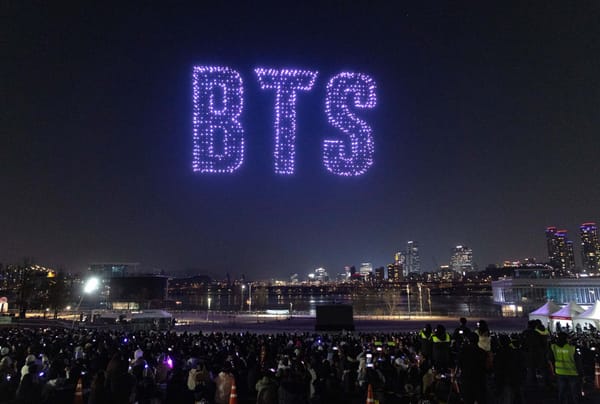
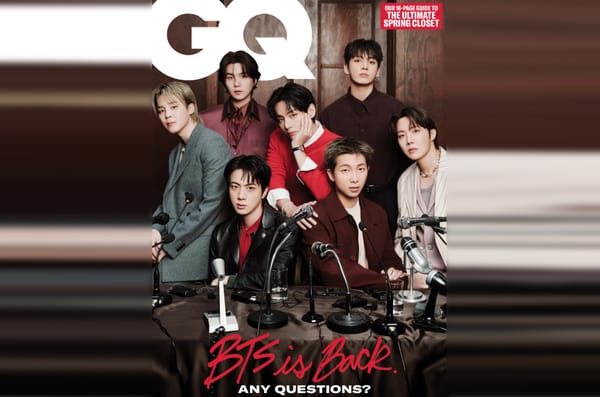
BTS returned to The Tonight Show Starring Jimmy Fallon last night, occupying the majority of the episode – and we’ll get into more of the interview and their performance later but first, some controversy behind the scenes.
Seth Herzog is the resident comedian at The Tonight Show who warms up the audience before taping. As expected, the audience at The Tonight Show last night was basically all ARMY, and there is no doubt the entire crew and production team would have been well aware of this. During his set, Seth made a racially insensitive joke: “Anybody here from the North? No? Nobody?" It’s a reference to North and South Korea, TMZ was the first to report that fans immediately called this out on social media and, because this is ARMY, their disgust went viral.
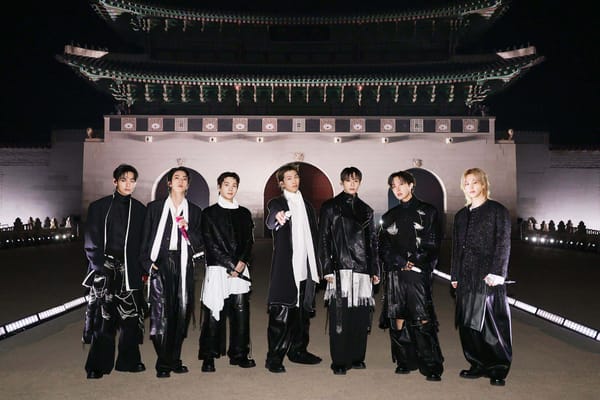
According to TMZ, Seth apologised to the group, and he was spoken to by network executives because, let’s be clear, The Tonight Show needs BTS so much more than BTS needs The Tonight Show. It’s a big boost to NBC and The Tonight Show that RM, Jin, Suga, j-hope, Jimin, V, and Jung Kook agreed to a double appearance – for ratings, for social media likes, for views, etc etc etc.
And it’s another reminder that allyship, cultural respect, and diversity requires constant practice, that we all have work to do, that we all can and should aim to do better. And, honestly, at the risk of being thrown out of ARMY for saying this, that also includes BTS and their team.
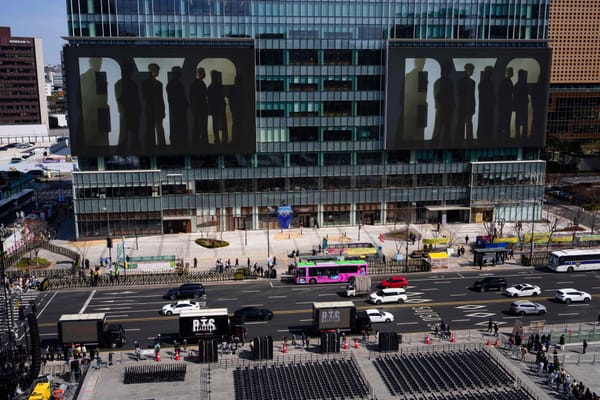
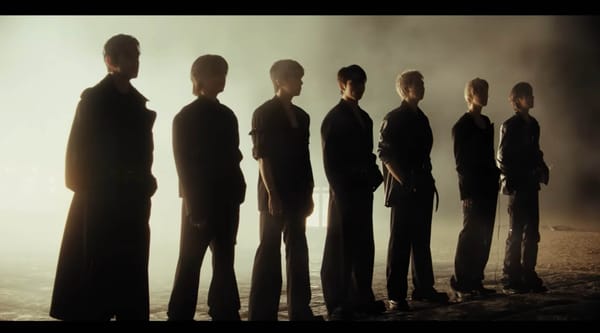
In a promotional animation trailer for ARIRANG released a couple of weeks ago, BTS revisited a piece of “Arirang” history and the Korean folk song’s connection to North America, specifically Howard University. In 1896, seven Korean students were enrolled at Howard – the ARIRANG album cover depicting the seven members of BTS is meant to be an homage to those seven students and their portrait, taken over a century ago. Those seven students often sang on campus, and their performances were reported on by the Washington Post. Three of them then went on to record a version of “Arirang” which is now the “first known recording of a Korean voice in the United States, and the first recording of the song anywhere in the world”. So the parallels between them and BTS are profound. It’s a beautiful story, and it could have been so much more powerful if its amplification by the group was handled more respectfully.
Because in that animated video, even though Howard is an HBCU, Black people are not depicted. And considering that K-pop has been heavily influenced by Black culture, it’s that much more insulting that Blackness has been erased in this trailer, especially by a group that has always tried to be inclusive, whose core message has been acceptance and welcome.
Many people, including Korean content creators, have criticised BTS and their team for this mistake. I’ve watched many takes on the situation, and I’ve spent the last several days thinking about how to reconcile my love for BTS with my disappointment in how they highlighted their Korean cultural ancestors at the expense of Howard University and Black trailblazers.
Not surprisingly, the analysis that has had the most impact on me, and has really helped guide my path forward on the situation is not on TikTok or YouTube, but comes directly from Howard University, an essay by Cedric Mobley, Christen Hill, and Yawen Deng – “Before BTS: How Howard University Helped Elevate Korean Culture and How Black Culture Influenced K-Pop”.
In that piece, the writers specifically identify where BTS fell short:
“BTS’s teaser video brings to light some important issues as the world navigates growing cultural intersections. The video properly acknowledges Howard's role in educating the students who would make history. However, there are some inaccuracies. The video prominently features the iconic Founders Library, the first site at an HBCU to be named a national treasure, which had yet to be constructed. In addition, most of the people depicted in the audience on The Yard are not Black, which belies the institution’s history as one of the country’s foremost colleges with a predominantly Black student body. Though much of the faculty at the time was not Black, the video does elucidate the need for cultural sensitivity and historical accuracy even when intentions are positive.”
The essay then goes on to explain how it was that those seven Korean students came to study at Howard, reminding us that “HBCUs across the country have historically welcomed students from diverse cultural backgrounds even as they have celebrated the richness of Black academic and cultural traditions. Like all cultures, Black culture is influenced by others, and Howard’s international students have always added to the university’s distinctiveness as a center of global culture.”
The writers then go on to “recognize the influence of Black culture on K-Pop”, pointing out that “cultural appropriation has been a byproduct of Black genius throughout American history”. At the same time, Howard is also a place that encourages “intersection between all cultures”, and the article shouts out the university’s Department of World Languages and Cultures as one of its “largest academic units”.
This leads into a section that spotlights 1OAK, “the first K-pop dance team at an HBCU, created by members of Howard’s Korean Culture Club to build a space for creativity, positivity, and cross-cultural engagement”. You can watch 1OAK’s videos and performances at their YouTube channel here.
Howard University educators are also quoted the piece, including Korean professors and students, and also Alexander McSwain, associate professor and coordinator of electronic studio arts, who said of the controversy that:
“As someone relatively new to the K-pop genre and its surrounding lore, my introduction has come largely through my students, many of whom are deeply immersed in K-pop culture. Several of my Electronic Studio Arts majors are also members of the K-pop dance team 1OAK, and I credit them for opening that door for me. I was further drawn in after seeing a post by our alumna, Bryten Gant, whose excitement about Howard University being featured caught my attention. I found myself both intrigued and impressed by the shoutout to Howard and its historical references. At its core, both animation and music are forms of expression mediums that invite interpretation, critique, and conversation. One could argue that without the visibility created by the trailer and accompanying music video, I may have never discovered the Korean connections tied to the university at all. This experience serves as a reminder of the importance of doing your own research. Even when a starting point may seem historically imperfect, it can still act as a catalyst for deeper understanding, because, after all, it is art, and art at its core is a conversation.”
And that, right there, is where we come back to practice. “Practice over perfection” is a guiding principle I’ve borrowed from equity thought leader Kike Ojo-Thompson who I interviewed a couple of years ago at a conference on International Women’s Day. “Practice over perfection” means that it’s impossible to be perfect, at anything, and our attempts to be perfect can often undermine the progress that comes from practice. The key is to meet our mistakes not with defensiveness but a resolve to practice allyship more respectfully. Yes, I f-cked up, I need to try again, I need to keep trying.
Colonisation has shaped so much of our worldview, and we are all still in the process of reframing our perspectives, unlearning and relearning so that we can appreciate different cultures and better understand one another. As Professor McSwain said, “Even when a starting point may seem historically imperfect, it can still act as a catalyst for deeper understanding, because, after all, it is art, and art at its core is a conversation.”
At a time like this, we need academics and scholars more than ever. Cedric Mobley, Christen Hill, Yawen Deng, and their campus colleagues, like Professor Alexander McSwain have, for decades, done the work in illuminating what could be a path forward. Please read the full piece from Howard University on BTS if you would like to participate in the conversation, and practice how you might be a better ally and a better fan.
Yours in gossip
Lainey