Revisiting Mo’nique's career drama

– 7 min read
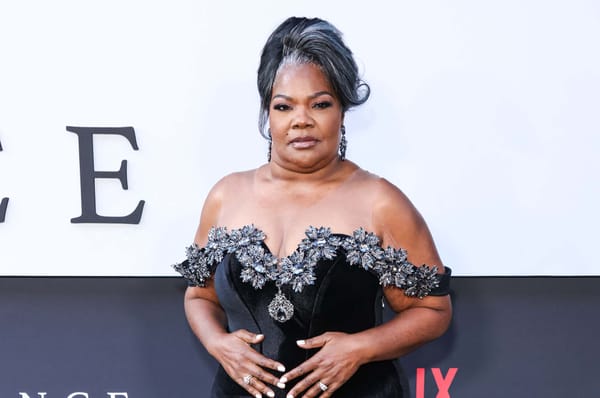
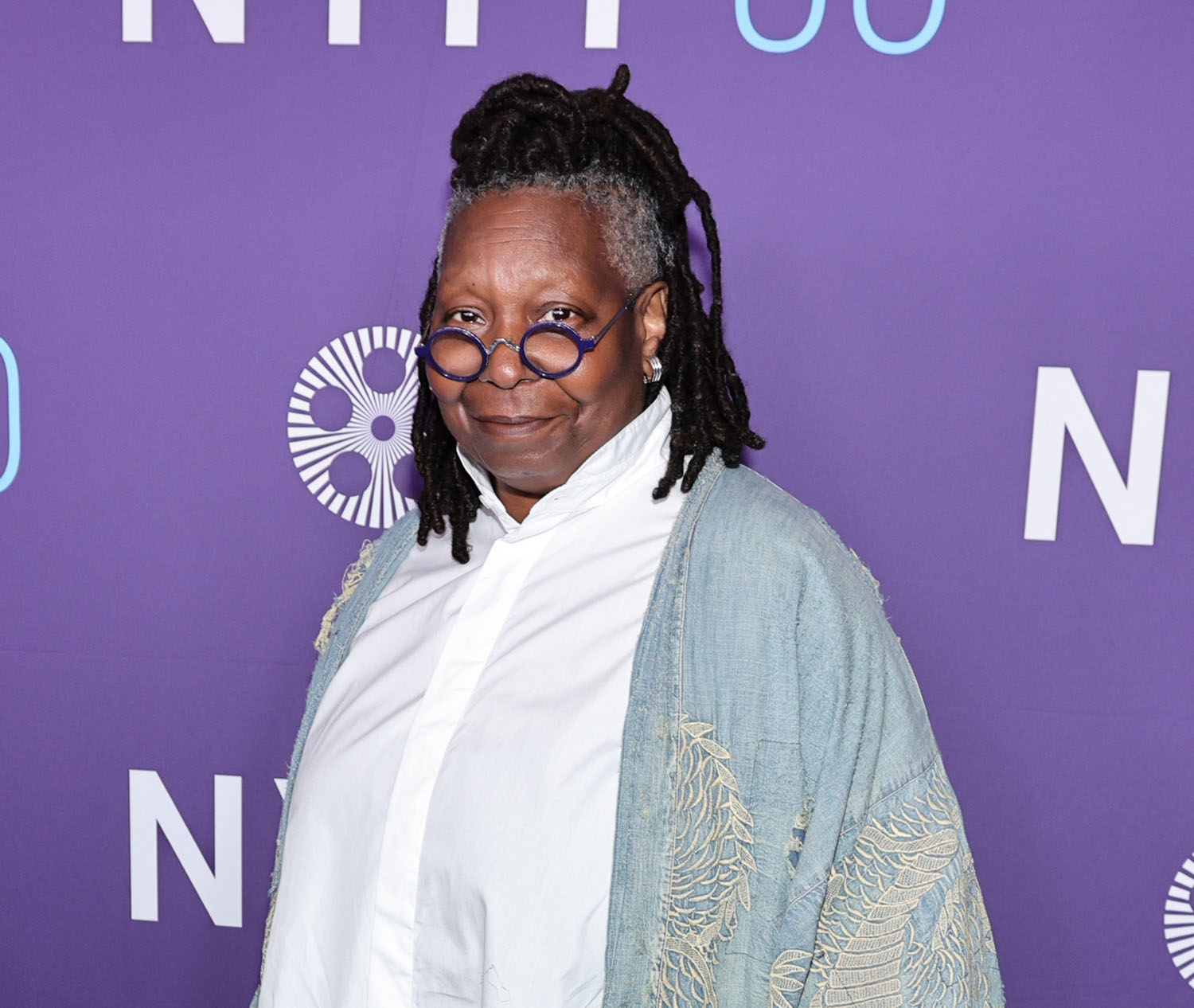
Mo’Nique is making headlines again – and some people don’t seem to be too happy about it. Much to the dismay of the internet, she’s doing the thing she’s come to be known for, which is calling people out over things that happened in the past. And the target of her latest lookback is none other than Whoopi Goldberg who, eight years ago, expressed a staunchly different perspective during Mo’Nique’s visit to The View over her refusal to promote her 2009 movie Precious overseas.
According to Mo’Nique, her contractual obligation did not clearly state that she was expected to participate in the international promotion of the movie – despite what Whoopi says is an expectation of actors, being that they will do what they can to get people to watch the film. Lee Daniels, Tyler Perry, Oprah Winfrey and Lionsgate attempted to have her do this promotion without additional compensation, but in the months and years that passed after her refusal, she felt like she had been blacklisted in Hollywood.
During her visit to The View, Whoopi pointed out what’s supposedly expected of actors and challenged Mo’Nique about whether or not something like that would not have been outlined in her contract. Whoopi shared her take during the panel discussion, saying that had Mo’Nique called her, she could have ‘schooled’ Mo’Nique on what was expected.
In an Instagram post, it was this that Mo’Nique seemed to be throwing back to, the idea that Whoopi still feels she could have ‘schooled’ her – and whether she still felt that way all these years later looking at it with a fresh lens. She shared what she called an ‘open letter’, revisiting their 2018 clash, posing the question of whether her feelings have changed since their debate.
“The tone of watching the resurfaced comments today seems different from the energy eight years ago, with many people now agreeing with my sentiments about not working for people or entities I don’t owe anything to,” she wrote in part. “I wonder, have your feelings changed since that time?”
The rest of her letter goes on to point out that she found out about the attempt in 1993 to sue Whoopi over an alleged verbal commitment she made regarding Theodore Rex. Mo’Nique pointed out that Whoopi employed the same defence Mo’Nique did, which was that it was beyond the scope of her commitment, highlighting a bit of a double standard that she felt predated her 2009 debacle and the 2018 conversation that followed on national television.
And as she has periodically throughout the years, Mo’Nique pointed the finger at Tyler Perry, who has been heard on audio saying that he was in the wrong for painting Mo’Nique out to be someone who is difficult to work with. She reminded everyone that despite that recording being in existence, he has yet to go on the record publicly and retract his statements.
“When they asked me to come overseas to promote the film, I said, ‘Guys, I’m spending time with my family, I’m gonna pass,’” she explained on The View at the time. “What Tyler Perry showed me, Lee Daniels, Oprah Winfrey and Lionsgate, is - when you don’t do what we ask you to do, we’ll take your livelihood. So for eight years, my family has suffered and my career has suffered because what I would not allow those entities to do was bully me.”
Comment sections on blogs and entertainment pages covering this story are filled with people encouraging Mo’Nique to ‘reach out to people directly’, people affirming their love for her but pleading with her to ‘let it go’ and others suggesting that she brings ‘chaos’.


The comment section
I was glad to see at least some comment section crusaders praising Mo’Nique for ‘standing on business’ and her ability to ‘shoot straight’ because I truly think this is more nuanced than it’s been made out to be. And that explains, at least in part, why this issue runs so deep for Mo’Nique and why it seems to resurface intermittently.
There are a few parts to this. Let’s start with the fact that it’s Oscar week, and Mo’Nique did win a Best Supporting Actress Oscar for this very movie. The irony of receiving such an accolade for a movie that essentially kicked off an apparent career descent is not lost on me. But it’s also not lost on me – or perhaps those comment section crusaders who stand up for her in moments this – that her career did not follow the typical path of an Oscar winner after receiving the award.
In 2015, she sat down with The Hollywood Reporter and addressed her 2010 Oscar win, clarifying that it hadn’t brought any of the changes she, or anyone else for that matter, assumed it would. The increase in choices, the increase in money, the increase in agency – none of that happened.
We see this with Black women actors. Last November, Lupita Nyong’o said her historic 2014 Oscar win for her role in 12 Years a Slave brought an onslaught of more roles where she would depict a slave. And she wasn’t getting offered lead roles, either. I wrote more about that here.
All of this showcases the different impact that winning an Oscar has on the careers of Black women compared to their non-Black peers. And in Mo’Nique’s case, she was also fighting against the powers that be – many of whom were from her own camp. I imagine that makes the blow that much more devastating.
In that 2015 THR article, Mo’Nique said she learned through a conversation with Lee Daniels that she had been ‘blackballed’ over not playing ‘the game’. This explains why, in her appearance on The View, Mo’Nique mentioned the idea of a ‘hotel room’, saying:
“I said to them, ‘Guys, my deal is with Lee Daniels, and I’ve done my job.’ And they all agreed. And this is what happens, in my humble opinion, when you don’t go up to the hotel room.”
There are so many questions to be asked here. Would the consequences of Mo’Nique’s refusal have looked the same if it wasn’t coming from someone who looked like her? Who is the best target for the collective frustration with this situation? Is it the industry? Her? The Lee Daniels, Tyler Perry and Oprah Winfrey of it all? And perhaps the last question is the one she’s asking Whoopi. With there being so much less support now for massive corporate entities, was she wrong to have said no in the first place?
Let’s start from the bottom and work our way up. I think most people are in agreement that if you’re doing a movie, you are expected to do whatever you can to promote it, even if that means leaving your family and hopping on a red eye to get to another destination and do junkets. So perhaps she wasn’t being realistic in her request for additional compensation. But to that point, she had only made $50,000 from that movie, despite it going on to gross nearly $50 million. Did that have something to do with her refusal to do what she viewed as additional, free labour?
Next – the key players in this debacle. Tyler Perry has a lot of reputational blemishes on his name, including this one. And his refusal to publicly apologize to her is saying something. Yet somehow, he’s gone on to build a media empire while Mo’Nique has been labelled as ‘difficult’ and has struggled to find the type of work we might expect from someone who holds an Oscar. At some point, you can’t help but feel like Black women always seem to get the short end of the stick, even among their Black male peers.
Lastly – what being labelled ‘difficult’ when you are not a Black woman looks like. Think about Katherine Heigl whose categorization of Knocked Up as ‘sexist’ kicked off a period where she, too, was seen as difficult to work with. She was able to go on to do 27 Dresses, continue working on the wildly successful Grey’s Anatomy (where she had a whole separate issue regarding the writers of the show), and even later on in her career she had some success with Netflix’s Firefly Lane. But even as a white woman, she was not immune to having a reputation that preceded her – and not in a good way.
So perhaps the question is – why is it that mostly women are labelled as difficult? Why has this title plagued women among the likes of Katherine Heigl, Janet Hubert and Mo’Nique? And more importantly, why does speaking up about it come with such an astronomical cost?
At its core, so much of this is about keeping women small. To Lee Daniels’ point about ‘playing the game’, that seems to be code word for doing what you’re told – whether you’re in the corporate world or Hollywood. That’s why it’s not only interesting but necessary to continue revisiting this conversation. Look at how much our relationship and sense of obligation to massive corporate entities has changed in the last ten years. Between the lack of loyalty from companies who dismissed employees during the pandemic or demanded that they compromise their health to keep money coming in, the atrocities we see these companies investing in and funding one way or another, or the immoral refusal to pay for art that we saw during the writers’ strike, there is a clear shift taking place. And we owe it to ourselves to give it some thought every once in a while to catch and stop history from repeating itself.