Gucci Mane’s “radical accountability”

– 7 min read

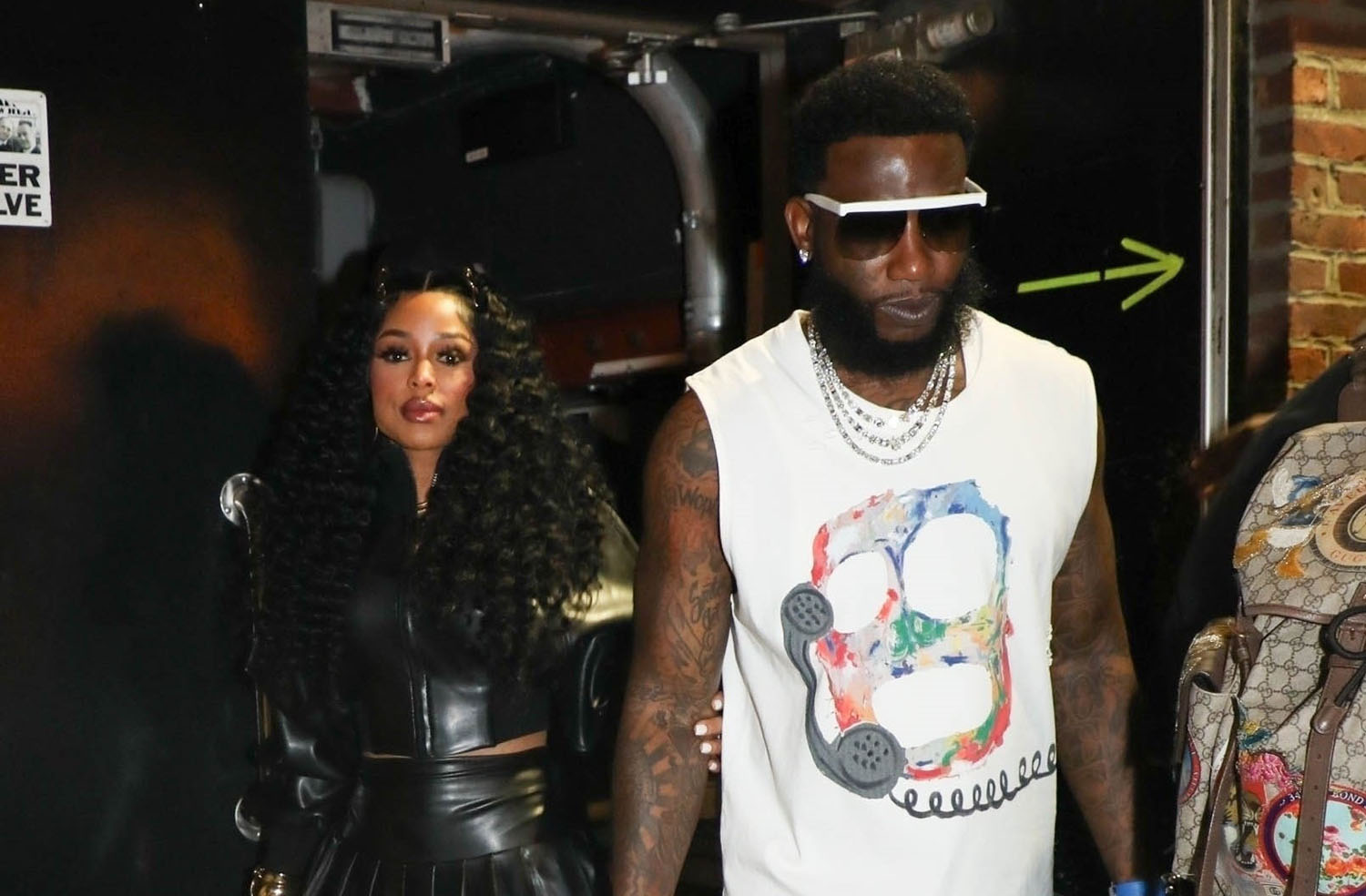
Gucci Mane recently released his 17th studio album and is gearing up for a tour starting in November. If that wasn’t enough to keep him busy, he also just published his third book, Episodes: The Diary of a Recovering Mad Man. Naturally, he and his wife, Keyshia Ka’oir, have been on a press tour to promote the album and the book. But their sitdown with The Breakfast Club did a lot more than encourage the purchase of a concert ticket or a copy of his latest memoir. Instead, it opened the door to a very important conversation about what it can be like living with mental health issues. And they did that by lifting the veil on what each of them has been dealing with behind closed doors over the last several years.
Gucci’s first book was an autobiography that he began writing while he served a prison sentence. His second book was a compilation of his life’s guiding principles. But this third book chronicles the issues he’s had with mental health – specifically, how he and his wife have navigated his struggles with bipolar disorder and paranoid schizophrenia.
During their conversation with the team at The Breakfast Club, Keyshia described in vivid detail how she springs into action when she realizes that Gucci is having an episode. She described everything from exercising greater control over the access he has to his phone and social media, to staging a full-on kidnapping in order to get him to a facility, one she forbade him from signing himself out of.
“I take his apps off his phone. First thing I do, I delete Instagram, I delete everything. Even if I gotta change his passwords, I’m changing it. I don’t need the public to know he’s having an episode,” she told Charlemagne and friends. “You’re not going on Instagram, you’re not going on Twitter. It’s deleted. I control everything at home.”
During the interview, Keyshia pointed to the fact that many of his episodes go undetected by the public and by the media, largely because she can see them coming.
“Now before the episodes come, I catch it. And how you catch that is, he doesn’t speak to you, he wants to be left alone. He doesn’t eat, he doesn’t sleep. Text messages - there’s a period after each word…I’ll say, ‘That’s not how you talk to your wife,’ and we snap out of it right then.”
While she may have learned to anticipate her husband’s episodes, there was one she couldn’t. And while she certainly shared a lot, it was in him reflecting on this particular episode, both during the interview as well as in the book where we can see his transparency and vulnerability, which is what makes his insight about mental health so invaluable.
The ‘September 13th’ episode, as they refer to it, was one that saw Gucci hurl insults on social media to celebrities likes Rick Ross, Drake, Nicki Minaj and Birdman before he served a jail sentence. He reflected on some of the things he said to them and being ‘hurt’ by the fact that he went that far while under duress.
“I was super embarrassed and hurt by the things I said because I wasn’t well then. Then I got locked up. So a lot of those people I was staying those things to, I thought they would never mess with me anymore. Even when I got out three years later, I still apologized to Ross, Drake, Nicki, all those people accepting my apology was just a weight off my shoulder,” he said. “I felt bad. I felt terribly bad. It was eating at me. It was super heavy on me.”
The couple’s revelations prompted a lot of conversation online about the approach Keyshia’s taken to helping her husband manage his diagnoses. Some suggested she was controlling, a narcissist, others bypassed his mental health diagnoses and pointed solely to his past substance abuse issues as the real cause of some of his episodes. And some people even suggested he is a clone, and she, his handler. Whatever that means.
While some of what’s being discussed is illogical, untrue and far beyond the point – like the points being made about how she looked, it’s important that there’s even a conversation happening. Because as I’ve discussed extensively in the past, mental health and the issues that can stem from it is a topic that could always use more exposure among Black people. Not just the people experiencing crisis, but the people around the people experiencing crisis, too.
And we’re seeing in real time how much the conversation is working. It’s led to some of those very people, the ones in proximity to people just like Gucci, taking to social media to share their experiences. And it’s been comforting to see people finally feeling safe enough to let it out and share their own stories of what Gucci’s diagnoses has looked like in their circles.
This user posted an anecdote about his relative who refuses to take medication for her schizophrenia, which prompted the family to put her into a mental health facility. And this user shared the story of his friend who, from the beginning of their friendship, would experience episodes. He said he stayed by his side throughout a great deal of them, but that his friend never understood the root cause of them and is now ‘too far gone’.
This is how progress is made, slowly. On all fronts. At one point in the conversation, DJ Envy reflected on how his team and the media could have done a better job by not latching on to the tweets Gucci was sending out during this episode. He recalled being on air the day of the September 13th episode, saying:
“We were on air that morning. And we were just like ‘Damn, Gucci’s going crazy on everybody.’ The sad thing about it is for media, press is like, that’s gold at first. But when you sit down and look back on it, maybe we shouldn’t have went that hard in promoting it because we see now he was going through an episode.”
And the conversation is also shedding light on why Gucci has been able to forgive rappers who have also shared some of his same transgressions. The same forgiveness that was extended to him, he is now able to extend to others. Besides his appearance on The Breakfast Club, he appeared on Revolt TV’s Big Facts. During that conversation, he explained why he was able to quickly forgive rapper Young Thug, who said some unpleasant things about him and a swath of other celebrities in a leaked call from jail.
“Thug said some stuff about me and it came on the internet. But then he made a song that said ‘I miss my dawgs’ and I immediately accepted the apology because I’ve been there. And I wanted someone to forgive me. It’s like a weight on you…I forgive him.”
Both Gucci and his wife opened up about their ability to recognize when other celebrities are experiencing an episode. The pair said that when they see a person firing off a series of aggressive tweets, they know exactly what’s going on. And given how common this is, it encourages us to lead with empathy rather than criticism or reactionary behaviour. And for people like DJ Envy and other members of the media, it means they’re not champing at the bit for a story, which can make things exponentially worse for all parties involved.
It bears mentioning that this is a man who turned his life completely around. I mean, just look at the photos of him at different stages of his life on the cover of his book. We see him in active addiction, we see his mugshot, and we see him now. The difference is obvious. This was way more intentional than just randomly tossing photos of him in different stages onto the cover arbitrarily. I think it serves as a physical reminder that you can overcome substance abuse, a dark past, and you can live a meaningful and fulfilling life despite having a mental health diagnosis. And none of that is easy to do, even with the support of loved ones. But it’s a clear example of how much more manageable it can all be when you have the right people around you.
One social media user lauded Gucci’s accountability, calling it ‘radical’. She pointed out that ‘we rarely see redemption stories for Black men that aren’t rooted in violence or entertainment.’ And she is absolutely correct.
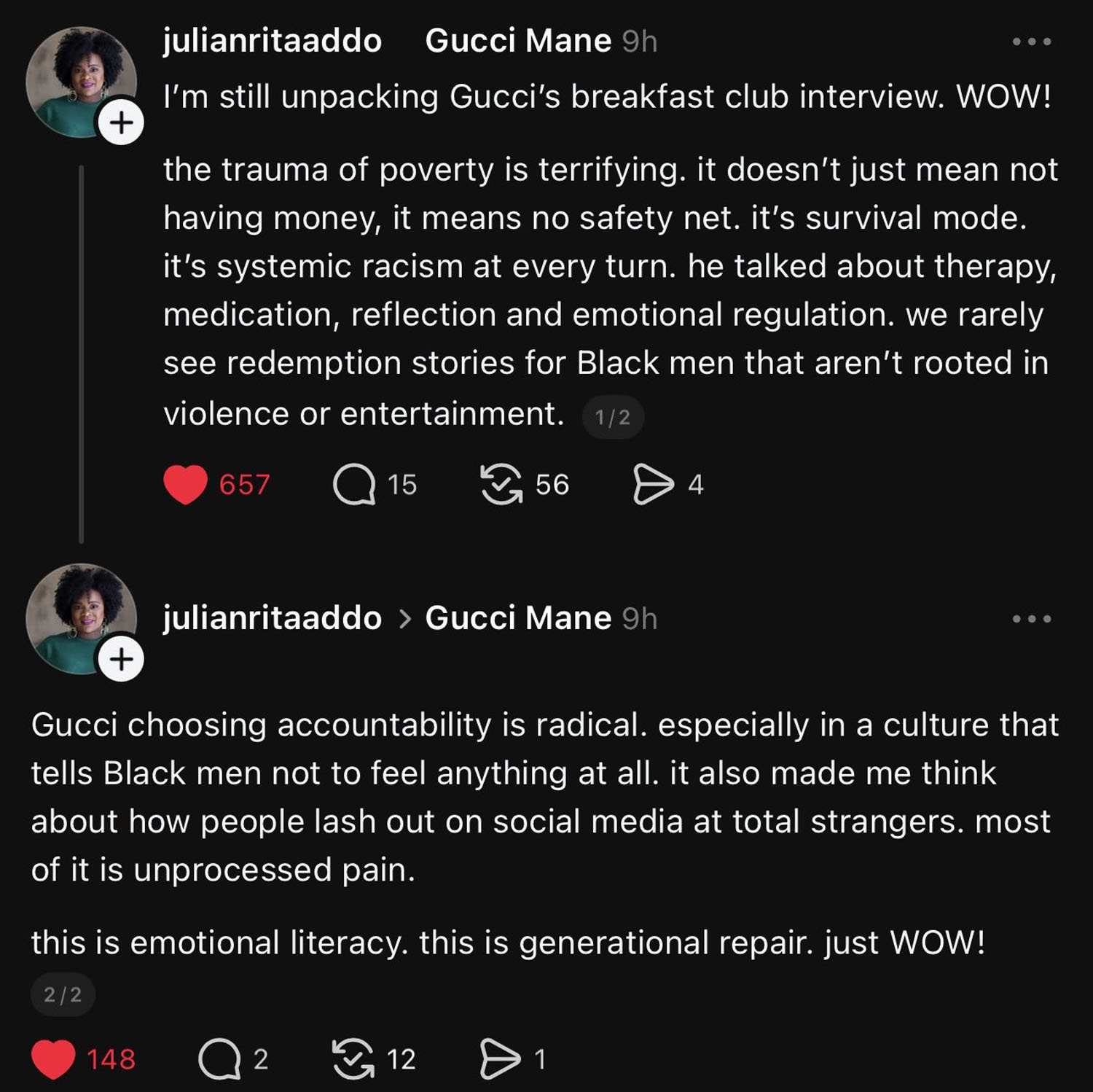
I think that’s why his narrative is so important. It’s not violent. It’s not entertainment. It’s his raw truth. And the reason it’s so crucial that these conversations continue happening, particularly with members of the Black community and more specifically, on Black platforms, are extensive. But perhaps one of the most important reasons we needed this is because I can say with almost absolute certainty that the anecdotes those social media users shared, providing windows into the lives of Black people dealing with anything even remotely similar to what Gucci has navigated, couldn’t be found with a telescope had it been a white Hollywood actor on a non-urban platform having this discussion. And that’s the power of putting a face – a familiar one at that – to these diagnoses.