Kim Cattrall’s latest health journey

– 6 min read
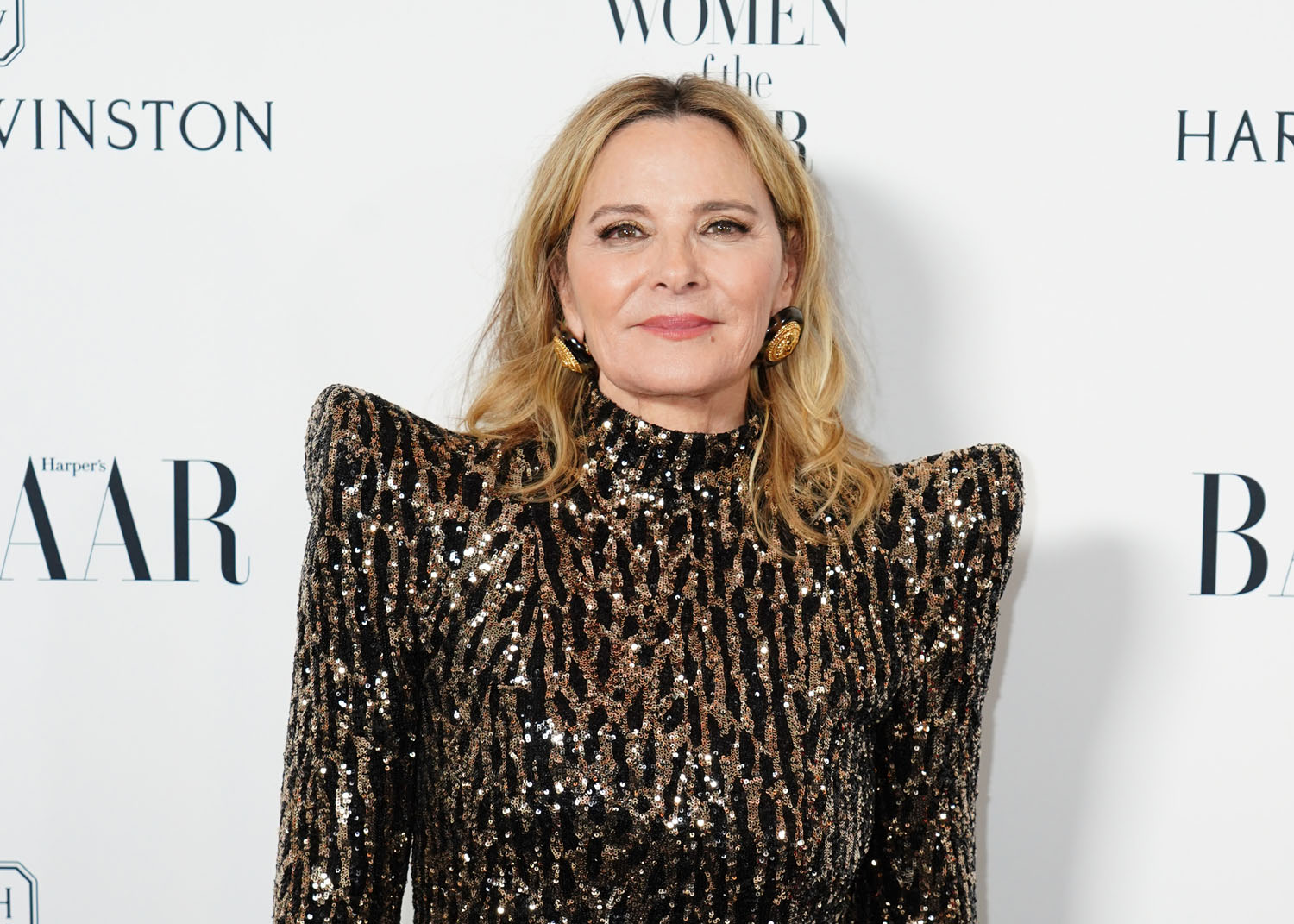
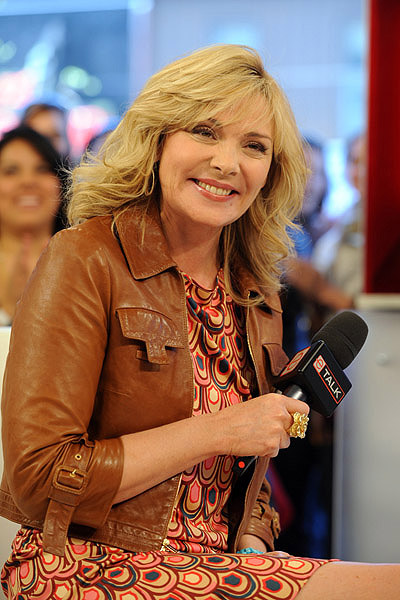
Kim Cattrall’s latest partnership is one that sees her pivoting from makeup to menopause. In recent years, she’s been named the campaign face for skincare and makeup brands like OLEHENRIKSEN and Charlotte Tilbury. In September, it was announced that she would be fronting the relaunch of the ever-nostalgic Designers at Debenhams. And even more recently, it was announced she’d be partnering with Natural Cycles, a woman’s health company that is at the helm of the world’s first FDA-cleared birth control app.
At 69, it would appear that menopause has been no match for the woman who famously executed the role of Samantha Jones. But as we now know, she executed that role while navigating perimenopause – and other roles even before she knew what her menopause journey would be like. And now, though not for the first time, she’s opening up about the impact the transition has had on her, in hopes that it will allow other women to have a better understanding of what menopause might look like for them.
As I mentioned, it’s not her first go round with being a brand ambassador of some sort for this stage of life. Back in 2014, she partnered with Pfizer, the company we became super familiar with during the pandemic thanks to the hand it played in creating a vaccine. Together, they launched a campaign called Tune In To Menopause. In addition to making vaccines and a slew of other medications, they also make prescription menopause treatments to address certain symptoms. At the time, the aim of the company’s campaign was to inspire postmenopausal women to pay more attention to their bodies.
During the time of the Pfizer campaign, Kim described having to act out hot flashes on-screen before ever experiencing them in real life, giving her a false sense of preparation.
“I thought I was prepared for menopause, hot flashes and more, but when my body started changing, I realized I still had questions,” she said in 2014. “But the more I learned and listened to what my body was telling me, the more I relaxed, adjusted and realized I could manage this by working closely with my doctor.”
Sure, doctors can certainly be a fantastic resource navigating any major change in life, be it the start of a girl’s period, a pregnancy, new motherhood, the option not to be a mother, or menopause. But in all of these cases, nothing quite compares to having someone who’s been through it or is currently experiencing it to give you the real low down, not the editorialized medical version of it. And that’s why it’s so great that Kim has lent her voice to this for over a decade now. And it’s also great that so many other celebrities are using their platforms to make the topic less taboo.
Since Kim’s Pfizer campaign in 2014, we’ve seen an increase in celebrities using their platforms to speaking out about their experience navigating menopause, particularly in recent years. In 2019, Oprah Winfrey dedicated a column in her magazine to highlighting the symptoms that existed for her, and then discussed some of the positive aspects of menopause. She discussed experiencing symptoms like heart palpitations, and went on to say that her and so many others navigating this stage of life viewed it as a ‘blessing’. She even went on to create a menopause masterclass in which other celebrities like Drew Barrymore and Maria Shriver, alongside medical experts, joined her to ‘set the record straight on everything everyone forgot to tell you about – from brain fog to hormone replacement therapy’.
HRT is something Michelle Obama would go on to talk about a year later in 2020. The former first lady opened up about her journey on an episode of The Michelle Obama Podcast, discussing hormone therapy and pointing out that, despite half the population inevitably having to navigate menopause, women seemed to live like it wasn’t actually happening.
It was such a big deal she was speaking about it that it earned a segment on nighttime entertainment TV. She revisited the conversation, this time with her brother, just two weeks ago, and a few weeks before Kristin Kreuk shared her own midlife reflections, which includes the use of testosterone supplements. Gwyneth Paltrow also spoke candidly about her menopause journey during a Q&A style podcast episode on the the goop podcast. And in 2024, Halle Berry famously shouted at the top of her lungs ‘I’m in menopause!’ on Capitol Hill as she advocated for women’s health care improvement.
As a woman in my early thirties who hasn’t quite experienced the early onset of menopause, I’m embarrassed to admit that I have started to panic when I feel myself sweating more than I typically have in the past. I find myself wasting no time in immediately turning to Google to punch in unreasonable searches like ‘How do you know when you’re having a hot flash?’ But that embarrassment and the unreasonable searches, as I’ve come to realize, is just curiosity, which for a long time, was starved in me and so many other women.
There are a lot of parallels between this and when I was about seven years old, looking to my older sisters for guidance on what it would be like having a period. I see that same curiosity in my eight-year-old daughter, who constantly and shamelessly, no matter where we are, asks with complete and utter sincerity whether it’s ‘that time of the month’.
The difference all these years later is that, as I inevitably get closer and closer to entering that stage of life, I actually have resources, which, yes, include the doctor Kim Cattrall cited the importance of working with during the transition – but so much more. Even resources that I can start using now, like this column from Oprah’s website about what women in their mid-thirties should know about perimenopause.
All of this begs the question of when – and why – menopause has become such a hot topic. And to put it simply, I think it’s because for so long, it wasn’t a topic at all.
It always stood out to me that for generations, women have been taught more about how to hide the effects of ageing, ovulation and menopause than we were ever encouraged to embrace any of it.
In 2016, poet Rupi Kaur posted this image to Instagram for a university project in which she was ‘tackling stigmas around menstruation’.
She shared some of the vile comments she received from men, including men she knew, saying she was sent death and rape threats before the post was ultimately removed from the platform.
‘A lack of information and awareness leads to dangerous misconceptions,’ she wrote in a post revisiting the initial hoopla back in 2023.
And it’s the same idea with menopause. Those heart palpitations Oprah was experiencing? She assumed it had to do with heart disease – but it was menopause. According to a 2023 study by the National Library of Medicine:
Over 90% of obstetrics and gynecology residency program directors in the U.S. agreed that residents should have access to a standardized menopause curriculum, yet less than a third reported that their programs actually offer one.
The impact of this? Knowledge gap risks that leave many women to be treated by medical providers who are not equipped to address the causes of menopause and treat symptoms effectively, which means our access to appropriate care is compromised.
Gynecologist Mary Jane Minkin, who spoke to the Yale School of Medicine about the work she’s had to do to convince women to consider HRT paints a very clear picture of the importance of considering menopause in patients who come in describing certain discomfort.
“When I teach my medical students, I’m assuming that none of them are going to be OB/GYNs. Statistically, they won’t be. But I am assuming if they’re going to be taking care of patients, they’re going to come across somebody who’s perimenopausal who’s going to not necessarily triage herself to the gynecologist. If she’s not sleeping well at night she’s not going to think of the gynecologist as her first call,” she explained to the university.
While some celebrities like TLC’s What Not to Wear star Stacy London have discussed the grief that can come with no longer being fertile, other celebrities, like Cynthia Nixon and Angelina Jolie, have cited this as a new wave of freedom, and something they do not fear, a ‘part of life’, as Angelina referred to it.
All of this underscores the very objective of Kim Cattrall’s latest partnership with Natural Cycles – it’s to get women to better understand their individual menopause journey.
“You think that your sister’s menopause is going to be like yours, or your mother’s, or your aunt’s, but that’s just not the way it is,” she said. “Yours is individual, and those challenges are there for you to prevent.”
If you were to have told me that things like hormone therapy, exercise, modifying my diet were all things that could help make the symptoms of menopause more manageable, I wouldn’t have believed there was anything that might lessen the load of this long-feared aspect of my future. Moreover, if you told me there were women out there who actually spoke favourably about this transition, I’d have smiled politely and ran full speed in the opposite direction. But that’s just fear, which thrives in environments where there is little information and lots of silence. So here’s to hoping women – the famous ones, the non-famous ones and the little ones like my daughter - continue to get louder and louder with their questions, concerns and everything in between.