Joker’s pratfall

– 4 min read
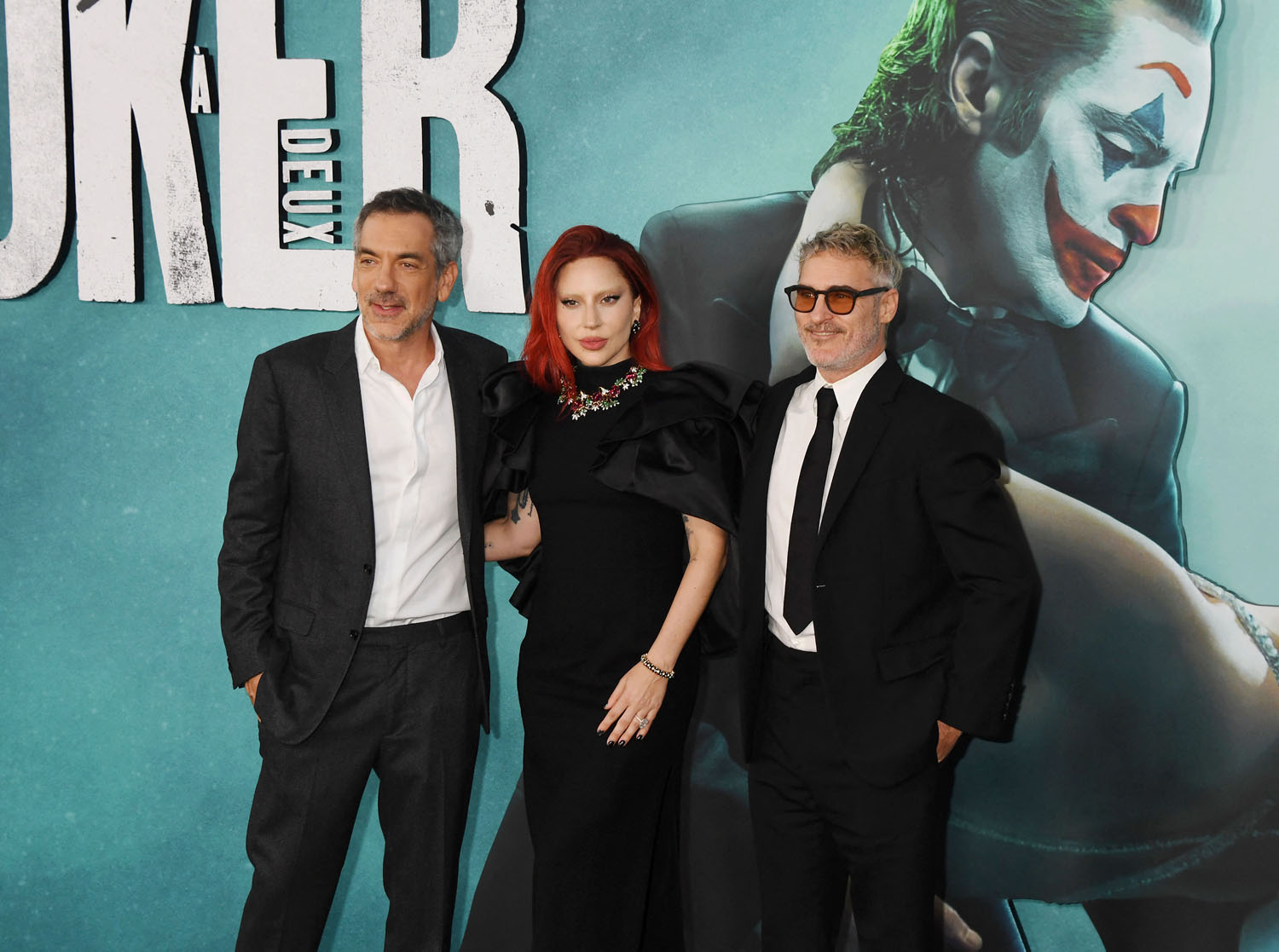
The writing was on the wall as the box office tracking went into freefall a couple weeks before the film even opened, but Joker: Folie à Deux tanked over the weekend, opening with just $40 million.
For comparison, The Marvels, last year’s widely derided superhero bomb, opened with $46 million, The Flash opened with $55 million, and back in 2019, Joker opened with $96 million, on its way to billion-dollar box office. Worse, though, is that Folie à Deux earned a D CinemaScore, which means no one likes it. Backing that up is the Rotten Tomatoes rating, which unlike its predecessor, is in lock-step with critics and audiences both rating it under 35%. I always say CinemaScores, Rotten Tomatoes, box office, these things are not the full measure of a film’s success, but when they ALL line up like this, yeah, you made a stinker.
With the lowest CinemaScore for a superhero movie ever, beating out Fantastic Four’s C- back in 2015, and with box office undercutting even Marvels’ worst outcomes, surely, we must be inundated with stories about DC Studios being in trouble? I mean, they’ve had two massive bombs in less than two years, with The Flash and Folie à Deux, that’s all it took for everyone to start counting down to Marvels’ implosion. There must be a thousand headlines about DC on the brink.
LOL, no, of course not. The trades are covering the “surprise” of Folie à Deux tanking, but DC seems to have an unlimited pass on how many flops they produce. Honestly, they’ve been messy so long, it’s when they produce something good, or at least something that hits commercially, like Joker did, that everyone sits up and notices. We’re only talking about Folie à Deux’s disastrous opening weekend because expectations were high—long-lead tracking put opening weekend at $100 million-plus, assuming the film would build on Joker’s success. That number dipped to $70 million after the film’s Venice premiere, when the first reviews were decidedly mixed. It dipped further when advance screenings started a couple weeks ago and hit bottom at $50 million opening week. The film ended up underperforming even the lowest estimate.
But that’s not actually unusual. In fact, it’s part of a trend we’ve seen for the last few years. Captain Marvel, Aquaman, and Black Panther all made over $1 billion, only for their sequels to underperform the original film. Outside the billion-dollar barrier, Venom: Let There Be Carnage, Thor: Love and Thunder, Ant-Man and the Wasp: Quantumania, and Guardians of the Galaxy vol. 3 all underperformed their predecessors (I’m not counting Wonder Woman 1984 because it was released before theaters had even fully reopened in 2020, never mind the day-and-date streaming release).
The best argument for superhero fatigue is this downward trend, or maybe more accurately, levelling off in box office. By the end of the 2010s, superhero movies were regularly overperforming box office estimates, now the market seems to have course-corrected to a state where some movies hit big (Deadpool & Wolverine), and some don’t (Madame Web, Folie à Deux). Of course, the movies that aren’t hitting are bad, which less suggests fatigue and more that audiences are pickier now than they were five years ago and are asking questions like “does this even look good” before seeing a movie.
With Folie à Deux, Todd Phillips & Co. may well have made a film they’re proud of, but it clearly isn’t anything audiences want to see. And that’s fine! Sometimes that’s how the cookie crumbles. The insane part of Folie à Deux isn’t that it’s a musical or that Phillips and his collaborators took Arthur Fleck in a direction their audience didn’t want (realistic sad sack instead of triumphant murder clown), it’s that it cost $200 million to produce (Joker cost under $80 million).
That has been a problem for a number of high-profile flops in recent memory. Studios are spending too damn much and getting bit in the ass when the film doesn’t connect. Folie à Deux’s price tag came in part to massive salary increases for Phillips and Joaquin Phoenix, and Lady Gaga got paid eight figures, too. The former made a billion-dollar hit, and the latter is Lady Gaga, so you can argue it was worth it to pay whatever it took to get them together for this film, and if Folie à Deux was a hit, no one would be blinking at the price tag. We only balk at the budget when it DOESN’T pay off.
I would love to say this is evidence we should bring the mid-budget movie back, but in reality, nine-figure films are still topping the box office. The only sub-$100 million film in the top 10 box office for 2024 (so far) is Kung Fu Panda 4. And yes, that is slanted data because studios aren’t making mid-budget films and marketing them like they expect them to be global hits, mostly they just dump them on streaming. The ones that do make it to theaters sometimes pay off, like It Ends with Us, Aliens: Romulus¸ Longlegs, A Quiet Place: Day One, Bob Marley: One Love, and The Beekeeper. That’s a fair number of mid-level hits, but each studio needs to make like a dozen each for the profits to add up, and we are still very much in a studio mindset where they’d prefer to blow everything on a couple nine-figure movies and risk both of them tanking, rather than invest in, say, four $50 million movies.
So, we’re just going to keep repeating this cycle until something changes within movie studio culture, which I don’t see happening any time soon. They’re just going to learn the wrong lesson from Folie à Deux flopping. I guarantee the takeaway will be “don’t take chances”, when a more accurate lesson might be “not every movie needs a sequel”. Honestly, even though I didn’t like either film, between Folie à Deux and Megalopolis, I’m actually afraid for creator-driven films in American cinema. We should be ushering in a mid-budget renaissance, but I’m afraid things might get very bleak, instead.