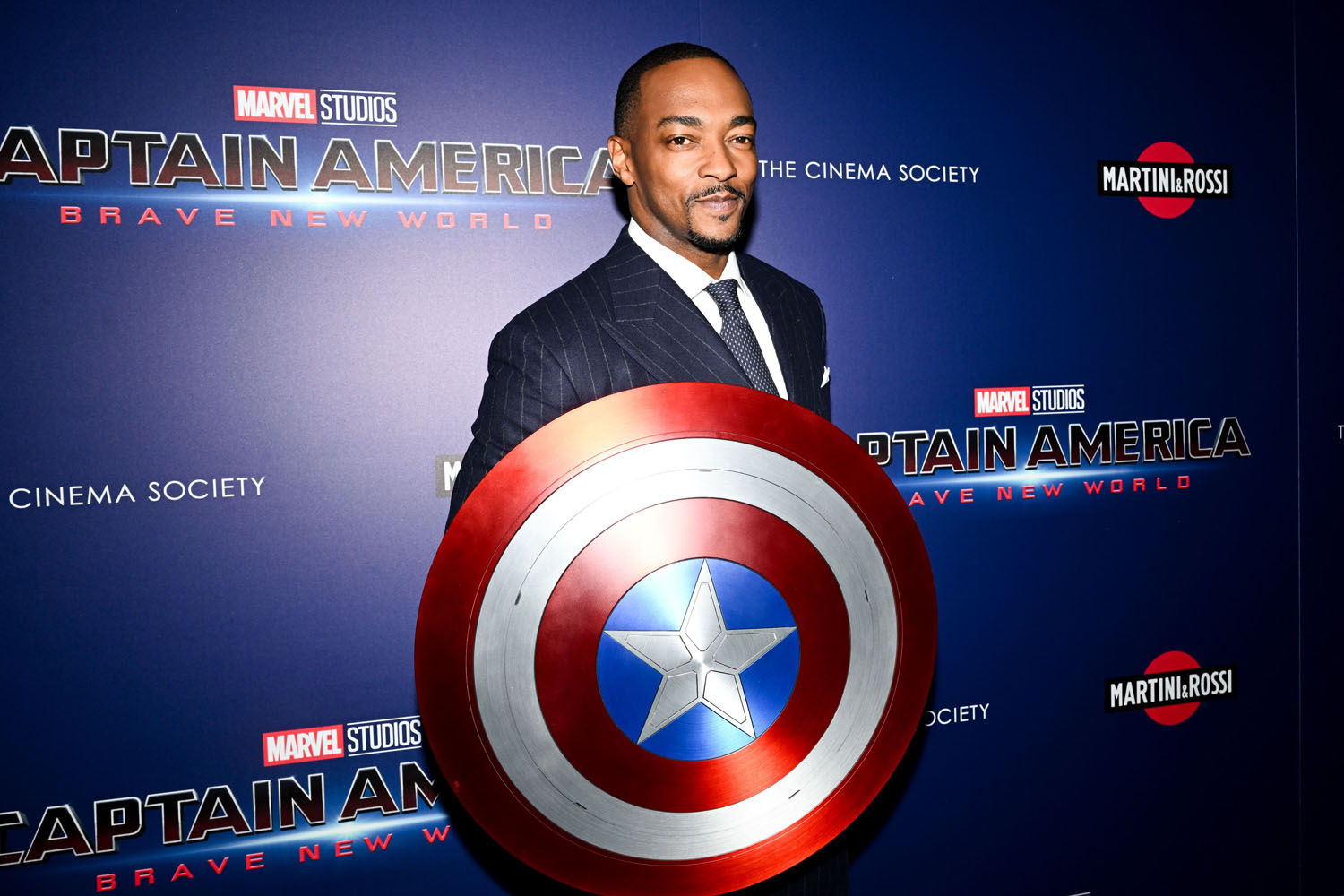
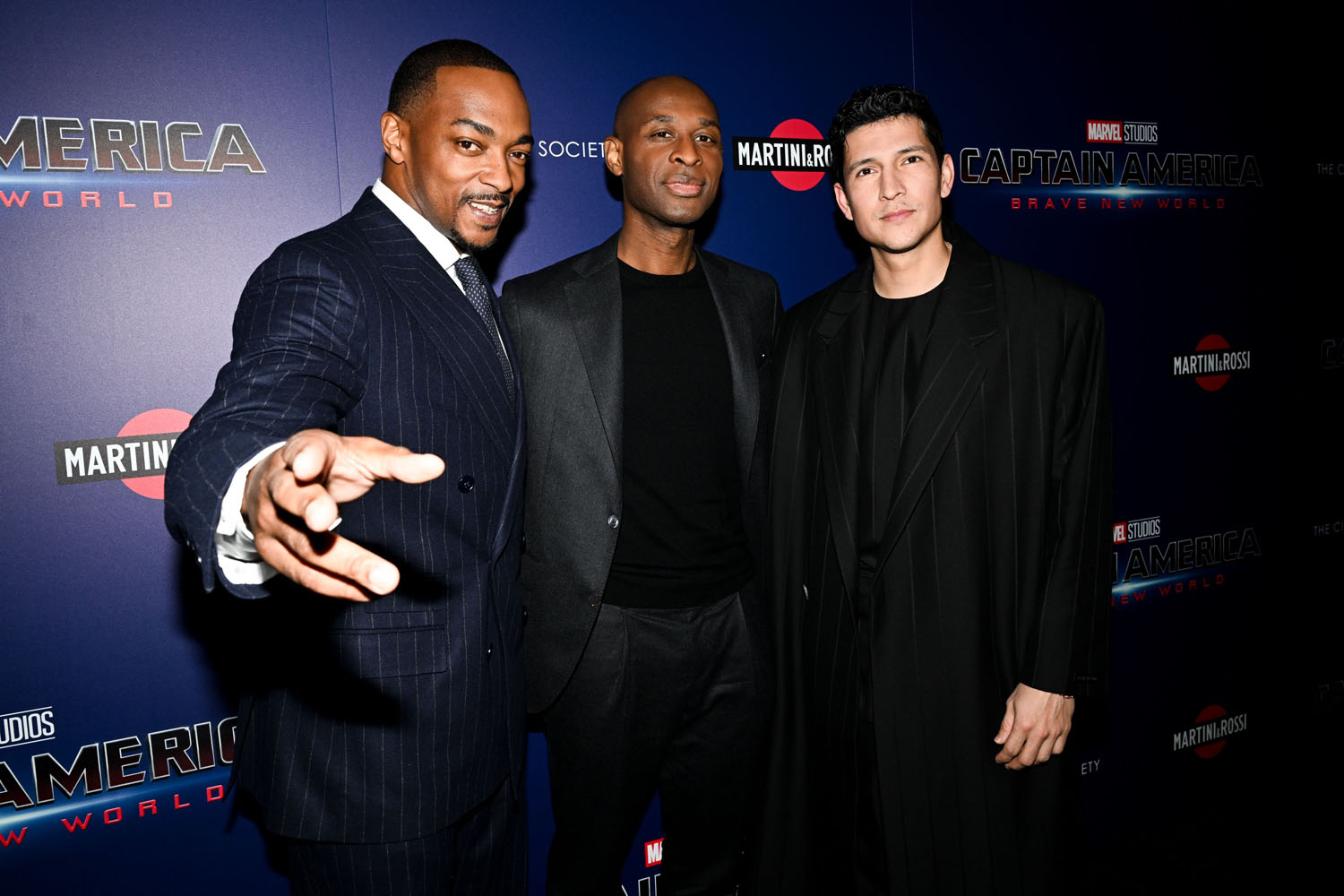
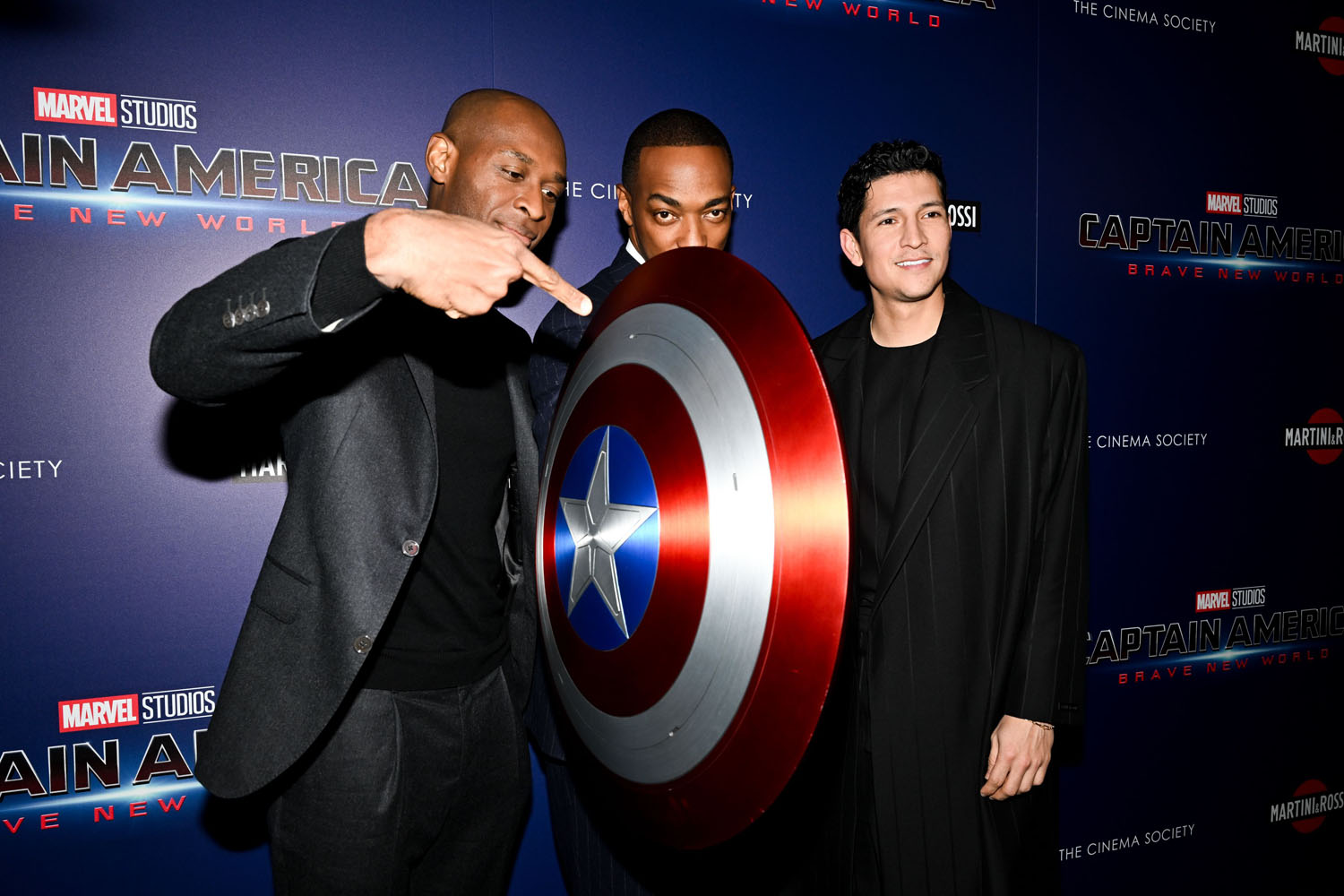
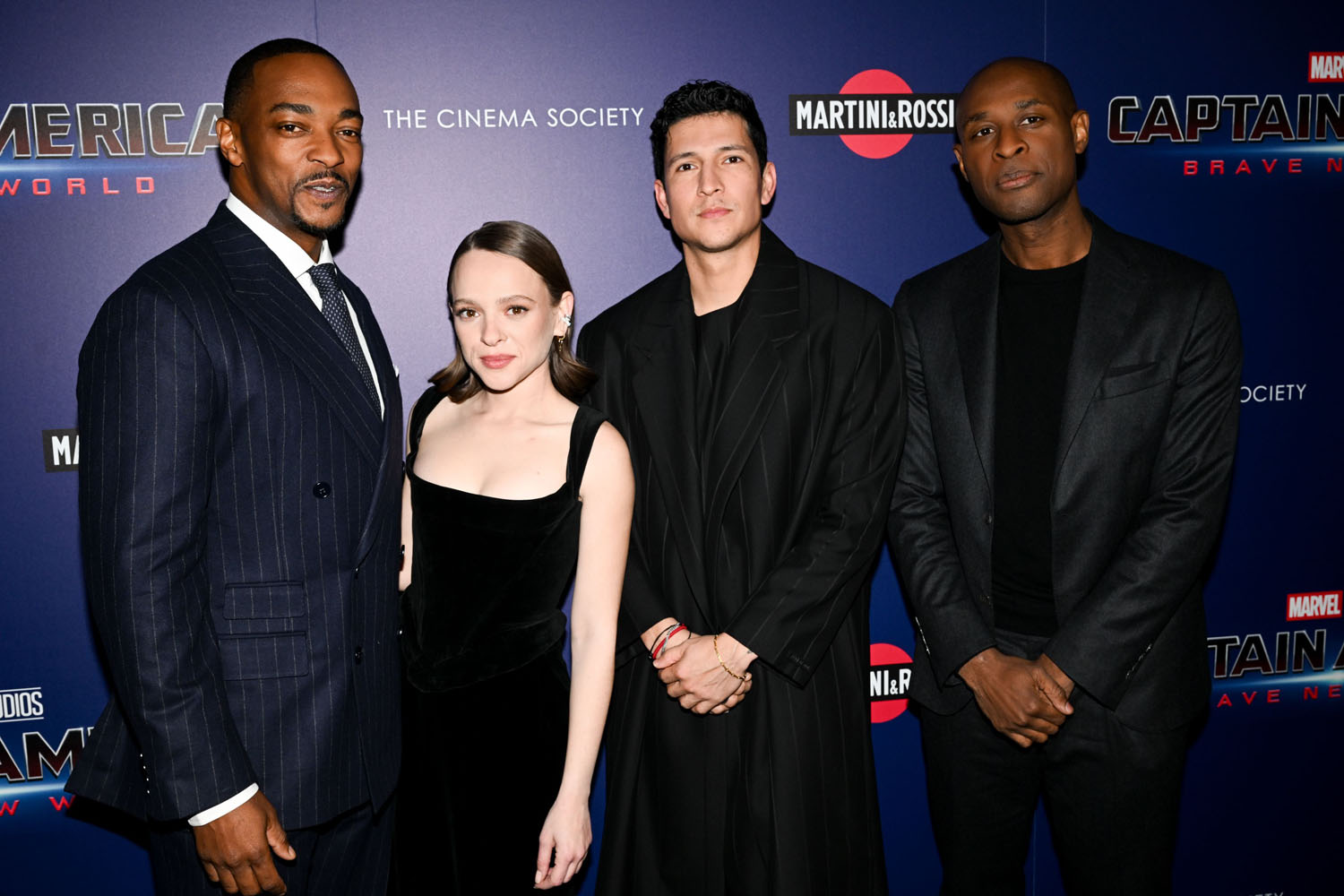
Anthony Mackie in Captain America: Brave New World

– 6 min read
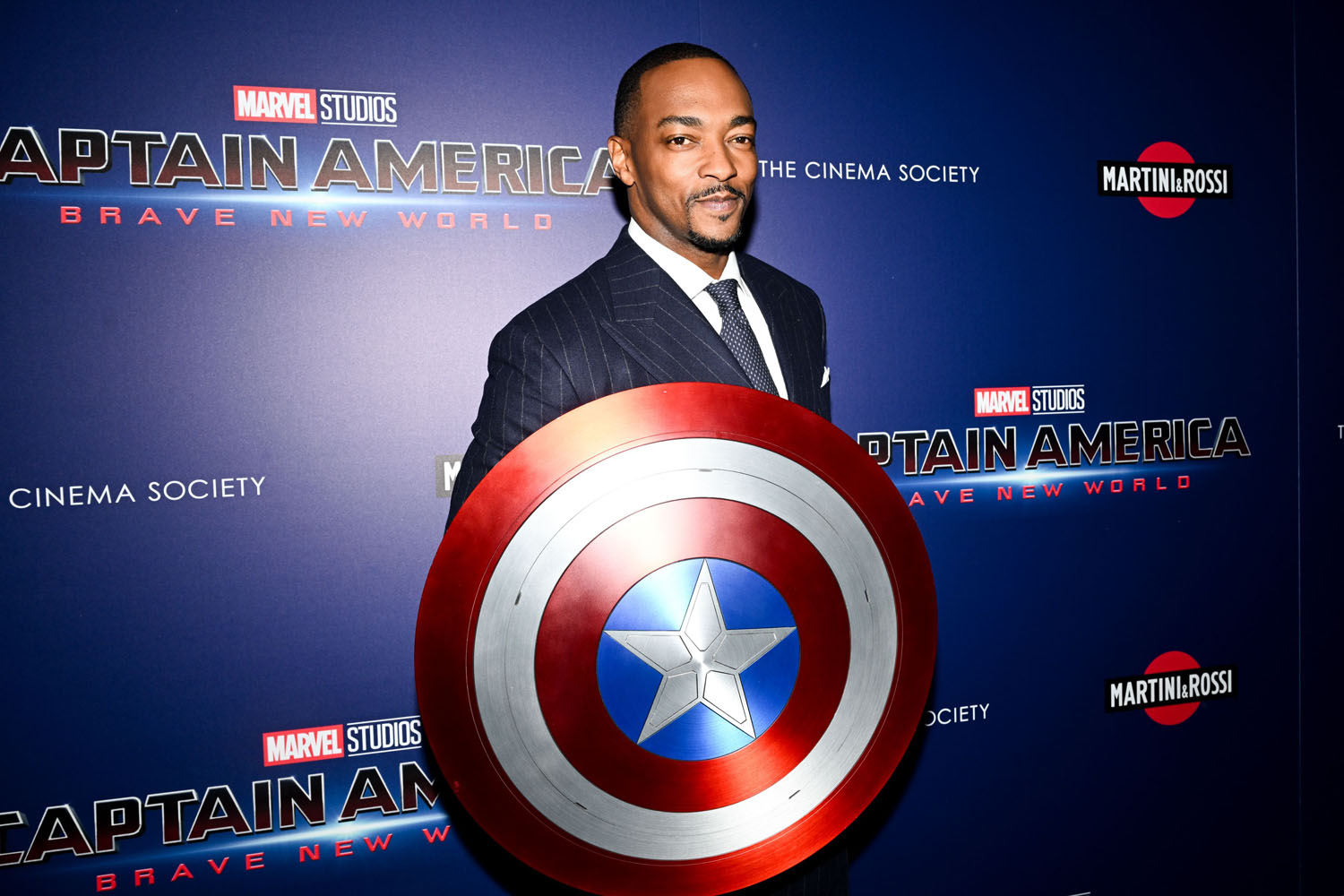
After a decade playing a sidekick in the MCU, Anthony Mackie and his character, Sam Wilson, have stepped into the central role of Captain America, picking up the mantle after Chris Evans exited the franchise, taking Steve Rogers with him. Following his stint on TV in The Falcon and the Winter Soldier, the fourth Captain America film, subtitled Brave New World, is Mackie’s first film as Cap. It opens three years after the events of Falcon and finds Sam comfortably ensconced in the role of Cap. He is popular with the people and trusted by the American military, no one has any negative feelings about a Black man carrying Cap’s shield at all. A country that gets mad when Black people kneel during the national anthem has absolutely no problem with a Black man disobeying orders while empowered by the might of the military and a bonus helping of Wakandan tech.
It is clear from Brave’s opening scene that this is a narratively bankrupt film, one with no vision beyond IP maintenance and franchise connectivity, scooping up pieces from some of Marvel’s least-loved films, including The Incredible Hulk and Eternals, and arranging them into a torturous shape, at once twisted and hollow. Sam’s conflict is two-fold, he is trying to figure out a bust gone bad in Mexico, where a mysterious buyer never showed up for a rendezvous with the leader of a bad-guy sect called “Serpent” (played by a wildly charismatic Giancarlo Esposito, doing the absolute most with the absolute least), about which we know nothing and learn even less; and then he must also figure out who tried to assassinate the new president of the United States, Thaddeus “Thunderbolt” Ross (played now by Harrison Ford, taking over the role from the late William Hurt).
Given that Ross once forced Sam to live several years on the lam following the events of Captain America: Civil War, Sam has some qualms about restarting the Avengers under Ross’s aegis. But beyond having a new face, it seems Ross has also had a change of heart. He is suddenly more understanding about the need for superheroes like the Avengers, and he’s trying to forge a treaty that will share the newly discovered element adamantium equally among world powers—except for Wakanda, they’re not invited because they won’t share vibranium (gee, I wonder why). This is a kinder, gentler, Thunderbolt Ross, who just wants to show his estranged daughter, Betty, that he has really changed by creating a “lasting peace”.
That would be a great framework—FOR A HULK MOVIE. But this is a Captain America movie, and yet it has very little to do with Captain America (even less than Civil War had to do with Steve Rogers). Sam Wilson begins the story conflicted about working with Ross and nursing misgivings about not taking the supersoldier serum to beef up his physical capabilities as Cap. He ends the story conflicted about working with Ross and nursing misgivings about not taking the serum. Sam undergoes no growth or change throughout the film.
Worse, though, is the treatment of Isaiah Bradley, played with heart, humor, and gravitas by Carl Lumbly. He delivers a finer performance than this dreck deserves—as does Danny Ramirez as human sunbeam Joaquin Torres—and in brief spurts almost manages to make Brave feel like it’s about something. Isaiah, now known for his time as Captain America during the Korean War and his wrongful incarceration thereafter, finds himself victimized by the villain, brainwashed into an assassination plot and ultimately arrested and re-incarcerated. Lumbly’s acting is enough to make this scene wrenching, but the sight of Sam—Captain America—standing by as Isaiah is roughly treated by cops is deeply uncomfortable.
The scene reveals the hollow core of Brave New World. Far from brave, this film is steeped in cowardice. Sam watching as Isaiah is arrested doesn’t seem like the moral act of a good man, it is a pusillanimous failure of imagination on the writers’ part, and it reveals the gutless double standard Marvel applies to their Captains America. Steve Rogers was allowed to mouth off to Ross and any other authority figure who got in his way, he was defined on screen as an anti-fascist patriot, meanwhile, Sam Wilson is forced to give voice to a message of understanding that even extends to authoritarians.
Sam’s final speech includes this line, delivered to Ross: “If we can’t see the good in each other, we’ve already lost.” That’s a lovely sentiment, and it might mean something if it were said between, say, Tony Stark and Steve Rogers with their ideological difference over how to lead the Avengers. But for a Black man to say it to a white man who knowingly threw a Black war hero in prison to keep his own immoral secrets, and who kept a political prisoner and illegally and unethically experimented on that prisoner, there is nothing lovely about the sentiment. What good are we trying to see here? Why are we trying to empathize with a fascist?
They are TERRIFIED of portraying Sam Wilson as any kind of rebel. He isn’t allowed to resist, he simply cannot be non-compliant. Sam’s Captain America is forced to be a patsy, to collaborate within a broken system and a regime which he knows is corrupt. Even in the face of blatant proof of Ross’s wrongdoing, STILL Sam tries to get along for the sake of some kind of Obama-era “we go high” messaging that felt inadequate back when things were “good” and now feels not only inadequate but foolish, naïve, even self-destructive.
Brave preaches togetherness and change, but the vehicle of that message is a character who is meant to be nothing but a mid-level irritant to the Avengers, a catch-all representation of the sort of bureaucratic interference that keeps the good guys from doing good. Initially, the World Security Council served that purpose for the MCU, but after Captain America: The Winter Soldier disposed of them as the boogeyman, Thaddeus Ross stepped into that role. And there he should have remained, the face of political obstructionism. Instead, Marvel tries to turn him into another anti-hero, but the effort falls flat. There has not been enough character building to support the swing, and worse, the effort to “see the good” in him means outright ignoring massive abuses of power that would render a character a supervillain in any other context.
Marvel is not prepared to meaningfully engage with a Black Captain America, and the result is a film about nothing. Worse, it’s self-importantly about nothing, setting up a conflict that should force Sam to contend with what it means to stand for a country that has never stood for people who look like him, only to betray the early hints of this framework by forcing Mackie and Ramirez to grind out debasing lines of political neutrality—you can feel how scared Marvel is of the pejorative “anti-woke” crowd.
The cravenness of this film is so outstanding it obscures every other issue, like a paper-thin plot that does not hold up under even the slightest scrutiny, or Anthony Mackie’s often painful over-acting (he’s trying so hard, and I genuinely feel bad that his time as Cap is going this poorly). It even obscures the few good elements, like a handful of fine performances, particularly from Esposito and Lumbly, and action scenes that are varying degrees of competent to actually stylish. None of it matters, though, because Captain America: Brave New World has the moral backbone of a piece of wet bread, which is really saying something for a franchise built on capitalism and theme parks.
Captain America: Brave New World is now playing exclusively in theaters.