Dwayne Johnson in The Smashing Machine

– 5 min read

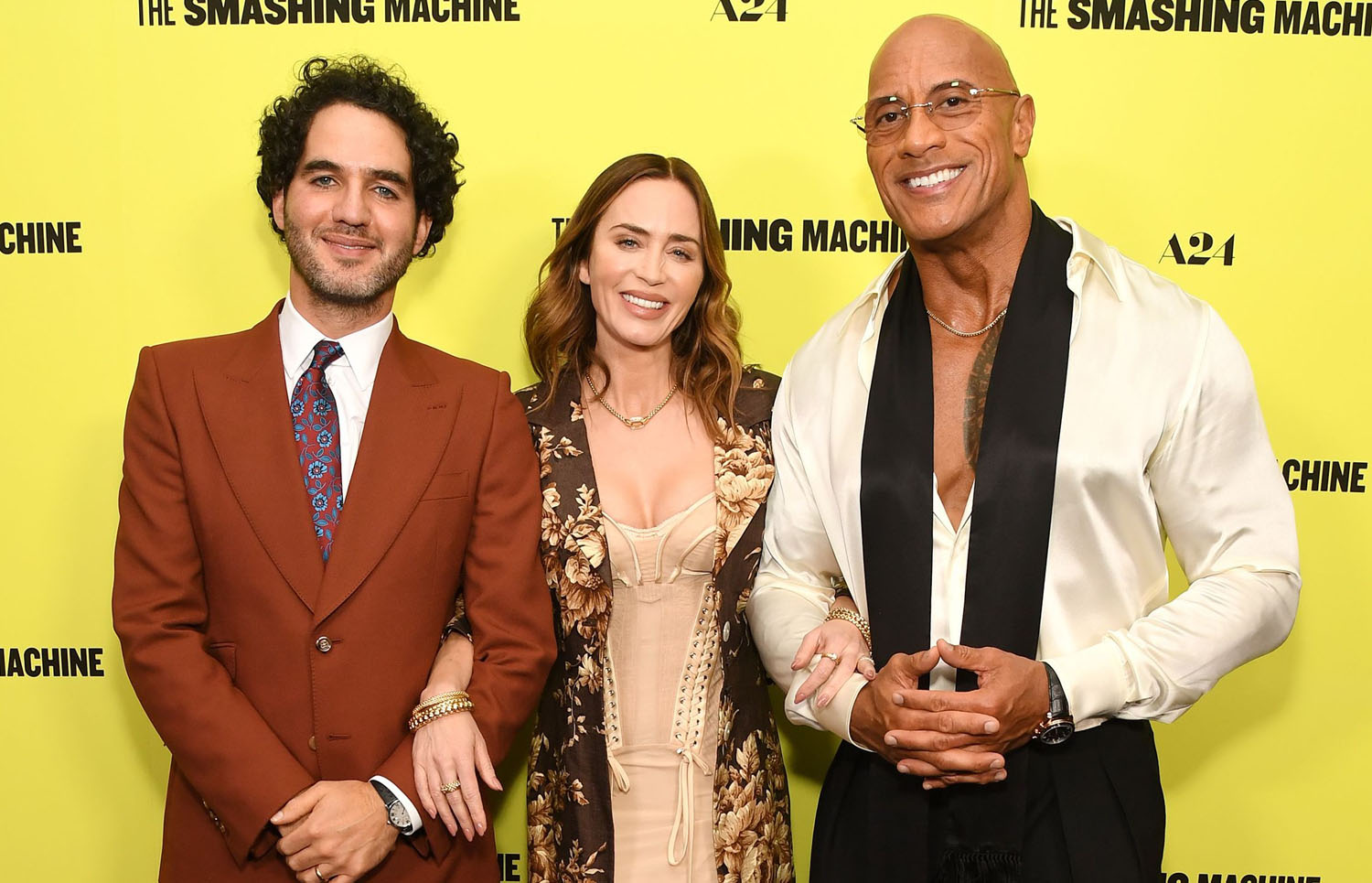
Dwayne “The Rock” Johnson has spent the last 25 years trying to become one of the biggest movie stars on the planet, and in this, he succeeded. But it has been a long time—since 2016’s Central Intelligence or 2013’s Pain & Gain, depending on your taste—since he’s made a good movie. Like the kind that reminds you that oh yeah, The Rock CAN act. In The Smashing Machine, though, Johnson gives the performance of his career as Mark Kerr, a pioneer of competitive mixed-martial arts. Written, directed, and edited by Benny Safdie, The Smashing Machine is not your typical sports drama.
The film begins in the mid-90s with a chintzy VHS aesthetic that introduces Mark Kerr, a former NCAA wrestling champion turned mixed-martial arts fighter. MMA is in its infancy as a global sport, though, this is long before the UFC coalesced into one of the biggest sports leagues in the world. In fact, the big “life-changing” prize money at the end of the film is $200,000. A large sum of money, to be sure, but today’s champions of the sport can make millions in prize money, plus endorsement deals. UFC/MMA made Conor McGregor a household name, but the whole point of The Smashing Machine is that guys like Mark Kerr, the early pioneers in the sport, did NOT gain that kind of fame or fortune.
In the 90s, Kerr is hustling to succeed in his fledgling sport, often traveling to Japan, where MMA is more popular than in the United States. Donning noticeable but not distracting prosthetics and a hairpiece, it’s not that Johnson is unrecognizable—he still very much looks like Dwayne Johnson—but in Machine Johnson bends his screen persona to serve his character. “Mark Kerr” is determined, competitive, professional, but insecure and struggling with opioid addiction. (One of the most galling moments in the film is when Kerr, fresh out of rehab, is forced to apologize to fans for the “personal issues” that caused him to miss a high-profile match. It’s a reminder of how little was understood about opioid addiction at that point.)
Johnson never really disappears into character, but he makes the character work for him, giving a convincing performance as an athlete struggling with self-acceptance and self-love as much as he is with addiction and a toxic relationship with his on-again, off-again girlfriend, Dawn (Emily Blunt, once again not convincing me she is a working-class American). This being a film by Benny Safdie, one half of the Safdie Brothers filmmaking duo who specialize in nerve-jangling cinema, it constantly feels like the other shoe is about to drop throughout The Smashing Machine, especially during scenes between Mark and Dawn. The percussive score by Nala Sinephro only adds to the tension, it really feels at every moment that Mark’s life is about to spin out of control.
It never really does, though. Mark Kerr’s life has its highs and lows, but The Smashing Machine isn’t interested in glamorizing either side of the ups and downs. Instead, the film focuses on the grind—the relentless training, travel, and awkward press moments that propel Mark’s career. It also focuses on his friendships with other fighters, particularly Mark Coleman (played by real-life MMA fighter Ryan Bader) and his trainer, Bas Ruttan, who stars as himself. Ryan Bader is the film’s secret weapon, a kind and sincere presence in Mark’s life, the true-blue friend who wants to win but is also cheering on his friend through the highs and lows of life. Bader’s performance is outstanding, providing the emotional balance and heart of the film.
People looking for a Rocky-esque thrill might be disappointed by The Smashing Machine’s relatively low-key approach to sports cinema, but what Safdie accomplishes instead is a sort of slice-of-life drama centered on an early MMA pioneer. Mark’s life story does contain some triumphant moments—mostly of the “overcoming addiction” and “learning to love oneself” variety—and Mark Coleman’s story playing out in the background of Kerr’s life does provide some underdog drama and thrill, but The Smashing Machine is really about learning to live when the celebration stops.
And The Rock carries Safdie’s story ably, embodying a big teddy bear of a man who has to learn to love himself outside of competition. For a guy who punches and gets punched for a living, Mark is a sweetheart, and that combination of big tough guy projection and big ole softie inner life is right up Johnson’s alley. It’s a reminder of how good he is an actor, and how unique his screen presence is. Not many people can convincingly play a champion martial artist while still suggesting a wounded baby bird’s emotional dynamic. The Smashing Machine is not a typical sports drama, it only follows the genre’s formula in the margins, but it is a lovely portrait of Mark Kerr’s perseverance and determination as he helped build one of the biggest sports in the world. It also has an appropriately quirky ending that ought to put a smile on everyone’s face.
The Smashing Machine will play exclusively in theaters from October 3, 2025.