TIFF Review: Andrea Arnold’s Bird

– 4 min read
Andrea Arnold’s work is often concerned with animals, whether it’s the horse of Fish Tank, the turtle of American Honey, or the titular cow in Cow. In Bird, there are, yes, birds. But there are also horses, dogs, foxes, fish, and a patch of green thriving on the edge of industrial Kent.
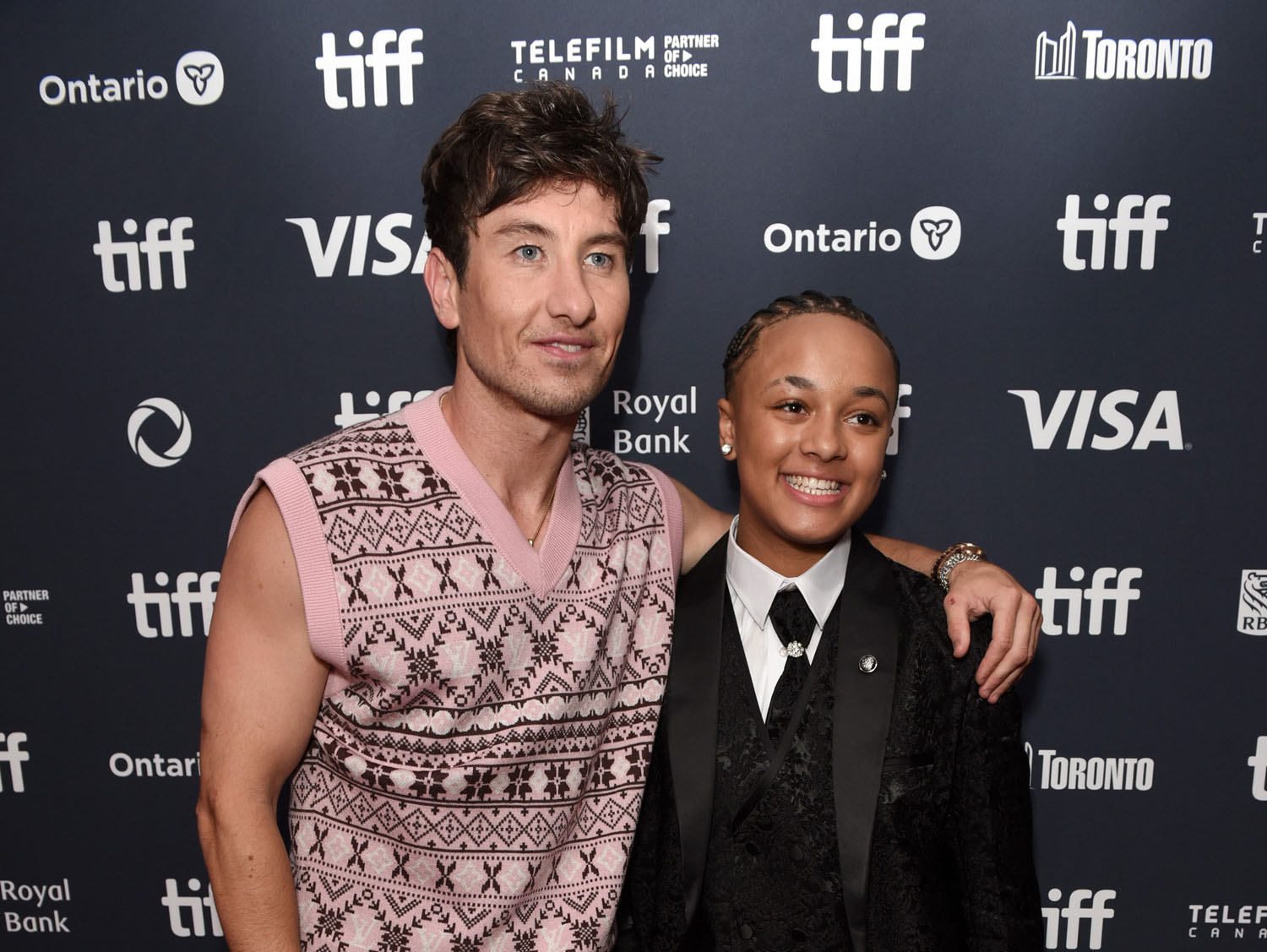
There is also Bailey (played with searing realism by Nykiya Adams), a twelve-year-old who spends her free time mostly lying in the grass, filming birds and insects and nature on her phone, which she later projects onto the wall of her bedroom made from hanging sheets in the squatter’s flat she occupies with her father, Bug (Barry Keoghan). Her dad is off-puttingly young, barely more than half the age of his fourteen-year-old son, Hunter (Jason Buda). Bug is deeply unreliable and on the brink of marrying a woman with her own kid in tow, and planning on financing their wedding by selling the hallucinogenic slime from a toad.
Across town, Bailey’s mom lives with Bailey’s three half-siblings in a state of near squalor and with a stereotypical abusive boyfriend, Skate (James Nelson-Boyce). Bailey is angry, resentful, unmoored. She shaves her hair in a fit of pique, she sics her brother and his tough friends on Skate in hopes of scaring him away from her little siblings. Into the miasma of Bailey’s tumultuous coming-of-age, though, enters Bird, a strange man played with apt strangeness by German actor Franz Rogowski. Bird is searching for his family, from whom he was separated as a young child. Bailey promises to help him, and the two embark on a quest to make their respective families, and selves, whole.
Adams is outstanding as Bailey. Andrea Arnold has always had a knack with young people on screen, and here she captures a performance that feels like the making of a new star, but also a totally organic, completely believable kid performance. Bailey is only twelve and you can feel the burdens pressing down on her; the arrival of her period is just one more f-cking thing she has to deal with. She has the sense to immediately clock Skate as a threat, yet also can’t stop herself from rushing in and trying to deal with him herself. You can see the shape of the woman she will become, but in this moment, Bailey is still very much a child, with a child’s impetuosity, and curiosity. It’s this curiosity, and the tenderest part of her that she protects fiercely, that vows to help Bird.
Rogowski is equally good, utilizing his background as a dancer to give a physical performance that suggests Bird’s reality long before it’s revealed on screen. This feels like a performance only he could give, and he is perfectly attuned to Adams’ wavelength, so that Bird, for all his oddness, feels like the only adult in the room at times with how he plays off Adams’ emotions as they rise and fall in her performance. Here, finally, is a grown-up Bailey can trust, so what if he’s weird? Barry Keoghan is also very good, though he mostly just has to play the most annoying git in the world, at least until the one pivotal scene he was clearly hired to perform. When that moment comes, he nails it. Keoghan has a way of landing on just the right line delivery to make his characters indelible.
Shot on rough-edged 16mm and in and around some truly depressing, impoverished homes, Bird steers away from poverty porn by focusing so closely on everything Bailey has, even though she is growing up in tough circumstances. She has that patch of green, for instance, to hide from the world when it’s all too much; she has the birds in the sky; she has her siblings; and as unpredictable as her dad is, there is a sense that she has Bug, too, when she really needs him. Arnold often portrays hope as an escape, but in Bird, Bailey stays, and yet Bird has one of the most hopeful conclusions in Arnold’s oeuvre. There’s also a touch of magical realism which works for me in the context of Bailey’s coming-of-age, but your mileage may vary. There is a moment that will, if you’re not on board with the subtle groundwork Arnold puts in, play as almost comical. Anchored by a trio of strong performances and a touch of whimsy, Bird is Andrea Arnold doing everything she does best.
Content warning for a scene of animal cruelty.