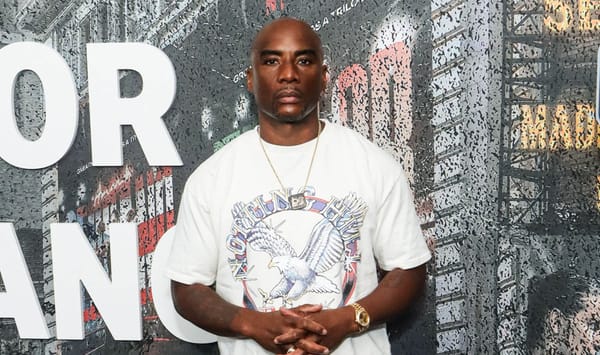

In a video circulating on social media, The Breakfast Club host Jess Hilarious is getting candid about how the show’s move to Netflix is going. If you recall, back in December it was announced that Charlamagne Tha God had snagged a $200-million five-year contract with iHeartMedia. The deal meant he would continue hosting The Breakfast Club, but also, expand his Black Effect podcast network in exchange for him and his cohosts streaming new episodes exclusively on Netflix. Exclusively being the key word.
That’s why the deal meant that the show’s daily YouTube stream, made available to the more than 6 million subscribers since 2013, would come to an end. And the Twitch channel they started in order to attract an even larger and younger audience, and subsequently, more engagement, has also become null and void. According to Jess, they’re feeling it.
“I ain’t gonna lie, since Breakfast Club been on Netflix, man, our engagement…our people…all the fans that we built up over time on YouTube, they feel neglected. Netflix was like ‘Nope, we want all of it, y’all can’t have any other social media presence,’” she said in the video.
Jess went on to explain that she would be doing segments similar to this tidbit in the future called ‘Jess’ Thoughts’ as a means of stirring up some engagement, since streaming on Netflix now meant the absence of the famed YouTube comment section for their broadcasts. Even the comment section on the show’s Instagram channel, with its 2.5 million followers, seems to be dying. It’s likely in response to the page’s shorter, pared down and less engaging clips mostly promoting guest appearances. But as per her remarks in the video, these were the orders they got from Netflix.
Despite the show carrying on as usual, with no real noticeable changes to the set or to the run of the show, there certainly is something different about it now. And while Netflix may not be stifling their creativity per se, it’s clear that other means of operations, like their social media presence, which was a huge component of the show, have been interfered with. So the question is (not only among members of the audience, who appear to be slowly becoming privy to what’s happening behind the scenes, but also from at least one show host herself) whether the move from YouTube to Netflix was the right one.
Late last fall, Netflix announced it would be bringing select Spotify shows to the platform. After that, it was revealed that a deal had also been struck with Barstool Sports and iHeartMedia. This was all part of Netflix’s efforts to ramp up their video podcast strategy with the overall goal to designate themselves as YouTube’s official competitor. The iHeart deal included 15 titles and they were all touted as “exclusive video podcast partnerships”. In other words, the audio feeds would still be available on other platforms, but video came exclusively through them.
This is certainly the case for The Breakfast Club. In all of their Instagram posts, the call to action is to visit their website. But for long-time listeners of The Breakfast Club, everyone knows that YouTube was the show’s bread and butter – and a lot of that had to do with the conversations that took place in that comment section.
While the news about the deal was initially lauded as a huge step forward in Charlamagne’s attempt to build the “BET of podcasting” through Black Effect – and is still largely perceived that way, in certain aspects at least – the reality Jess is outlining in her video paints a concerning picture of how the shift in where they stream is affecting their audience. And I don’t know that this threat exists for the other shows in the same way it does for The Breakfast Club, specifically.
That can best be explained through a list of some examples of the other shows that migrated over to Netflix. Shows like Pardon My Take, Spittin’ Chiclets, The Ryen Russillo Show, My Favorite Murder, Dear Chelsea, and New Rory & MAL. If you’re not familiar with any of those, just know that The Breakfast Club a) boasts the largest audience out of all of these by a landslide and b) is pretty much the only “urban” podcast on the list. So the size of the audience and more importantly, the demographic we’re dealing with is totally different than fans of true crime or hockey.
With that much of a difference in audience size, though, it also means that this is the show that has the most to lose. With content cycles moving as fast as they do these days, audience retention is crucial. It’s why Ebro and co moved over to YouTube almost immediately after their radio show ended. Keeping the momentum up, particularly when you have a daily show is critical.
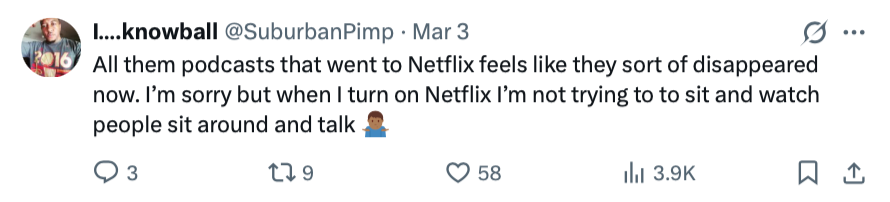
On top of that, these are all podcasts consumed primarily through podcast platforms like Spotify or Apple Podcasts. So people are already accustomed to paying for this content. But The Breakfast Club’s audience was primarily listening through free platforms like the radio and YouTube. So it’s a bit presumptive to assume that if their listeners have a Netflix subscription, they would use it to consume podcast content, which, according to the sentiment about this topic on social media does not seem to be the case.
On the topic of cost, though, we have to look at the very obvious benefit of this deal for Netflix. Because by acquiring a few dozen of these video podcasts, they’ve just landed hours and hours of evergreen talk shows that they don’t have to pay talent for. There’s no red tape around unions, collective bargaining, or salary increase demands based on the show’s success.
People on social media seem to be in agreement that the eye-popping amount of the contract, a whopping $200 million, might have compromised Charlamagne’s perception on whether this would be a good deal in the long run. And already we can see that that argument has got legs. But as with most things, it’s nuanced.
Back in December, all eyes were on New York radio as longstanding shows like Ebro in the Morning came to an end after 13 years on air, which I wrote about here. Word of Charlamagne’s iHeart deal only hit the news days later, but that means talks had likely been happening for months. At least.
It could have very well been Netflix or nothing – save for the show’s established channels. But with the success we’ve seen people amass from YouTube and Twitch channels alone, perhaps there is some thought that had the show stayed the course, and if the show’s move to Netflix proves to be unfruitful, I imagine that sentiment will only be strengthened.
If Charlamagne’s goal is in fact to build the BET of podcasting, he needs capital. And I’m just not sure that a YouTube or Twitch channel, all followers considered, could get him that kind of money. But if he’s successful in getting that built, he’s setting the stage for what could be a very interesting competition. Because the whole reason Netflix ventured into video podcasting was to compete with YouTube. And if Charlamagne reaches a certain level, he could eventually be in competition with YouTube and with Netflix. And it will be interesting to see how that looks when it unfolds – if he can get there.
Newer
Celebrity Social Media, March 4, 2026
Jennifer Aniston is very good friends with Jason Bateman and his wife Amanda Anka and she, along with her boyfriend Jim Curtis, Will Arnett and Will Speck (who directed Blades of Glory and Office Christmas Party) surprised Sean Hayes at The Unknown. Jim also posted about her birthday a fewOlder