Wayne Brady's truth

– 5 min read

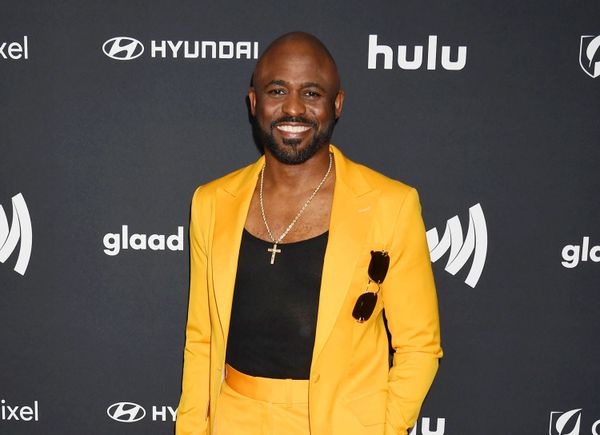
Wayne Brady is reflecting on his family’s response to him coming out as pansexual in August of last year. His reflections came during a press tour for his new Freeform show, Wayne Brady: The Family Remix. The show is centred around his non-traditional family, and you can expect to see his ex-wife Mandie Taketa on the show, as well as his daughter Maile, whom he shares with Mandie.
Wayne revealed to Us Weekly that he found his mom to be a lot more understanding of his sexual identity than the trolls and bigots he faced online – which, as a Black man coming out as pansexual, he faced a lot of.
“I think it’s hardest for a lot of people online or in life in general because everybody has a belief system,” he told Us. “If you listen to the people who are so entrenched in their beliefs, then you would think that you’re wrong. So it’s not even just my mom, she’s fine. She still loves me as me. She has her big beliefs.”
Wayne admits that his mom, who is actually his grandmother, but regarded as his mom because she’s the one who raised him, had a difficult time understanding his sexuality at first, but eventually came around to accepting it. In fact, he credits her acceptance and the acceptance from the rest of his family with making him feel comfortable enough in who he is to come out to the world.
“In any circumstance, you can only do something once you feel backed up and safe. So this has just been part of my mental health journey…I look at that as just growth. Anything that is a secret that you can then share, it’s because you’ve been doing some work.”
In addition to his family helping him to feel safe enough to share his sexuality, he credits seeking out therapy and having “honest conversations”. And despite the radical changes that have happened within him, he says his life hasn’t really changed all that much.
So much of what Wayne is touching on in his journey to coming out are elements I’ve written about in the past about what it’s like and what it means when people of colour come out to their families. But particularly Black people, and particularly Black men.
First, I wrote about singer Tevin Campbell’s coming out, which came much later on in life, despite there being speculations and rumours about his sexual identity for years. Then, I wrote about Southern Charm star Mikel Simmons coming out to his dad, and how the family’s very religious background informed the experience for both him and his father. And I’d even say that there are elements of Jerrod Carmichael’s story, which I wrote about here, in Wayne’s experience too, because both men have gone the route of making shows to convey their real life experiences about being non-heterosexual Black men navigating life in America.
Like Tevin, it took Wayne decades to muster up the courage to speak and live his truth. He ran the risk of losing his career by being upfront about his sexuality, which may sound like an extreme consequence, but when you consider the fact that in the last few years, Sam Smith, a white musician, admitted they lost fans over homophobia and transphobia, imagine the consequences that existed for an openly gay Black R&B artist in the 90s.
That’s assuming Tevin knew he was gay. A lot of people don’t because they simply don’t have the freedom, comfort, or acceptance to even explore, let alone accept, that as part of their reality. I think that’s why Wayne attributing so much of his comfort in coming out to his family’s acceptance hits home.
By that same token, though, it’s also why his subtle and indirect mention of religion, by way of referring to it as a ‘belief system’ is noteworthy. It’s worth bearing in mind that Wayne, much like Mikel, hails from the deep south – Columbus, Georgia to be specific. This is a city with rich, Black roots, where almost 80% of the population identifies as Christian. It’s home to several historically significant Black churches. And like coming out did for Mikel, it meant speaking his truth to people whose belief systems were in direct opposition to his sexuality.
“If somebody says, ‘Oh, I identify as queer,’ their belief system is challenged so greatly that they can’t ease up on it, because if they do that, it challenges who they are as a person,” Wayne told the outlet. “So my bigger issue was with them, not necessarily with anybody in my life.”
I completely understand what he’s saying, and how he’s differentiating his mom’s ability to still have her beliefs, while accepting Wayne for who he is, compared to people who would flat out reject him as a person simply because his sexual identity contradicts their religious teachings and beliefs. As I’ve mentioned in previous articles, religion and so much of the Black community are inherently connected, and that has a lot to do with why Black, non-heterosexual men face so much opposition in living openly, often from their own community and family.
It's one of the reasons why both Wayne and Jerrod’s solution, perhaps not necessarily to the issue of the lack of acceptance, but maybe just as a way of coping with it, was to launch a show to better inform people of how little their sexual identity changes them as a person, which Wayne makes clear throughout his interview.
“The biggest change has been within me,” he said during the interview. “No one threw me a parade, which they shouldn’t. Life is good.”
Currently, I’m listening to a podcast called This Is Actually Happening. Recently, there was a six-episode long feature called The 82%: Modern Stories of Love and Family. It chronicles six stories of men and women whose family life and views on family life are anything but ordinary, and deal with polyamory, celibacy, asexuality, and being a seahorse parent. When the series was first introduced, I didn’t expect I’d hear a Black voice on the podcast. But I did. And he told a remarkable story.
In the third episode, a Black man who grew up during the crack epidemic and spent his childhood around gangs, drugs and violence, repeating cycles of infidelity he had seen growing up, finally started questioning what he was doing wrong. He realized that his mistake was trying to live within society’s parameters of normality – which meant a monogamous, heterosexual relationship, despite that not being what he wanted for himself. After gaining the confidence to comfortably explore his sexuality, he realized that his truth was having an open marriage and experimenting with different people.
I love that Wayne, his family and even his ex-wife have given him a soft enough place to land that he, in his 50s, was finally able to speak his truth and take up space the way that he has in the last year. Ironically, the space he’s taken up in the last year probably amounts to a lot more than the space he took up in the years prior to being open, despite all that time he spent in front of the camera and on stage.
I can’t tell you how important it is for all of us to get the reminder that what works for some won’t work for others, particularly when what is working is based on belief systems we inherited through our family or our immediate environment, or societal norms we haven’t spent enough time challenging. It’s imperative that we all feel safe enough to step outside the confines of the lives we’re born into and find what works for us. But it’s especially imperative for Black men to feel that safety. Because as they have all shown us through their respective journeys, from Tevin to Mikel to Lil Nas X to Wayne, there are immense challenges in doing that, and sometimes it takes failed marriages, therapy, incredibly difficult conversations and most importantly, time, to feel safe enough to live their truth.