Bravo’s small town bet

– 6 min read
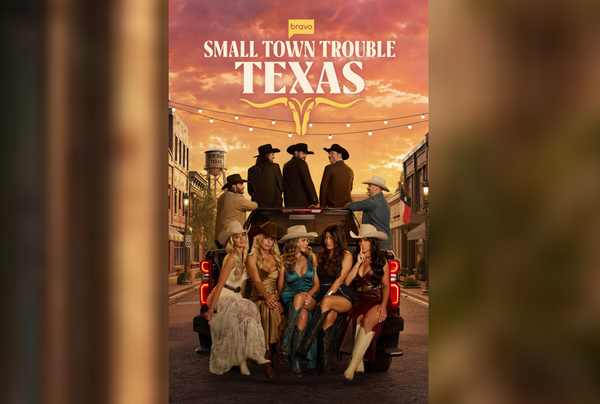
We’re a day away from the premiere of Small Town Trouble: Texas on Bravo, and leading up to its debut, social media users have had a lot to say about the show’s concept and cast. Since the new series was announced, with the trailer dropping in late October, people have been speaking out against the network for its decision to platform a conservative social circle, which includes former disgraced reality TV stars with a very clear history of being racist.
Essentially, the show follows a ‘charming, yet unconventional’ circle of conservative friends against the backdrop of a small Texas town called Boerne. Cameras are rolling as they navigate the same things most of these shows do: incestuous social circles, unstable friendships, and drama.
So why the upset over something so run of the mill? Well, a lot of it stems from the fact that in the wake of Bravo cancelling, shelving, or at least putting on pause shows like Family Karma, Kandi and the Gang, Summer House: Martha’s Vineyard, Real Housewives of Miami and Real Housewives of Dubai, all of which center mostly racialized casts, the network somehow found the money for this show, which features a mostly white cast.
Scattered throughout the show are women with evangelical backgrounds, plus Aaryn Williams, a former Big Brother housemate who, during her time on the show, said some of the most unimaginably racist things. Show host Julie Chen ultimately confronted her in a post-exit interview and you can see the interview and hear more about the atrocities she uttered for yourself here. This is what led to people like Taylor Hale, another former Big Brother housemate posting videos like this to social media, where she says:
“Hey, so, I actually think it’s really weird to focus on rehabbing racist people instead of focusing on the people they actually caused harm to. But it’s not like I would know anything about that.”
Taylor does in fact know a lot about this. She won season 24 of Big Brother, but only after enduring horrible and racist treatment by other house guests, including Paloma Aguilar and Daniel Durston. The two referred to her as ‘aggressive’ and implied she would have a temper tantrum if she didn’t get her way. At one point, Daniel worried about how it would come across that he had “two Black people on the block” at the end of his week. What Taylor was subjected to was so bad that the show’s casting producer, former house guests, and social media all demanded change following her season.
I watched the almost three-minute-long trailer for Small Town Trouble and one of the first things I noticed was the amount of similarities between this show and Secret Lives of Mormon Wives, which just premiered its O.C. spinoff, by the way. First, it's set in a town that doesn’t really scream that it would be an ideal setting for a reality TV show. It’s not a big city by any means. Second, you’ve got some pretty steep traditional belief systems in place. The Bible and sins came up an awful lot – which seems contradictory to the alcohol-guzzling, half-naked women in montages where some of the cast admit that they step out on their husbands to sleep with other women, something the husbands know about and say they are okay with. But also, most of these women are married or at least in long-term relationships and are mothers. So in a lot of ways, all of it is very reminiscent of Secret Lives of Mormon Wives in that it explores the underbelly of marriage and motherhood in a conservative community.
But according to people from Boerne, many of whom flooded the comment section of the show’s trailer on YouTube, they say they don’t know a single person in the town that is actually like this. So if I had to hazard a guess, the reason the network thought this would be the best investment for whatever is left of their alleged shortage of funds is because they saw the success of Secret Lives of Mormon Wives, and knew they had to try to find their own version to compete with it. And something tells me they’re trying to go all the way, because the fact that they’ve formatted the name as something that could lend itself to multiple cities is an indication that they’re really trying to tap into small towns across America and have that be the next big thing for reality TV.
It's not to say there isn’t an appetite for conservative women on TV. Some of the most iconic housewives are, in fact, Republicans. Women like Ramona Singer, Shannon Beador, and Vicki Gunvalson have all been known to express their support. Andy has addressed this several times over the years, often prompted by questions of why they are included in casting. Back in August, during a Q&A on Threads, he had this to say to a user who said recent casting decisions have made the Real Housewives of Orange County hard to watch.
“If we didn’t showcase people with different POVs there would be no show.”
In part, he’s right. Polarization often makes for good TV. And despite Andy’s claim that Real Housewives is not about politics, it’s definitely become a subplot over the years, particularly in franchises like New York, Orange County, and Beverly Hills. In fact, politics is what led to the dismissal of Kelly Dodd back in 2021 over remarks she made about COVID-19 and her mockery of the Black Lives Matter movement. Annemarie Wiley, who appeared on Real Housewives of Beverly Hills for a short stint, said she was iced out of conversations over her conservative beliefs, which included her support for restricting trans athletes from women’s sports. And of course, former Real Housewives of New Jersey cast member Siggy Flicker revealed on SiriusXM that most of the cast members secretly lean right but pretend not to in order to protect their jobs. Needless to say, it didn’t come as a shock when we never saw her on the network again.
But there are a few problems with Bravo placing its bets on small town TV. The first is that it's in complete contradiction to the very backs they built the network upon in the first place, which is mostly members or allies of the LGBTQ+ community and Black women. The second issue is that according to the results of the latest US election, the audience doesn’t even actually align with the beliefs they’re platforming with this new strategy. This suggests the blue wave is rolling out faster than media companies can respond to with the actual state of thought in the U.S.
This most recent election brought with it unprecedented results. We saw former Atlanta Mayor Keisha Lance Bottoms become the first Black woman elected governor of a U.S. state. Over in New Mexico, Deb Haaland, the former Interior Secretary, a member of Laguna Pueblo and a Democrat, became the first Indigenous woman elected governor, after already making history as the first Indigenous person to lead a federal Cabinet department. Abdul El-Sayed became the first Muslim person to be elected to the chamber and Democrat Scott Colom defeated incumbent Cindy Hyde-Smith, becoming the Mississippi’s first Black U.S. senator-elect since Reconstruction. Even in Texas, Democrats took the House for the first time in over 20 years.
Sure, politics has become a subplot of reality TV culture. But does what we’re seeing with this latest show announcement constitute as the commodification of polarizing politics in hopes that it could generate more views? More engagement? And if so, what are the inherent risks that come with that? And I would pose the same question I did last week in my piece about the sheer amount of relationship breakdowns in the reality TV space – is it ethical?
To me, what a lot of this signals is that media companies are responding to a reality that might not exist on the scale they think it does or did two years ago. And having worked in TV, I totally understand that it absolutely can take that long to get cameras rolling. From the conceptualization of the show to scouting casts and locations and contracts, it can easily take well over a year to get the ball rolling on something. But the lesson the network could be learning here is that if the goal is to keep up with Americans, they’re going to have to move faster and keep a better finger on the pulse of the changing tide across the country.