Giggly Squad laughs their way to the bank

– 5 min read
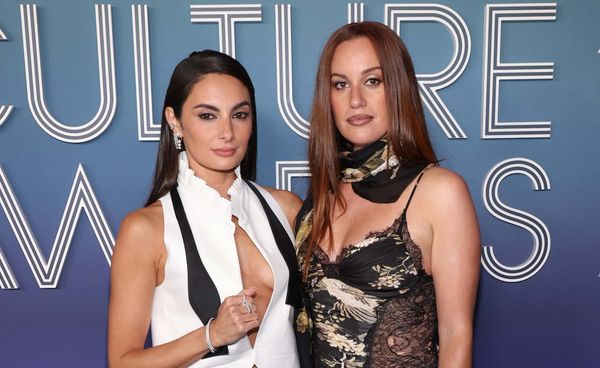
Former Summer House castmates Hannah Berner and Paige DeSorbo have just landed a major multi-year deal with SiriusXM for their podcast, Giggly Squad. The four-year deal, estimated to be worth $160 million, was reached after what’s being called a ‘competitive bidding process’ in headlines covering the story. The deal, which officially starts this Wednesday and sees the women move from Acast to SiriusXM, means SiriusXM gets exclusive global sales for both the audio and video episodes of the show. Also in the forecast is new and exclusive programming from the podcast, but details surrounding this aren’t expected until next year.
To contextualize just how big of a deal this is, you might recall the news of Alex Cooper’s Call Her Daddy landing at SiriusXM in a $125 million deal, and the SmartLess podcast moving over to Sirius in a $100 million deal. So how did two former reality TV stars manage to secure one of the biggest podcast deals in recent history? Bigger than longtime podcasters and A-listers, and second only to a heavy hitter like Joe Rogan? Well, it started as a total accident.
During the pandemic, Hannah and Paige started hosting Instagram lives where they would appear on camera nightly and just…yap. And of course, giggle. It became a highly-anticipated thing for people who had taken a liking to them during their time on Summer House, who were now trapped inside their homes due to COVID restrictions.
When the world opened back up again and the nightly lives ended, the pair, largely at the request of fans, converted their nightly yap sessions into a bi-weekly podcast. Since then, they’ve seen huge success. Hannah and Paige have gone on to do live tours across North America, reached the top 10 in the comedy podcast category, published a New York Times bestselling book and this year, they were named the podcast of the year at the iHeartPodcast Awards.
With all this success under their belts in just the last few years, you’d expect them to have had something a bit more celebratory to say about the recent deal other than their joint statement, which read:
“We’re so excited for this next chapter with SiriusXM. Giggly Squad has grown beyond anything we could have imagined and getting to experience that growth with the Gigglers has made it even more special. We can’t wait for what’s next and to keep giggling together.”
But anyone who followed these two through the throes of the Summer House scandal, which I wrote about here, or through Paige’s highly publicized breakup with Southern Charm’s Craig Conover, knows that they’re not strangers to discerning what gets discussed on and off the pod. So many people questioned how they could go on to record podcast episodes without barely a mention of either scenario. But they stay very true to their name.
As a longtime reality TV watcher who has seen the success of dozens of businesses headed by the stars of shows throughout not just the Bravo network, but several others, think MTV and E!, there’s a huge part of me that wonders just how much Hannah and Paige’s time on reality TV helped kickstart the success they’ve seen with their podcast, and whether it makes a difference in the end. But one thing that has made a noticeable difference in the reality TV landscape is what it means when the pool of eligible reality TV candidates become more invested in platforming their businesses through the visibility that comes with appearing on reality TV than they do in making good TV.
This has become one of the major criticisms in the reality TV landscape in recent years – just how much the ever-visible attempt to clout chase has overshadowed the genuine desire of cast members to just show up organically. This is what made some of the earlier seasons of shows so iconic. The first few seasons of any franchise of Real Housewives, Vanderpump Rules, Southern Charm and other series soared to popularity because of just how unhinged everyone was. Now, it’s believed that the main reason people appear on these shows is to help catapult their businesses to more capital, but that comes with inherent implications for the show – read: less outbursts, the fear of being cancelled and exponentially more censorship.
If this is the case, what makes earlier examples of this immune to criticism? Bethenny Frankel famously launched her hugely successful brand, Skinnygirl, during her second season on Real Housewives of New York. I recall watching episodes of her in grocery stores offering free samples to shoppers. And I think that’s one example of what makes this generation of reality TV stars different – they’re willing to hustle, but not in a grocery-store-offering type of way.
But perhaps because they don’t have to. They can do all their hustling digitally, now. Prior to social media, you had to be in a grocery store offering free samples. There wasn’t an entire digital audience you could capitalize, the way Hannah and Paige did during the early days of their Instagram lives. In fact, had it not been for them capitalizing on in-home audiences, the chance of them acquiring the audience they did during the pandemic was super unlikely. And as much visibility as any given show could bring someone in the late 2000s and early 2010s, reality TV was still in its early days, the audience wasn’t nearly the size it is now, and you weren’t able to catch the in-betweeners – the people who don’t necessarily tune in to every single episode, but have a level of familiarity with reality TV stars or perhaps just follow them on socials.
So much of that ‘hustle’ now is validated through the size of one’s following on Instagram or TikTok. This is what helps people land brand deals, it’s what makes someone a viable choice to help market any given product, or, to take it a step further, to become the face of a brand.
Look at Alix Earle’s recent Reale Actives product launch in March of this year. It was documented through her show, Earle Meets World on Netflix, which by the way, she landed due to the size of her following and her years building an audience as an influencer. These businesses are different in the sense that people are not necessarily at home doing their own product creation and testing. Instead, they’ve amassed enough capital that they can hire people to do all of the formulation for them, they sign off on the final product and use their status and following to market the product. And hers was so successful that the site damn well crashed.
As with anything, context is key. When I decided to launch a podcast in 2024 with my best friend, I had stars in my eyes and imagined we would be the next Hannah and Paige. But between studio expenses, scheduling and the production of it all, it’s easy to get discouraged. Money and visibility is the antidote to all of this, of course, and had we had access to even a portion of what the Bethenny’s, the Hannah and Paige’s and the Alix’s of the world, I’m sure we could’ve made it. But could we have been what Hannah and Paige are? Probably not.
This goes back to my question of whether it makes a difference in the end. Do we respect people any less whose businesses got a boost due to their popularity through social media or reality TV? For some, yes. But for me, it can still be pretty tireless work and I have a lot of admiration in the levels of success people are able to reach, regardless of how much of a head start they got. And when the name of your podcast was inspired by an insult being hurled at you by a man for the fact that you were laughing at the dinner table, I think it makes the landing of a deal this massive just that much sweeter.