Diddy’s reckoning

– 6 min read

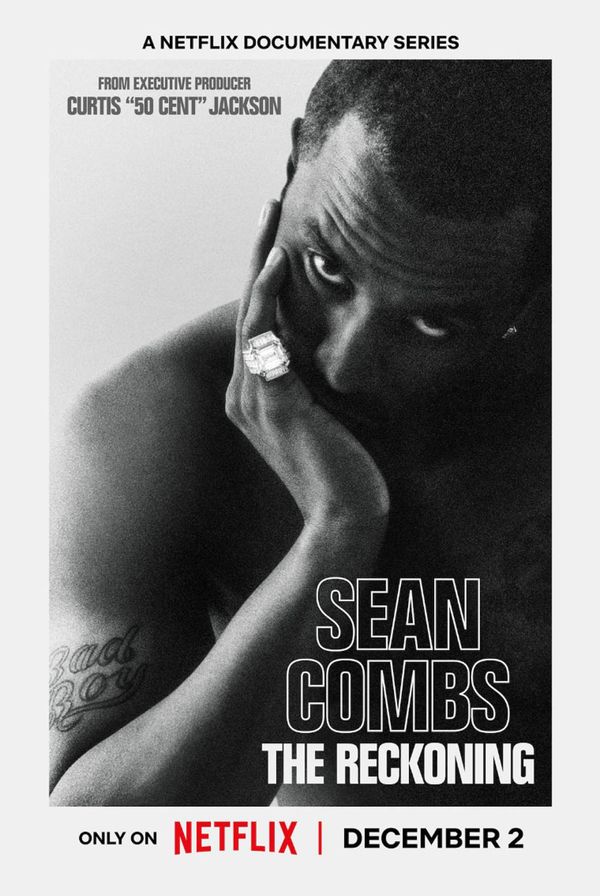
Almost immediately after a new three-part Netflix documentary was released came the cease and desist from the man at the centre of it all. Sean Combs: The Reckoning became available for streaming on Tuesday, and Diddy and his team wasted no time slamming the production.
Reps for Diddy say the documentary is a ‘shameful hit piece’ which used ‘stolen footage’, adding that it was ‘fundamentally unfair and illegal’ to use some of the material, which Netflix rightfully characterized as ‘explosive’, that appeared in the series. In response to these claims, Netflix asserted that the footage was obtained legally, with director Alexandria Stapleton saying plainly:
"It came to us, we obtained the footage legally and have the necessary rights. We moved heaven and earth to keep the filmmaker's identity confidential."
Besides the ‘stolen footage’ claim, his team has a major beef with the man credited as the executive producer – Curtis Jackson, aka 50 Cent, a long-time foe and very vocal critic of Diddy.
"For Netflix to give his life story to someone who has publicly attacked him for decades feels like an unnecessary and deeply personal affront. At minimum, he expected fairness from people he respected," a statement from Diddy’s spokesperson read.
The crux of Diddy’s team’s response to the documentary appears to be that this footage was not authorized for release and instead, was originally intended for a documentary Diddy intended to make himself. And it’s pretty damning. The series features phone calls from Diddy to his lawyer, Marc Agnifilo, talking about wanting to ‘fight’ for his life and pressuring him to implement a better media strategy that would include “somebody that has dealt in the dirtiest of dirtiest of dirty business of the media and propaganda."
But Netflix also refutes that claim, saying:
"The project has no ties to any past conversations between Sean Combs and Netflix. The footage of Combs leading up to his indictment and arrest were legally obtained. This is not a hit piece or an act of retribution,” adding that though 50 Cent was involved as executive producer, he didn’t have creative control over the project and that the subjects of interviews were not paid participants.
Despite not having creative control over the project, 50 Cent, an ever-polarizing character known for homophobic jabs in his commentary on Diddy’s crimes and next-level social media trolling, is being lauded and credited for the depth of the storytelling we saw in this series. While it’s clear that most people thought this would be a ‘big troll fest’ as this social media user puts it, it instead ended up being one of the most thorough and honest retellings of hip-hop history and a deep exploration into the atrocities that took place in order for Diddy to climb the ranks and acquire the power he did. Without 50’s involvement, we may not have heard from a lot of the key figures that appeared in the series.
For instance, we heard from people who, up until this point, had either rarely spoken out about their experience knowing Diddy, or hadn’t done so at all. People like Kirk Burrowes, who co-founded Bad Boy Entertainment until being axed and essentially erased from memory by Diddy. He kept handwritten notes on the financial operations of the company which were on display throughout the series. People like William Lesane, Tupac’s cousin, who shared further context into Diddy’s obsessive jealousy. We also heard from a former LAPD detective, a former sex worker who spent eight years with Cassie and Diddy, jurors from the case, ex-cast members of Making the Band and of course, Al. B Sure, the ex-husband of Kim Porter, whose death has always had an air of suspicion around it, even more so now.
We also got to witness footage that Diddy ensured was kept buried, like the Keffe D confession tapes where he admits to killing Tupac on Diddy’s (alleged) orders. Seeing fans connect the dots between album names like Life After Death following Tupac’s murder and song lyrics over the years tells me that something is finally starting to click.
The initial refusal of so many to believe the stories we’ve heard over the years, the footage we’ve seen, the phone calls we’ve been privy to, has always been of particular interest to me. Especially because it appears to be cyclical – we saw it with Bill Cosby, we saw it with R. Kelly, we still see an undying allegiance to Chris Brown despite repeated instances of physical violence. And even in the wake of this documentary, some people are still adamant about maintaining their loyalty to Diddy. But based solely off of the response I’ve seen on social media, this is the most change I’ve seen in the tides since his crimes (some still alleged) started gaining notoriety.
I think that has to do with the fact that the scope of this documentary goes beyond just the female victims who people made up every reason not to believe. But with this production driving home just how untrustworthy Diddy was, specifically as it pertained to money, business dealings and stealing the girlfriends of the people in his circle, it supports what women have been saying all along. There is something for a particular segment of the audience about hearing his childhood friends and ex-business partners from decades ago all sharing similar sentiments about this person that was needed to really drive it all home.
While I wish the testimonies of the many women and victims that have been sounding the alarm over this man for decades had been enough to flick the switch in the minds of people who, up until recently, believed he is innocent, or perhaps still do, I think 50 knew the importance of including certain narratives in this particular rendition of the story. He knew the importance of going beyond the testimonies of women and went to the people who saw Diddy go from a hungry promoter in New York to a conceited mogul who would stop at nothing to amass as much wealth and power possible. People who ran through the concrete jungle alongside him. And because he’s a native New Yorker that grew up in the hood, he knew how to meet them where they were at and how to get them on board to share their story, something a team of prestigious, Emmy-award winning documentarians might not have been able to do on their own.
Whether by design or not, 50’s involvement allowed the bridging of real hip hop history and storytelling and expert direction and production to meet. So there appears to have been a much deeper strategy in place to his involvement in this project than simply onboarding an enemy of Diddy onto the production team for shock value. He added a much-needed dynamic to the series from his role behind the camera. A dynamic that, without it, may not have filled the gaps that existed in the minds of many people, gaps that kept them from being able to see just how sinister of a person we’re dealing with here.
There’s a scene six days before his arrest, where Diddy goes to Harlem. Roger Bonds, a former security guard of his, speaks about it, saying:
“When I first got with Sean, I liked him as a person because I didn’t know him. But everything that I believed you were, you weren’t. And that came from me seeing what mattered the most to him and the way that you treat other people. I began to see him use the culture that he came from, only when he needed it. Now you’re walking around Harlem because you know that the world turned their back on you? So now you’re gonna come back home hoping that Harlem got your back.”
In a way, what Roger is saying explains the allegiance so many people have maintained to this day. The people in Harlem who welcomed Diddy back with open arms despite his legal troubles, I think they see so much of themselves in him because of their shared roots. He’s a hometown hero – and there’s a strong desire to support our hometown heroes, our idols, because sometimes it feels like we really don’t have that many, especially who have amassed the wealth, the power and the fame that people like Bill Cosby, R. Kelly and Diddy did.
Distrust in the legal system and in women’s intentions in their dealings with wealthy and powerful men has made it so easy for the allegations that all of these men faced to be chalked up to society’s attempts to ‘tear down a Black man’. Sometimes it feels like no evidence in the world seems to be enough for some to accept the truth. But when you have someone like 50, who is also considered an idol by many, urging you to look in a specific direction, to look at history and to look at the patterns, not necessarily ones being pointed out by white ‘pop culture experts’ or psychologists looking to intellectualize and explain Diddy’s development, but by those same concrete jungle runners, it becomes harder to ignore.
In an interview with Good Morning America ahead of the release of the series, 50 spoke about the importance of his involvement in the telling of this story, saying:
"If I didn't say anything, you would interpret it as that hip-hop is fine with his behaviours. There's no one else being vocal."
And he’s right. While 50 certainly isn’t the person we expected to help echo the voices of victims, if not him, then who? Because in the same way that people have had an issue turning their backs on those whom they see themselves in, truth becomes easier to accept when it’s being told to them by someone who is also one of their own.