Vogue’s “cloud bob” afro erasure

– 4 min read
Vogue found itself in hot water after recently publishing an article about hair, resulting in some swift backlash. The title of the piece, 16 Flattering Haircuts for Thick Hair, No Matter Your Texture or Length, sounded promising. But as we’ve seen time and time again with mainstream media outlets and the ever-nuanced topic and discussion of hair, the article featured some information that missed the mark, and that’s putting it lightly.
Most of the article was fine. It covered different hairstyles, textures and celebrities and I was actually quite impressed with the range of people and styles being showcased. The piece referenced Farrah Fawcett and her signature 70s hair, as well as Ciara, who, despite having many hairstyles over the years, was featured with marquise bangs. Even Teyana Taylor’s signature pixie was featured.
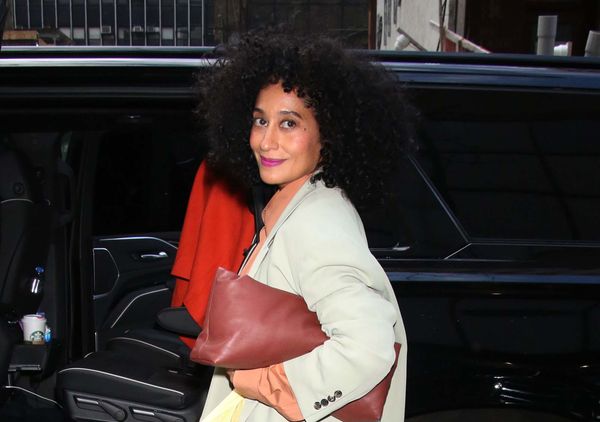
It was the characterization, or mischaracterization, of a traditional afro rocked by none other than Tracee Ellis Ross as a ‘cloud bob’ that was controversial. A cloud bob? What even is that? Given the definition outlined in the article, how is that any different from an afro?
According to Tom Smith, the hairstylist who coined the term, as quoted in the article, a cloud bob is a ‘rounded haircut with a soft, airy silhouette’. “Unlike the sharp, architectural bobs of seasons past, this version is light, weightless and characterized by its effortless lift and movement,” he was also quoted as saying.
I’m not sure what else Mr. Smith had to say about his ‘reimagination’ of the afro, and that’s mostly because this entire portion of the article has been removed following the backlash, adding yet another layer to the issue at hand. Because not only are we dealing with a very deliberate and exclusionary mischaracterization of a traditionally Black and African hairstyle, we’re also dealing with a lack of acknowledgement and discussion about why this was so offensive to so many.
The reactions ranged from comical to solemn. While some joked that Anna Wintour’s signature bob was more in line with the description of a cloud bob than Tracee’s, others expressed fear that the afro would be rebranded as some sort of Gen Z invention. But many pointed out the deep history of the afro along with its symbolism in Black culture, calling the renaming of it a form of colonization and gentrification.
As it turns out, Vogue has been calling it a cloud bob for some time now – since at least September 2025. Social media users shared the link to a 2025 article about how to style the cloud bob. In fact, the author of that piece, Hannah Coates, had to issue a statement condemning all of the ‘abusive messages’ she was receiving as a result of last week’s article being published, despite not having written it. Based on her description of the issue, she introduced Tom Smith’s ‘cloud bob’ terminology in 2025, which was recycled as a part of this year’s piece. She says it was ‘taken out of context’ for the more recent article.
Why couldn’t Vogue just come out and say that, then? Especially considering that their decision to go with what appeared to be the path of least resistance actually came with a lot of resistance, with people calling the article and outlet out for the initial mischaracterization as well as the removal of the section. Why not face the issue head on?
Back in 2015, Allure also found itself in a similar situation after publishing an article entitled You (Yes, You) Can Have an Afro, Even If You Have Straight Hair and using white actress Marissa Neitling of all people as the featured model. This prompted backlash that lasted for at least two years, with EBONY publishing this piece in 2017 that perfectly encapsulates the problematic nature of the initial article. Once again, the original Allure article is nowhere to be found online.
To Allure’s credit, even though it appears they pulled the piece, they at least addressed the issue at the time, telling BuzzFeed:
“The Afro has a rich cultural and aesthetic history. In this story, we show women using different hairstyles as an individual expression of style. Using beauty and hair as a form of self-expression is a mirror of what’s happening in our country today. The creativity is limitless—and pretty wonderful.”
The thing is, for Black people, hair has always been more than just hair. It’s been a source of self-expression, resistance and identity. The role of the afro in the 60s and 70s as a political statement cannot be overstated. And the afro, especially, is perhaps one of the most symbolic Black hairstyles throughout history, similar to dreadlocks and cornrows. So it’s far beyond a simple renaming or relabelling – it is erasure.
There were many different alternatives to handle this situation. Vogue could have issued a correction, an editor’s note, a social media post addressing the outrage, which would have offered visibility to those that felt erased. It could have opened the door to an entirely new piece about the history, significance and evolution of the afro, or all the other Black hairstyles that have been so much more than just an aesthetic. And I suppose this still is a possibility, but based on their non-existent response to this issue, I’m not holding my breath.
I cannot begin to describe the irony of a magazine, arguably one of the largest in the world at that, using the method of erasure to tackle an issue that is largely about erasure. We read it, we saw it, it’s being discussed online. We’re not asking you to erase the remarks, we’re asking that you reflect on them a little, we’re asking that you dig a little deeper.
And I think that is the key issue here. Black culture and identity are so often discussed, imitated, duplicated and replicated without depth. Without proper care and consideration for its origins. Everything from hairstyles to dialect, slang and fashion. There has been meaning in so much of our identity because of our rich and unique history. Yet these things remain up for grabs, up for renaming, up for debate and up for erasure.