Las Brujas: Narrative and Power in Agatha All Along

– 5 min read

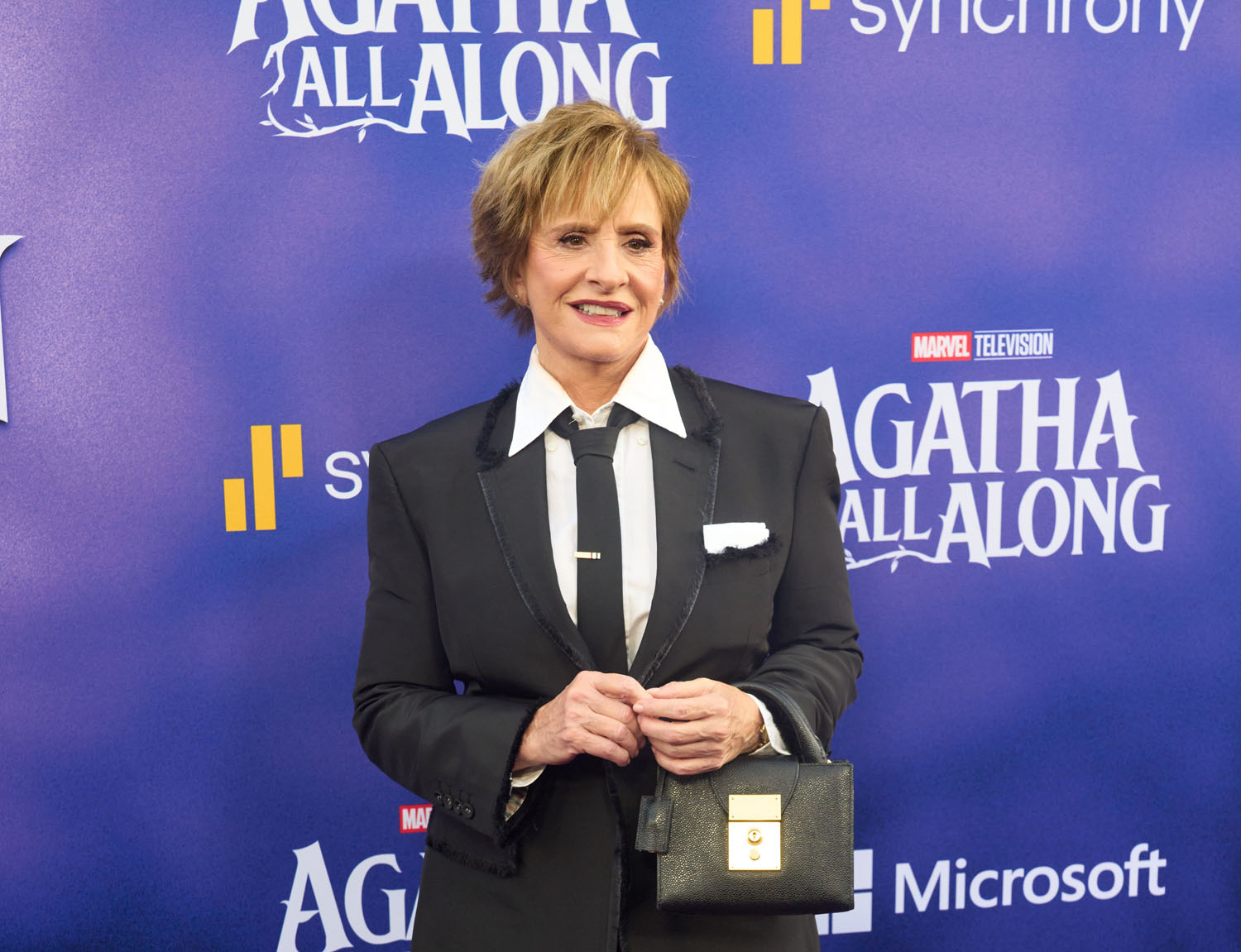
With WandaVision, I understood its protagonist quickly and deeply. The show came out at a time when I was struggling with narratives—not only could I not make them, I was struggling to focus on them, make sense of them, understand them. This might not seem like a big deal, but when you teach reading and writing for a job, and you’ve been telling stories in your head for as long as you’ve had thoughts—it’s kind of a problem. And what was odd for me was that the types of narratives or stories that used to give me comfort–a familiar sitcom or dramedy, a favorite album, or a cozy or intriguing book–none of them could hold my attention. I’d have to rewind, start over, or I’d just give up on reading, watching or listening to the text altogether. The lockdown, the pandemic, and the literal and figurative deaths became too much.
I understood Wanda because I saw myself in her. I know what it means to use sitcoms and other comfort TV to cope with loss. Pop culture has both fed my desire for tidy arcs and helped me avoid facing my own messy narrative.
I’ve been thinking about this a lot lately, about the pop culture connections in my life, especially as I struggle with narrative again; this time, with my own. I am working on an autobiographical project that actually has a deadline, that I’ve been writing in my head for years, but that I never thought I’d have the chance (or the guts) to write. A lot of the ideas about it connect to the pop culture I’ve loved or that I’ve not been able to avoid. This month, the self-doubt kicked into high gear and I’ve been wondering if I can actually do it, wondering if I really have a story worth telling, and if I can make it any good. Worried that so far I have these writing scraps that I cannot sew (back) together. Worried that I do not remember enough of my past or that I cannot find the structure to tell it. Worried that I’ve literally lost the plot (of my life).
So imagine my surprise (and my husband’s and my kids’!) when Jim Croce’s “Time in a Bottle” starts to play in the closing credits of episode seven of Agatha All Along and without warning, I BURST into tears. I can feel three people’s eyes on me, I’m sure I heard at least one gasp, I feel my husband’s hand on my shoulder, and hear my first-born ask, “Are you OK, mom?” And I try to find the words, the words that will explain why I am crying at the dinner table…that I am OK, that this is the most OK I’ve been in weeks.
Because the narrative is finally making sense and who/what has gotten me here are Maggie Smith (the poet), Stephen King, and the seventh episode of Agatha All Along. Last week, I was re-reading Smith’s You Could Make This Place Beautiful, finally started King’s On Writing, and got back on track writing my Morning Pages, which have all helped me understand that my narrative’s process and even structure, does not have to be linear. That the scraps in English and Spanish I’ve written in the last couple of months, and that the morning writing dumps (however inconsistent they’ve been lately) will soon be ready to come together. I just never thought it would be a fictional witch in the body of future Emmy-winner PATTI LUPONE that would make my process click. Now “the gaps are filling in.”
The genius of episode seven is its nonlinear structure because it's meant to mimic the “mental walkabouts” or “gaps” Lilia experienced ever since she was a young girl. Living life out of sequence is unsettling to her, and due to the pain it brings her, she suppresses her ability for centuries. But this power cannot be denied or forgotten. And it takes the Witches’ Road for Lilia to remember who she is and what she is meant to be.
It was so neat to see Lupone, IDGAF personified, begin the series and even this episode, timid and confused only to become a confident badass in the episode’s climax when she figures out she is the traveler, and she needs to read her own fortune. She becomes powerful when she stops wanting to control what is happening and allows herself to see what is happening. And that power is unlocked when she opens herself to collaborate, to be in community, to harmonize with the fellow witches in her coven.
When the episode ended, I saw my multiple notebooks, google docs, the stacks of books in my dining room, my nightstand, the coffee table, my abandoned home office…fall into place like those tarot cards in Lilia’s trial. My youngest asked what it meant when Lilia said she lived her life with gaps and the rest of us began to explain how once she allowed herself to see, and to be who she is meant to be, she can hold these moments in her life and make sense of them even if they are not in sequence. I begin to say, “When she stops being afraid to use her power–” and my voice breaks, and I worry I’ll break into sobs again. Because it’s me. Because I understand why Lilia tells her teacher it’s seemingly better (and easier) to be alone and a fraud than to find her community and be who she is really meant to be.
In my house we joke a lot about my bruja powers, about what I am able to summon into my life, big and small, when I really put my mind to it. Earlier this year, I was invited to stay with a friend in Oaxaca, one of my dream destinations, but I could not go because it coincided with a family reunion. I’ve always wanted to go to Oaxaca, so I swear I manifested that I’d get presented with another opportunity…and it came the very next day. I was in Oaxaca last month for a week, and it was f-cking magickal (yeah! With a K!). My husband is such a believer in these powers that a few months ago when he was about to check if he was one of the winners of a charity raffle, he asked me without context, “Do you feel lucky?” and when I gave him an honest “No” he became convinced that my answer was why his name was not on the winners’ list.
I don’t use my “powers” often. The day before I watched Lilia’s trial on Agatha, after a lot of false starts, I began to write a piece about the father I’ve never met, a father whose name is so comically long and fancy, it reminds me of those rich male leads of Mexican telenovelas of the 80s and 90s. I jokingly vowed to not type out his name on the page, even though I’ve said it many times, because I was worried I’d conjure him up. And I don’t want to do that. I want to use my powers for good.
One of my uncles used to call my mom and her sisters “brujas.” When I was born, I became a “brujilla” in his eyes. As a kid, I knew he called us that as an insult, even when he said it between laughs. I understood that even if it was light teasing, a witch is not what I should ever want to be. But wiping my tears at my dining table, I was writing my story in my head, and it was making sense. With the Jim Croce ballad still playing in the background, I heard myself say to my family, “I guess I am a bruja.”
Like Lilia, I really like being a witch.
https://x.com/aIyceauroraz/status/1849592784870899885