Keke muses on power, money, and love

– 8 min read

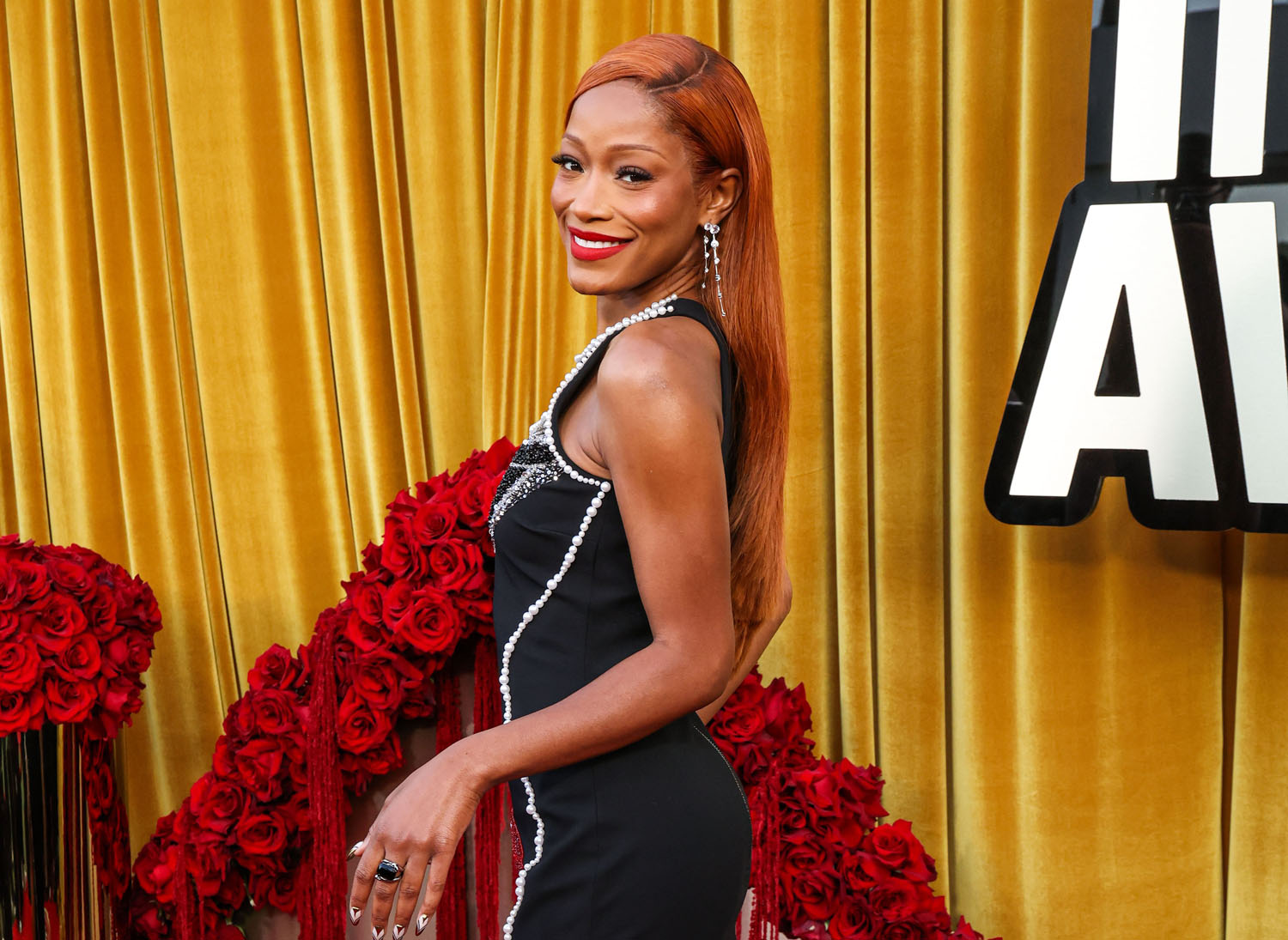
Keke Palmer recently drew attention to a double standard that exists for women with wealth and power, which doesn’t appear to exist for the male counterparts of those women.
During a conversation with Bevy Smith on Sirius XM, Keke pointed out that there is a sense of pressure placed on wealthy women to partner with someone who either earns as much or more than they do. But Keke says that men with wealth and power get to enjoy a life without certain societal expectations.
“Nobody cares when a man finds his woman under a bridge,” she said. “I frankly don’t care. If that’s who you love, that’s who you love. But why do we have to deal with that?”
Keke and Bevy pointed to the relationship between Oprah Winfrey and Stedman Graham, suggesting that the public perception seems to change when it’s the woman in the relationship who has more success or more money. And Keke knows a thing or two about this, considering she dated and had a child with Darius Daulton, a personal trainer.
Both Keke and Bevy declared their love for Stedman, but acknowledged that he had long been the “butt of jokes” – which Keke says is the result of gender rules.
“People feel like it’s because she’s Oprah Winfrey. Who did you want her to be with? Barack Obama? That’s the weird thing about powerful women, what we’re left with. So I’m supposed to find love, but he’s gotta have a certain amount of money?...Let me tell you something that Keke don’t need. Money. From nobody,” she said.
Keke went on to point out that Stedman’s own success got overshadowed by the success of his partner, suggesting that the public could have inflicted some serious damage on the pair’s relationship by constantly comparing them.
“By the way, Stedman’s esteemed. Stedman has a whole career, he’s just not Oprah. How dare people compare you to your lover. I hate that Oprah had to endure that. And I hate that Stedman had to endure that.”
Keke explained the standards her dad helped her set when she was younger, which were always rooted more in how she was treated by a man as opposed to the depth of his wallet.
“My daddy told me, ‘A man needs to treat you right, he needs to handle you and service you in whatever way you need service.’”
The points that Keke is making are interesting, especially that last one about treatment, considering the experience she had with Darius. But the points are also honest and an invitation to dig a little deeper. What she’s saying echoes sentiments I’ve expressed in the past.
Studies show that in heterosexual relationships, men are happier when both partners contribute financially, but much prefer for themselves to be the breadwinners. Essentially, women don’t actually mind earning more, but men certainly mind earning less. Also, the pool of potential suitors for women continues to shrink as their net worth and level of education increases – hence Keke’s point about what wealthy women are “left with”. And lastly, and perhaps this is the point that Keke didn’t make – what are the implications of all of this?
In 2022, I wrote a piece about a conversation Emily Ratajkowski had with TikTok star Olivia Ponton on her podcast High Low. The conversation was about men’s insecurities with women who stand firm in their masculinity and power – which, if we’re being honest, mostly translates, at least in this case, to their money. EmRata pointed out that it’s not uncommon for men to laud women for their independence in the beginning of a relationship, and then flip that into a growing sense of resentment as time progresses and as that independence threatens their own masculinity. So they want to see their partner doing well, but not better than them. A lot of this is backed by the study I cited in that piece, which points out that:
“Men appear to be more relaxed when their wives or partners earn anything up to 40% of the household income. But their distress levels increase sharply as their spouse’s wages rise beyond that point. And they find it most stressful when they are entirely economically dependent on their partners.”
So it’s a question of why it’s deemed as more societally acceptable to place women in the position of earning less if it’s been proven to be a source of stress for men in that same situation. Is it because women are less likely to find it as stressful as men do? Or is it because we’re more comfortable putting women in situations where they might be stressed?
It's an interesting – but all the while, sad – thing to consider. Because I think what it really comes down to is that women being in a state of dependency on men is the norm in heterosexual relationships. It’s one of the most fundamental ways men can maintain and exercise control over women. When you look at it through that lens, it reminds us why there’s such a massive push to return to so many of the values that not only keep women in that state of dependence, but punish the women who go against it, and mock the men, like Stedman, who contribute, in any way, to a woman’s independence – even if they are okay with having an independent partner who is wealthier than them.
Then there’s the widely-shared notion that the dating pool becomes smaller and smaller as women ascend the ladders of wealth, net worth and education. All of this is becoming a growing factor in why so many women are choosing to take their family planning into their own hands and become “single mothers by choice” through methods like IVF, adoption, or sperm donation. And it just so happens that as women are exercising that type of agency over their fertility, women’s bodily autonomy is under attack. You can click here for an update on how the U.S. is doing after recently marking the three year anniversary of the overturning of Roe v. Wade (spoiler alert: not good).
The Institute of Family Studies summed up the research on the changing landscape of partnering nicely, saying:
“Fundamentally, the story is that as many lower-skilled men have fallen behind and women’s own opportunities have grown, marriage has suffered. It’s not that women, even highly-educated women, categorically refuse to marry men without college degrees—but rather that many non-college-educated men are economically floundering or facing other serious problems.”
And that is precisely what brings me to my third point – the thing Keke didn’t talk about: the implications of it all. Because we saw Keke live out a very unfortunate partnership collapse between her and the father of her child, Darius Daulton. We saw the same thing with EmRata and Sebastian Bear-McClard. We saw the same thing with Teyana Taylor and Iman Shumpert. And even more recently, we saw the same thing with Halle Bailey and the father of her child, DDG. What role did money, fame and power play in the collapses of all of these relationships?
To Keke and Bevy’s point, Stedman is very successful. He’s built an empire for himself and is a bestselling author and CEO of S. Graham & Associates. He is not the basement-dwelling man who eats popcorn off his beer belly that I cited in this piece. And yet still, we all have a level of awareness of how damaging the heteronormative expectations – or gender roles, according to Keke – might have been on Oprah and Stedman’s relationship over the years.
And what does that mean for other wealthy women? Women like multi-millionaire Bethenny Frankel, who, after her divorce from Jason Hoppy, sounded the alarm for other women navigating separations? And women like Taylor Swift?
Similarly to Oprah and Stedman, Taylor is a billionaire, while Travis Kelce is “only” (I use that term very loosely) a multi-millionaire. For the average person, his accumulation of wealth is astronomical. But in comparison to hers? Pennies. Yet he doesn’t seem to face the same scrutiny that Stedman has over the years. Is it because the wealth gap between Oprah and Stedman is so much larger? Is it because Stedman is a Black man? Is it because Taylor’s fan base is rooting for her to find love and her mostly-female audience sympathizes with the fact that with her level of wealth, it might be difficult? Perhaps a combination of all of the above?
Going back to Keke and Darius, though, I want to be clear that I’m in no position to sit and speculate on whether the wrath he unleashed on X on that fateful day she appeared looking like a hot tamale at Usher’s Las Vegas residency was really just an indication that he was a bitter, emasculated and broke (or just not nearly as rich as the mother of his child) baby daddy. But when the research continues to say the same thing, which is that women who have amassed a certain amount of wealth and therefore power, may be more likely to have to deal with a male partner who has a visceral emotional reaction to a competition that they are not only engaged in internally, but one that is constantly reinforced by society, I can’t help but come to my own conclusions.
It's that even when women don’t mind – in a lot of cases, men do. And when they don’t, and the two people within a relationship are comfortable with their dynamic, it doesn’t make them immune to the stresses of having to deal with the outside noise that suggests they are inequal. And without emotional resilience, such as Stedman has shown over the years, that behaviour can manifest in some very ugly ways.