Intersectional beauty queen drama

– 6 min read


A clip that went viral on TikTok this week has stirred up quite the conversation online. The video shows a bunch of beauty queens celebrating the outcome of the Miss International Queen pageant, a beauty competition exclusively for trans women.
@real_missosology Drama in Miss International Queen 2025 - contestants cheered for the 1st runner-up, Cuba's Olivia Lauren
♬ original sound - Missosology - Missosology
The Black woman standing alone, save for the company of Miss Malaysia, is the actual winner of the pageant.
Something about the scenario piqued my interest. Because, sure, we’ve heard about the drama that goes on behind the scenes in pageants for cisgender women. In fact, just last week something similar happened when Fatima Bosch was crowned Miss Universe Mexico. Only four out of the 31 contestants hugged the winner, while the other 27 openly supported first runner-up, Yoana Gutierrez, demonstrating their disagreement.
But it surprised me that even amongst a group of some of society’s most marginalized people, there would still be drama, and particularly in this setting, which, in theory, is about celebrating beauty – or something like that.
As my deep dive into the TikTok rabbit hole of research would inform me, the woman with the trophy in hand celebrating with the group of other beauty queens is Miss Cuba. Her name is Olivia Loren and she was the first runner up in the competition, outranked only by Miss USA, Midori Monet, the stunning Black woman who had been left to celebrate on her own – again, save for the company of Miss Malaysia.
I had a lot of questions. Why are the women not celebrating with Midori? Why is only Miss Malaysia sticking around? And of course - is there a racial undertone here?
I watched the clip a few more times, then followed the natural order of events and went straight to the comments. People had the same questions I did. Then came the post-pageant interview with Miss Cuba – and with that, the swath of TikTokers now consumed by the hoopla had begun piecing the pageant drama together, convinced, almost unanimously, that she was the drama.
“It’s a bit of a shock to see what’s happened. It is what it is and we have to move forward,” a visibly deflated Miss Cuba said. “But I’m a human being with feelings.”
When asked her thoughts on the new winner, her response was:
“I think the organization is gonna have a lot of work to do if that’s what they choose but I’m so confused because this year it was beyond beauty.” She would go on to declare the theme by name two more times in under one minute and 20 seconds. And in another clip, she can be heard saying, “That’s why I’m here, with my real hair.”
In situations like these, my long career in watching and critically analyzing reality TV comes in great use. Because avid reality TV fans are highly skilled at reading between the lines. But nothing allows me a clearer understanding of what Miss Cuba is really saying here than having been the target of microaggressions myself in every realm from the boardroom to the bedroom (yes, the bedroom).
First, her response is just plain tacky. I’m no beauty queen but I don’t need to be in order to know that etiquette is a huge part of pageantry. And proper etiquette in this scenario would’ve been to simply express your congratulations to the winner and wish them well.
It was deliberate that Miss Cuba chose to paint the idea of a Black trans woman winning a pageant as a “shock” – when there’s really nothing shocking about it. She challenged the organization behind the largest, most prestigious pageant for trans women on their choice, suggesting that they, as a result of crowning Midori the winner, would have ‘a lot of work to do’, all while undermining her win, suggesting she hadn’t really been chosen yet. And for the kicker, she mocked Miss USA for wearing a weave, which the majority of the women on stage also donned.
As I continued my deep dive, I learned that Miss Cuba had accused Miss USA and Miss Vietnam of bullying her throughout the pageant. As the on-camera interviews continued, she had this to say about the winner and second runner up:
“The two standing next to me have made it impossible for me to enjoy 100% of it. They have made this pageant very, very sour for me. They have tortured me throughout the whole thing, as well as my other sisters, making fun of us each and every single day. It is very sad to see people act and be rewarded for something…The action from my fellow sisters tonight told it all.”
And this gave me pause, because if what Miss Cuba is alleging is true? And she did have a point – there was something to be said about the choice everyone made to celebrate with her, instead of Midori.
But then I was reminded how racism works. And how narcissism works, too, for that matter, thanks to points made by this TikTok creator who encourages people not to be confused by the allegiance of the other contestants to Miss Cuba. Both racism and narcissism thrive in groups.
I rewatched the video a few more times, looking specifically at who is around Miss Cuba. And most of the women celebrating with her are from other Latin countries, like Nicaragua, Brazil and Mexico, all countries with disturbing and complex histories of long-standing anti-Blackness, which Cuba also shares, despite all of these nations having a Black Latinx population.
When Miss USA was asked what her message was, she went the high road instead, saying:
“I want the world to continue moving in love. There’s so much hate, so much envy, there it is, jealousy. All of these different emotions that plague this world,” making the subtle implication that Miss Cuba is bitter over losing.
Her response earned her a ton of praise online, and she was lauded for ‘keeping it classy’. But that, too, is a very exhausting thing to have to do, particularly while other people get to be petty, and often without punishment.
Throughout comment sections on posts talking about this, it’s evident that what we’re seeing a Black trans woman live out in a beauty pageant in Thailand is a shared experience for a lot of Black women – cisgender or not. We’re unfortunately very familiar with this type of scenario. Whether it’s a Black woman sitting in Congress, a Black woman winning a tennis match, a Black woman getting into a good school, or a Black trans woman winning a beauty pageant, we do not have the luxury of not dealing with racism in some capacity in the different spaces we come to find ourselves in, and that’s likely after having to fight to get there in the first place.
Some of our greatest accomplishments are met with vitriol and the inherent belief that we are undeserving, even when we are the most qualified. And we have to navigate being incredibly disrespected, often in very public forums, with class, grace and elegance, because if we step out of line, the tropes ring true. We don’t have the option of expressing honest, true responses because we’re not met with the same softness that women of other races are. When they go low, Michelle Obama once said, we go high. But sometimes, what we really want to do is take it to the pits of hell.
Since the debacle, Olivia Loren has apologized – but seemingly not to the satisfaction of internet users.
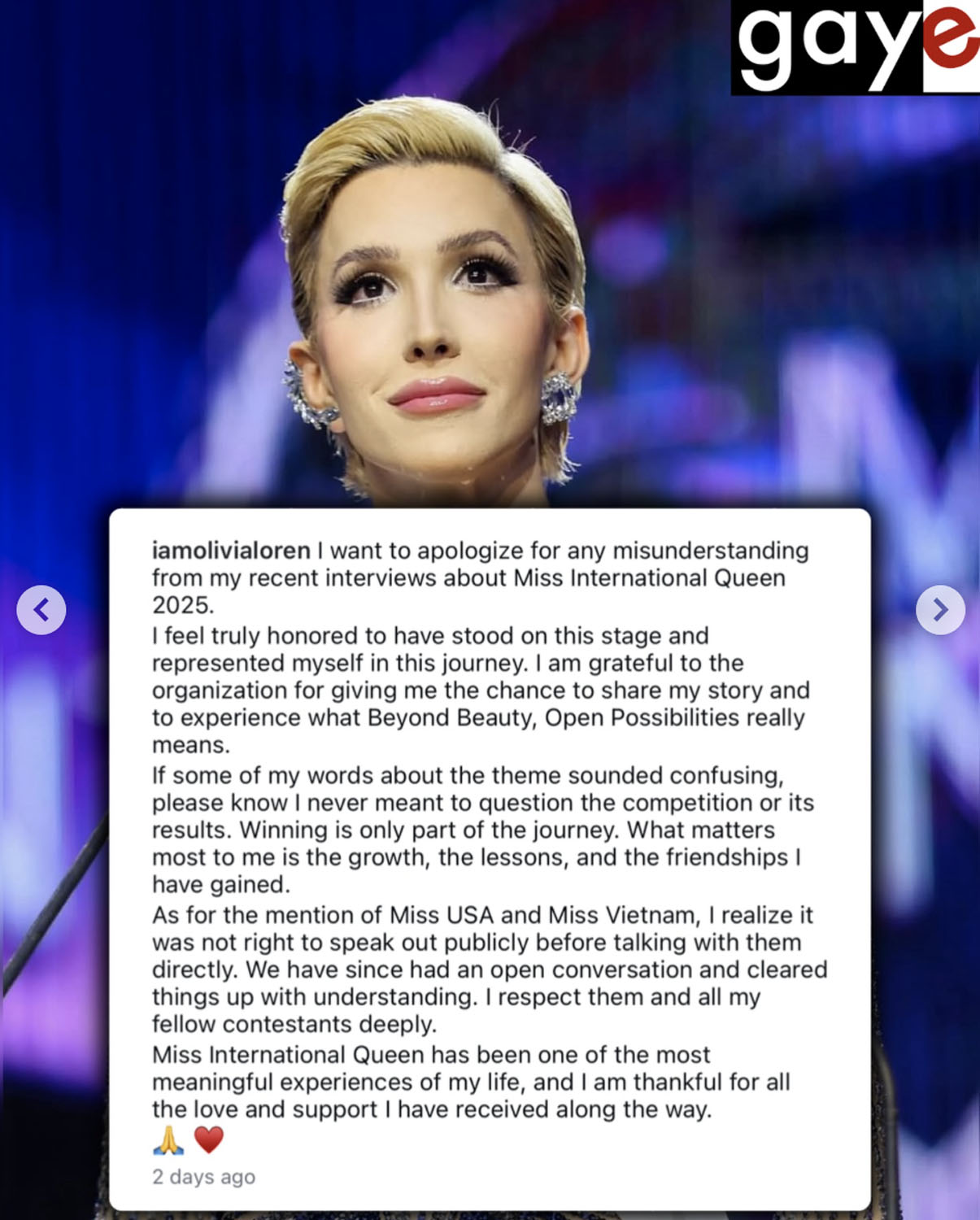
In my horrible habit of therapizing everyone, I can’t help but wonder what would make Miss Cuba respond this way to losing. But there’s a part of me that really empathizes with the trans experience of feeling like you have to prove your womanhood and femininity to the world on a daily basis. She even said that part of her beef was that she got told she looked like a man. That must be one of the most devastating things you could hear as a trans woman. But if anything, that should’ve united her with the woman she deemed her opponent. And it gives her more in common with Miss USA than she realizes, because Midori moves through the world having to prove herself, too.