In Andor, the cost of freedom is everything

– 6 min read
Spoilers for Andor
Captain America once said that the cost of freedom is high, but in Andor, a world without superheroes, where there are no magic space wizards coming to save the galaxy—as far as anyone knows—the cost of freedom isn’t just high, it’s everything. Everything and everyone you love, every breath you take, every piece of your soul, your life, all of it goes into the thresher called “hope” and all that comes out is the barest whisper of a chance of a possibility that one day someone else might know the freedom that left you gutted, drained, and most likely dead.
If Star Wars is the fairytale, the adventure story told to children, then Andor is its blood-soaked lore, the dark remnant put aside in favor of shinier, happier heroes who live. To say that Andor is the best thing to come out of Star Wars since The Empire Strikes Back is not hyperbole, it’s probably the best thing to come out of Star Wars, period, except that it wouldn’t exist without the original trilogy or Rogue One before it. The first season premiered on Disney+ in 2022, the second season took three years to arrive, but it was worth the wait, because Andor’s second, and final, season is a sweeping story that traces the roots of rebellion throughout a galaxy wracked by fascism.
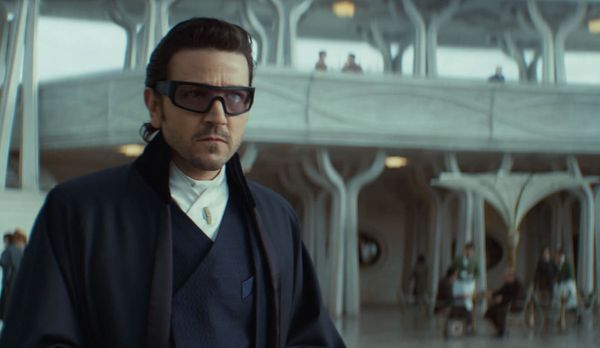
The first season is very good, focusing on Cassian Andor (Diego Luna), a character first introduced in Rogue One as a captain of the Rebellion. The first season of Andor follows his path into the Rebellion, but the second season expands its scope, showing not just Cassian’s collision course with fate in Rogue One, but how people across the galaxy reach the breaking point, when a confederation of rebels turns into a proper Rebellion. The breadth of storytelling is ambitious, but it is matched by the execution of the filmmaking. Andor is meticulously crafted, perfectly plotted, and beautifully written and acted.
The second season contains twelve episodes like the first, but in this second cycle, the episodes are grouped in threes, with each set of three episodes covering one year up to the events of Rogue One (which itself occurs a year before the events of Star Wars). No, this is not “one big movie”. The narrative structure is episodic, with each episode containing complete arcs, and each set of three episodes containing larger arcs that resolve within their year, and there are still larger arcs that span the entire season. Television is a chaptered narrative form, and Andor makes the most of it, essentially structuring season two like a three-volume set, in which each volume is one complete tale that connects to the larger story.
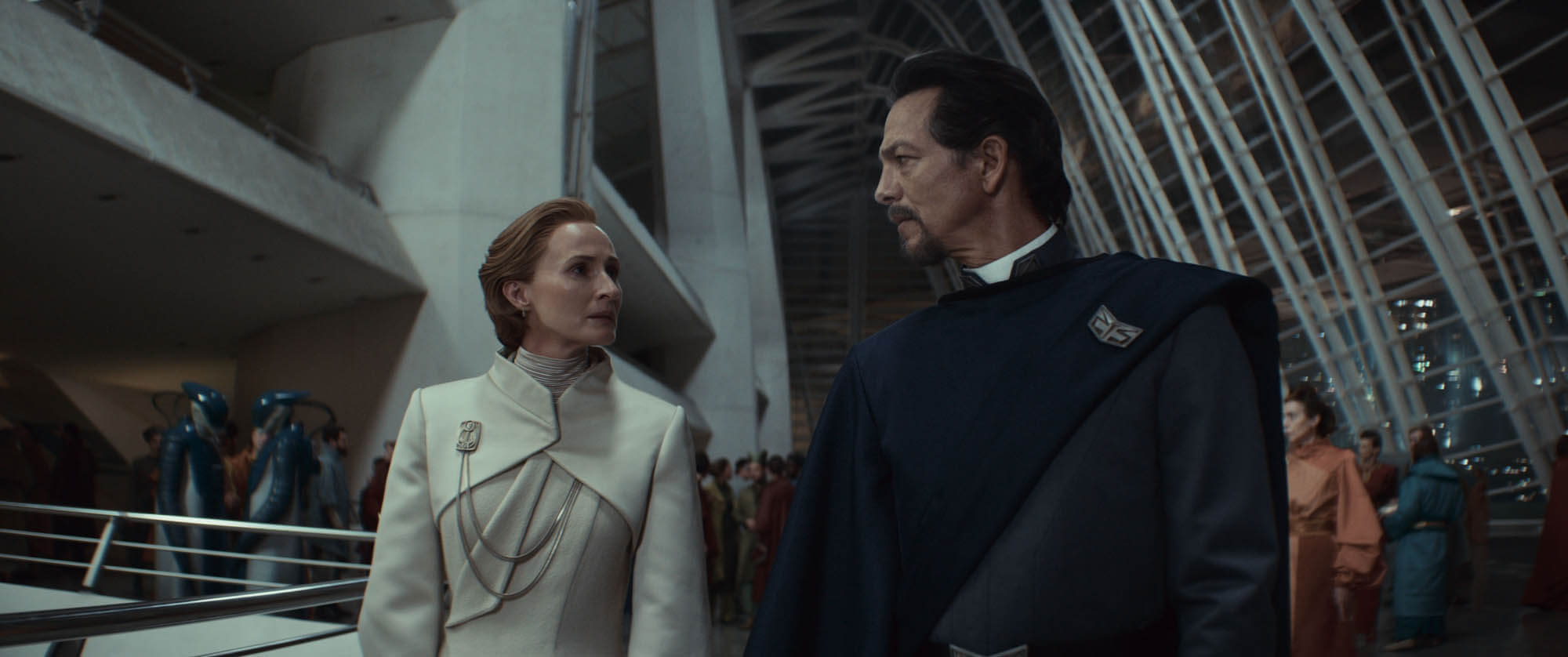
It's the interconnected nature of the storytelling that gives Andor its weight, because the cumulative effect is a compendium of horrors and indignities that overlap until there is no corner of the galaxy untouched by the Empire’s rot. The wealthy citizens of so-called peaceful planets, the young, the old, no one is spared. The Empire is noxious gas spreading to poison the galaxy, but frankly, the Rebellion isn’t much better. Spies like Cassian, Bix (Adria Arjona), and Kleya (Elizabeth Dulau) leave pieces of their humanity behind as their actions extract a higher and higher toll; rebel leader Mon Mothma (Genevieve O’Reilly) sacrifices her family to advance her cause; rebel spy master Luthen Rael (Stellan Skarsgård) gives everything he possibly can. As Luthen says in the first season, I burn my life to make a sunrise I know I’ll never see.
Far from presenting a both sides narrative, though, Andor never minces who the bad guys are—it’s the space Nazis. The rebels pay a high price because they must, because freedom is at stake, and the entire story is built on the premise that freedom costs everything. Because the opposite of freedom is fascism, and fascists will stop at nothing to consolidate control. Every possible exploitation and degradation are visited upon those who dissent, from displacement to incarceration to assault to death.
Beyond the literal horrors the rebels face, Andor also uses production and costume design to show fascism as a flattening, soulless existence. The Empire’s most tightly controlled spaces are sterile, antiseptic spaces indistinguishable from a hospital. Imperial officers wear boring white uniforms, a plain trench coat or dumb little hat their most interesting accessory. In contrast, Cassian sports a series of cool outfits and leather jackets, and less controlled rim worlds are vibrant, colorful places with unique fashions. No place is this more apparent than Ghorman, a colony planet rich with resource (singular, one resource the Empire cares about, not unlike, say, oil).
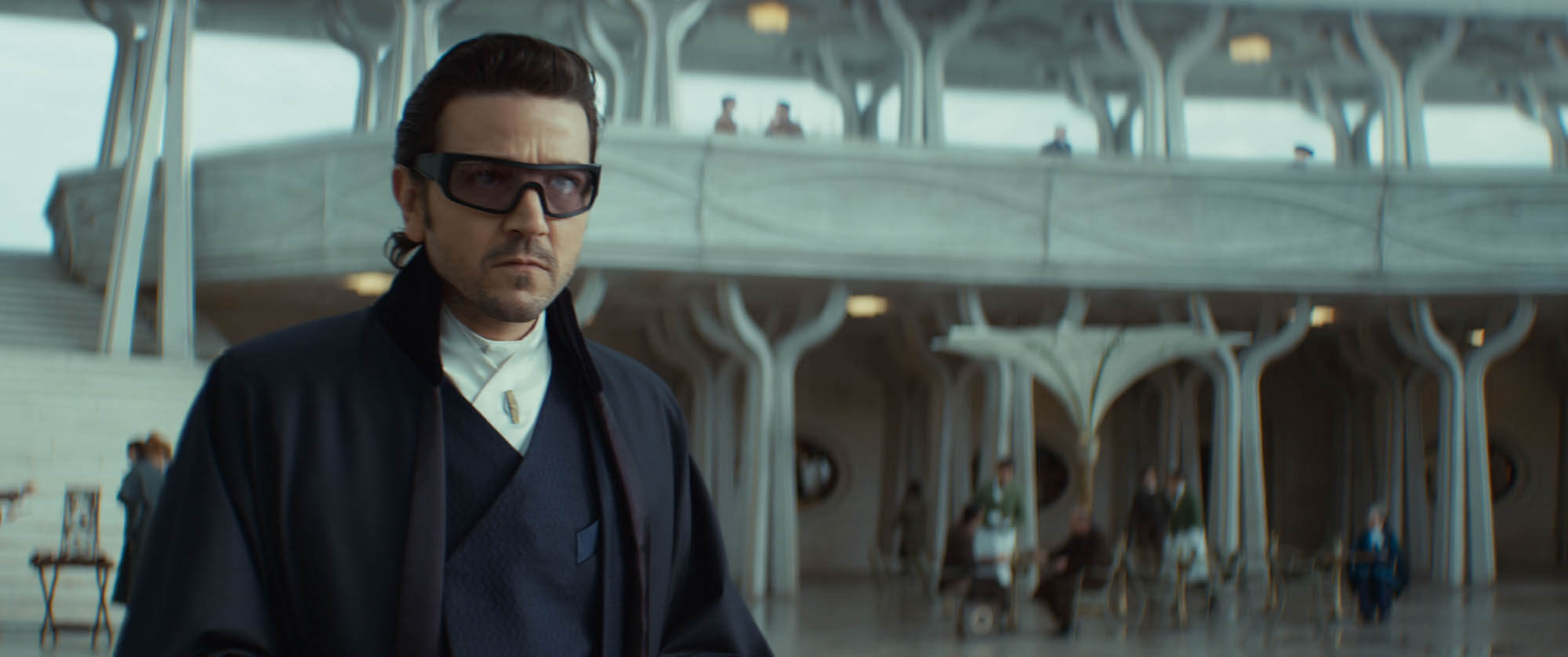
Ghorman is charming and very aesthetic, the people wear beautiful garments and have a rich culture. The Empire wipes it off the map with a staged genocide, entrapping and murdering citizens to feed a narrative of justified takeover. The Ghorman Massacre, though, escapes containment when Mon Mothma stands before the galactic senate and calls it what it is—imperial murder. It’s impossible to watch season two, episode eight, “Who Are You?”, in which the Ghorman Massacre unfolds and not think about the ongoing genocide in Gaza (Roxana Hadadi beautifully addresses the confluence of fictional and real worlds). In showing every facet of how fascism exerts control, Andor inevitably steps into real world conflict.
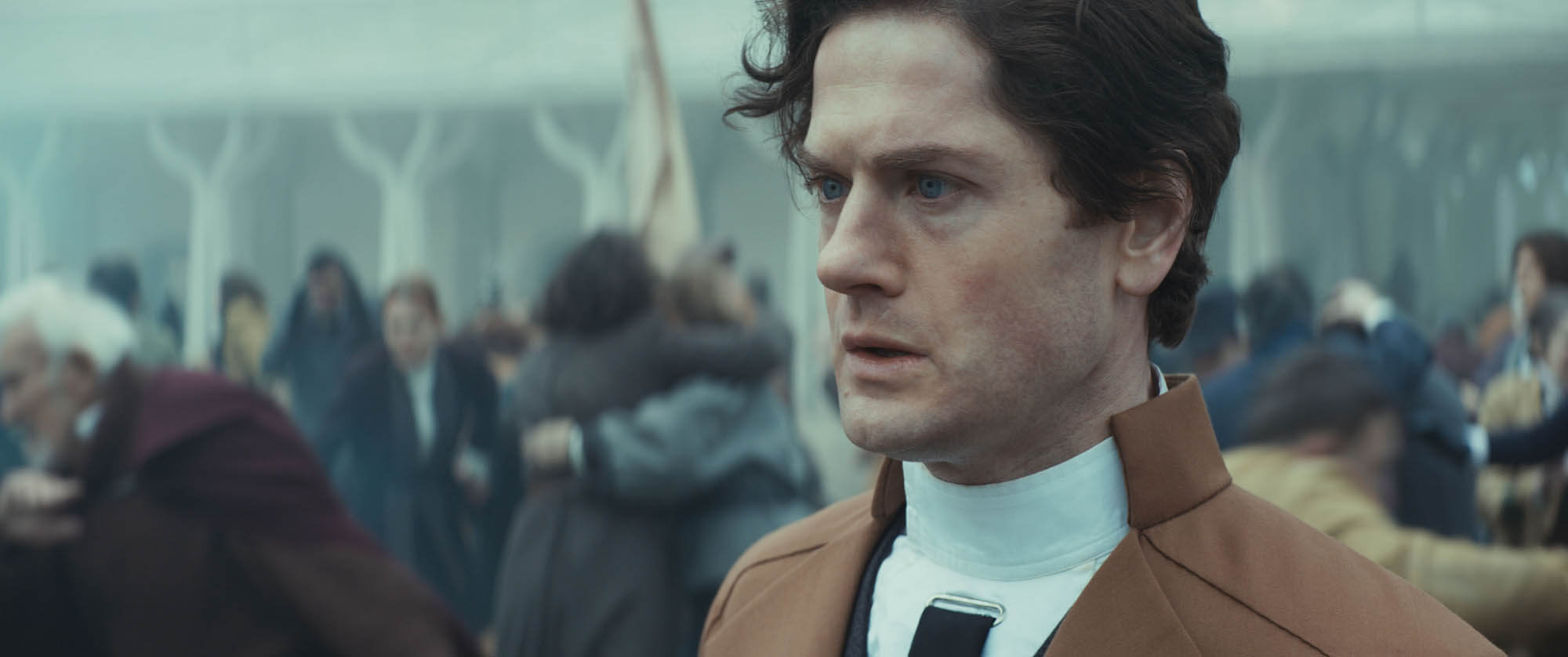
This does make it a heavy watch. But it lends weight to Star Wars that hasn’t been felt in a while because the films have become so afraid to engage with politics they’ve become narrative vacuums where one person making a bad decision can affect the whole galaxy. But Andor goes back to square one and shows how fascist systems take root and spread, depending on the small minds and petty grievances of weird little dorks hungry for power and willing to do anything to get it. Syril Karn (Kyle Soller) is one such weird little dork, a security guard with delusions of grandeur who is incapable of seeing the poisoned path he’s on until it is far, far too late.
Similarly, Imperial officer Dedra Meero (Denise Gough) is ambitious, climbing the ranks at any cost, even that of her soul. Whatever misgivings Dedra has, she literally chokes down in favor of following orders, rising in office until she runs afoul of someone else’s control mechanism. The second she is no longer useful to the fascist machine, she is cast aside, no different from the rebels she previously condemned to every indignity and death. All the way up the chain the Empire is run by increasingly officious men, weird little dorks turning into savage monsters as their actions bleed their humanity dry.
The Empire seeks to stamp out every light, to leave only its control to tell people how to live. Through his violent and sometimes betraying actions, Cassian leaves pieces of himself behind, but his broken pieces are shards of a mirror, reflecting whatever light they can catch. Where Cassian goes, he creates connections and touches others inspired to pick up whatever piece of himself he left to light their own path forward in rebellion. Like Luthen said, they’re burning to fuel a sunrise, hoping that one day that dawn will break on a free galaxy, whether they see it or not.
It’s a terrible price to be paid, but someone must pay it, and the heroes of Andor do so over and over, only to fade from history, written out of the Jedi fairytale that becomes the story of the Rebellion. But it was always bigger than the Jedi, bigger than the Skywalkers, bigger than any one person, a lesson that Star Wars forgot and Andor painfully teaches. The Rebellion grew because there were thousands of Cassians bleeding and dying in the name of hope, leaving pieces of their soul behind so that the next person to walk their path can do so whole.
Andor is now streaming all episodes on Disney+.