Angelina Jolie in Maria

– 4 min read
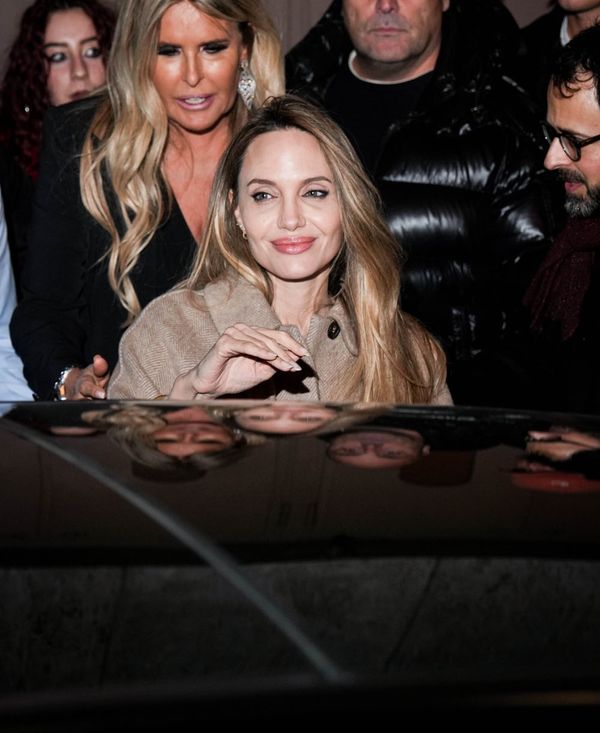
Of late, Pablo Larraín has made a study of iconic women of the 20th century, specifically catching them at dramatic turning points in their lives. Jackie finds Jacqueline Kennedy reflecting on her life in the White House as she is preparing to (finally) leave it following the assassination of her husband, JFK. Spencer traces Princess Diana’s descent into paranoia driven by loneliness and unhappiness on the brink of her divorce from Prince Charles. Both films are predicated on our shared cultural recollection of these women: that Jackie is poised and elegant even in grief, that Diana is too shy and sensitive for royal scrutiny.
We must have a collective idea about these women in order for the iconoclastic performances given by the actresses inhabiting them to work. Natalie Portman’s jittery, chain-smoking take on Jackie only works as a contrast to her more collected public face; the latent rage in Kristen Stewart’s performance as Princess Diana is grounded in her own celebrity persona as a shy person hounded by the press.
The central problem for the third film in Larraín’s pseudo-trilogy, Maria, is that the film focuses on 20th century opera diva Maria Callas, and we just don’t have a collective idea about “La Callas” to underpin Angelina Jolie’s performance as the legendary soprano. Jolie herself is magnificent in the role, never has she seemed more fragile or more romantic on screen. Her face dominates long sequences, her beauty so staggering she is best positioned amongst Maria’s collection of Roman statuary—another perfect, marble countenance upon which to gaze. Larraín and cinematographer Edward Lachman shoot Jolie in buttery autumn light, frame her against iconic Paris scenes, position her center stage and push in and pull back on her statuesque form like waves of applause engulfing Callas herself.
But amidst the aesthetic splendor of Maria—which is great and should not be discounted as a pleasure in and of itself—is a hollow core where that collective idea of Callas should reside. Larraín obviously has great love and respect for her, Jolie has clearly devoted herself to creating a character grounded in admiration and understanding, but missing is the piece we, the audience, should supply. If you do not know the ins and outs of Maria Callas’s life, that sense of iconoclasm, the whole point of Larraín’s exercise, is simply gone. As a straightforward biopic depicting the final week of Maria’s life, Maria works as a somewhat airy entry into the genre. But as an exercise in deconstruction, which this is meant to be, it fails because we just don’t know Maria Callas well enough to know what is being deconstructed.
There is something, a feeling like an anchor chain slipping through your hands as the film unfolds. There are moments underscored either by silence or selections of opera, that tell us that we’re supposed to clue into something in a given moment, but the chain slips, the anchor in free-fall because we have no understanding to grasp it. In a vacuum, Jolie’s performance is splendid, a career best; as part of Larraín’s project, the role feels thin and underwritten, which is probably a result of taking for granted that collective idea of Maria Callas that simply doesn’t exist, at least not widely enough for this film to work as intended.
I don’t know how much of the voice on the soundtrack is Jolie’s and how much Callas’s (I suspect the blend is heavily in favor of Callas), but Jolie convincingly sells the physical act of singing opera. It’s easy to believe that voice coming out of this cinematic form representing Callas. Less believable, though, is an implication that Maria isn’t a great beauty. In real life, she was not known as such, and there is a scene in which Aristotle Onassis cruelly points out no one cares about Maria’s body just as no one cares about Marilyn Monroe’s voice. But in the context of Angelina Jolie playing Maria, especially given the luscious lighting and never less than utterly flattering framing of the camera, it’s a completely deranged thing for movie-Onassis (Haluk Bilginer) to say, so much so that several people audibly scoffed at my screening, indicating they either don’t know Maria wasn’t considered beautiful, or don’t care in the face of Angelina Jolie’s, er, face.
Opera fanatics might get more from Maria, the more you know about Maria Callas, the more Jolie’s performance takes on that extra dimension Larraín intends. But the average person probably doesn’t know enough about opera or Maria Callas to reach that meta-textual level, especially not as easily as we get there with the likes of Jackie O and Princess Di, women who are still so famous and known to the public, you don’t even have to say their full name to evoke their cultural cache. Angelina Jolie gives a great performance in a beautiful film with a lot of gorgeous opera music in it, but in the end, Maria rarely goes beyond the aesthetic to reach the ecstatic.
Maria will play in theaters from November 27, 2024, then stream exclusively on Netflix from December 11, 2024.