Paul Thomas Anderon’s One Battle After Another

– 5 min read

Throughout his career, Paul Thomas Anderson has examined the American mythos from every angle, picking apart the American dream and all the various ways it can and will fail. His examinations are not really critiques, though, as much as they are clockworks depicting specific times and places in the “American century” that illuminate these points of failure. His work doesn’t even amount to much of a consistent thesis beyond “the American mythos is a multi-headed monster”, so it is more than a little surprising that his latest film, One Battle After Another is fiercely political declaration, and one of the sharpest perspectives on American revolutionary culture offered since America’s slide into fascism gained real momentum.
Battle leaves no room for misinterpretation, it is a boldly anti-fascist work that states “violent action good, actually” while celebrating the role Black women have played in American political movements throughout history. Loosely adapted from Thomas Pynchon’s novel, Vineland, Battle begins with the blazingly committed and excellently named Perfidia Beverly Hills (a fiery Teyana Taylor) leading a raid on a US facility holding undocumented families. She is part of the French 75, a Weather Underground-esque revolutionary group committed to anti-fascist action. Along with her partner in crime and life, “Ghetto” Pat (Leonardo DiCaprio), Perfidia and the French 75 liberate the captives. In the process, Perfidia sexually humiliates a US Army officer known as “Lockjaw” (Sean Penn). This ignites in him a dangerous fascination with Perfidia.
Lockjaw eventually backs Perfidia into a corner, forcing her into a sexual relationship. Reeling from this trauma along with post-partum depression, Perfidia abandons her daughter with Pat, now going by the alias “Bob Ferguson”. Bob takes the baby, Willa, and raises her as his own in hiding. Together they live in the sanctuary city of Baktan Cross—everything in Battle has a perfectly Pynchonian name—where Bob morphs from a revolutionary into a drug-addled, middle-aged burnout.
Jumping ahead sixteen years, Lockjaw is on the cusp of being inducted into a secret society of white supremacists known as the Christmas Adventurers, but he has to swear he has never had interracial relations. Willa, now a teenager played by the charmingly feisty Chase Infiniti, is proof to the contrary, so Lockjaw must dispose of her. This is the heart of the film, as Bob springs into addled action to save his daughter, who is on her own journey of discovering the truth about her parents.
Battle is uproariously funny, driven by Leonardo DiCaprio’s best performance to date. He is delightfully daffy, delivering a top-tier physical comedy performance while also conveying the real anxiety of a father for a daughter he barely understands. You can feel Anderson’s own anxiety informing the father-daughter relationship, as he is both a Gen X parent raising Zoomer/Gen Alpha children and is also a white dad to biracial kids. DiCaprio’s performance is heartfelt and sweet, in between bouts of terrific comedy. He and Chase Infiniti aptly anchor the film in the emotional stakes of their relationship, especially as Willa learns the truth of her parentage.
Battle is also very good at action, from the opening assault sequence to bank heists to numerous chase scenes. Anderson’s direction has tended toward the showy in the past, but here every shot is perfectly calibrated, deploying incredible technique without calling attention to it (the film is lensed by cinematographer Michael Bauman). There is a three-car chase that looks as gritty and thrilling as anything shot in the 1970s, but there are also pratfalls and cartoonish physical comedy—much of it gamely performed by DiCaprio—that keep the film clipping along at a brisk pace (you barely feel the nearly three-hour runtime). Anderson’s command of his craft allows these sequences to breathe, nothing ever feels forced or anticipated. Each action and story beat arrives at exactly the right moment to set up the next, Anderson’s work is not only confident but mature.
It’s also thematically decisive, as if Anderson is deliberately leaving no room for misinterpretation. Battle is blatantly anti-fascist, the heroes of the story are Black women and teenagers who use their friend’s correct pronouns. Battle is an interesting companion for Ari Aster’s Eddington, which includes some astute observations about America’s political moment, particularly how politics is often used as a cover for much baser, pettier interpersonal conflicts, but it comes with a decidedly “both sides” edge. Anderson, though, does not prevaricate, Battle absolutely chooses a side, and it is not the side of bootlickers like Lockjaw.
But Battle does not offer pat solutions or homilies for the future. While this particular story comes to a conclusion which is hopeful for the future—both Willa’s fictional one and our real one—there are still darker forces in play. “One battle after another” is a title and a rallying cry—the fight is never over. Bob is representative of one outcome, Sergio St. Carlos (Benicio Del Toro), who fights to protect his undocumented neighbors, is another. Some people burn out, some people carry on, either way, the battle continues with the next generation.
It is notable, though, that Anderson chooses to end on a positive, rather than a dour or even bleak note. The fight may never end, but there are always new revolutionaries to take up the cause. In the works of Paul Thomas Anderson, hope is less “the thing with feathers” and more the thing with talons and claws, but Battle has hope for the next generation as the next torchbearers of revolution. There may always be another Lockjaw, but there will also be another Perfidia, another Bob, another Willa, another Sergio, to fight him, together. In One Battle After Another, we don’t save ourselves, we save each other, and that is the path to freedom.
One Battle After Another is now playing exclusively in theaters, including in 70mm and Vista Vision in limited locations.
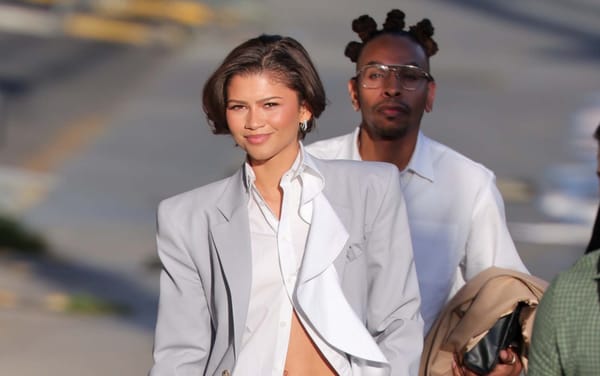
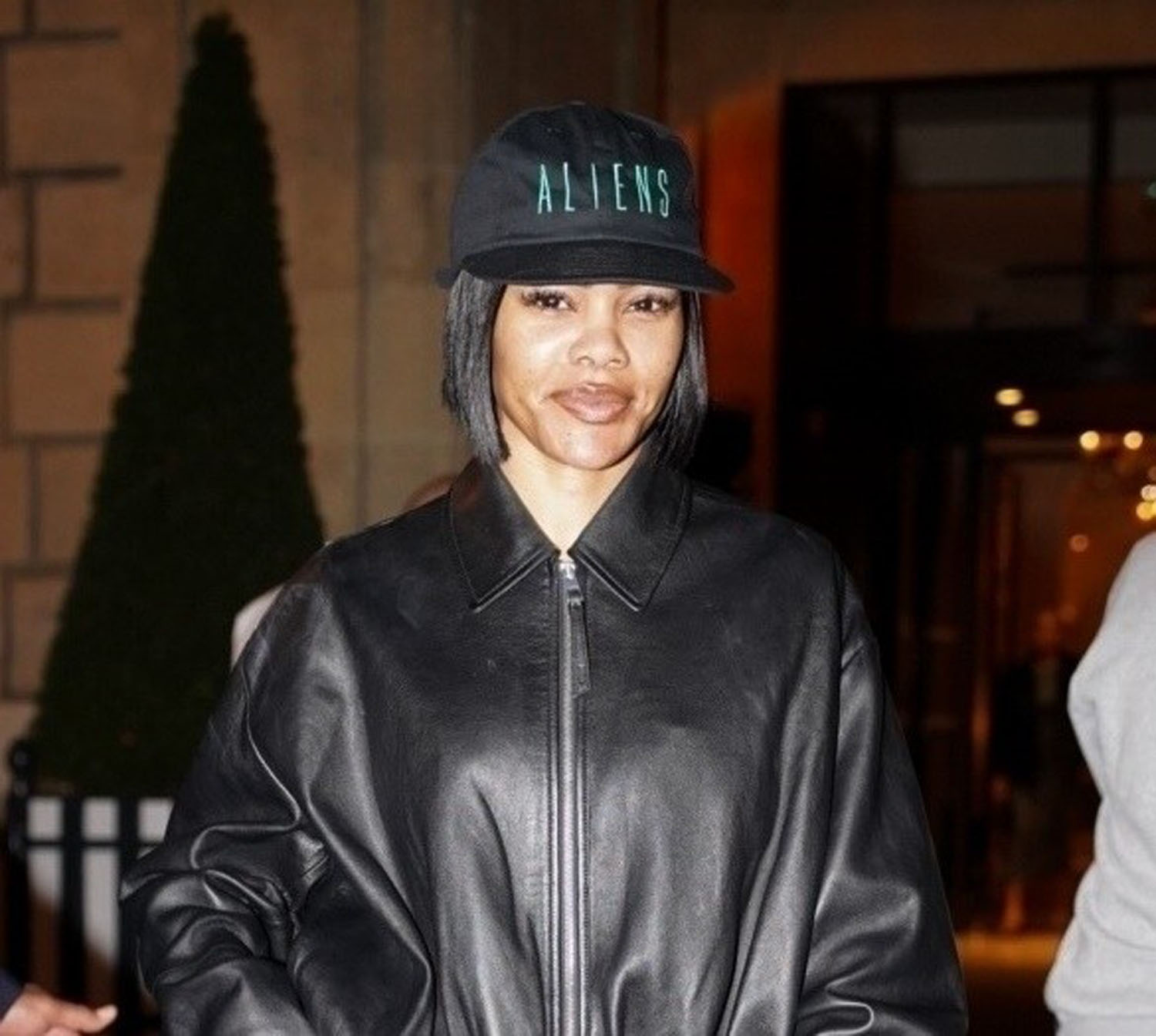
Attached - Teyana Taylor in Paris for Fashion Week.