Jenn Tran's Bachelorette dilemma

– 6 min read

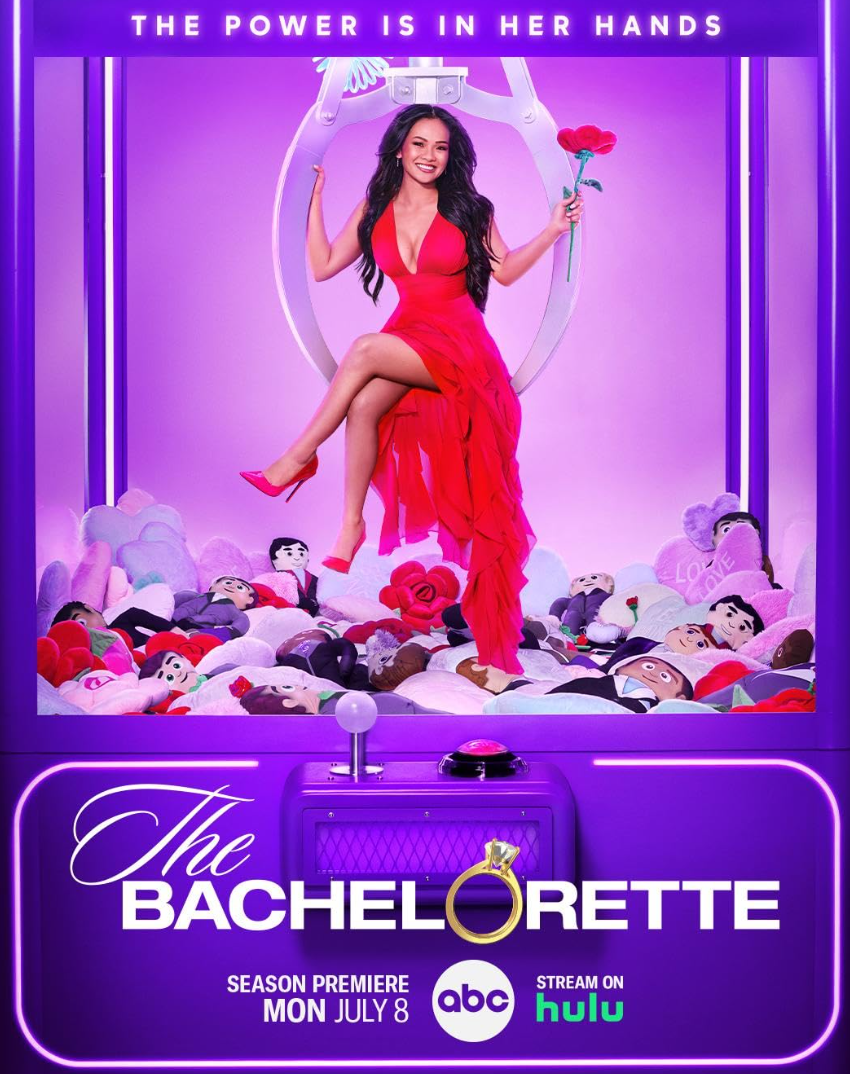
The first Asian American Bachelorette, Jenn Tran, recently opened up about the pressure of millions of people watching her date multiple men on this season of The Bachelorette.
During her appearance on Kaitlyn Bristowe’s Off the Vine podcast, Jenn expressed what it felt like being the first Asian bachelorette cast on the show:
“I won't say that it's all been positive because racism still exists. I have gotten a lot of hate messages, but along with that, I've also gotten so many people who have been so grateful to see somebody like me on their screen. I feel so grateful and honored that I get to do that for people because growing up, I never had that. I am becoming the role model that I've always wanted to see as a little girl.”
She also described having a sense of regret over some of the season’s “steamy” makeouts because her family would be at home watching:
“I don't have regrets in any decisions that I made because I trusted myself very much, and I still do,” she said. “I think everything happened the way it was supposed to. I think that I regret the steamy make outs because my family will be watching.”
She chalked up some of her willingness to make out on camera to finally throwing caution to the wind when it came to the cameras, which was a different experience than she’d had when she was on Joey Graziadei’s season vying for his love. During that season, she says she was “very aware” of the cameras on her:
“And then the second time around, I was like, what do you mean? I'm just living my life,” she continued. “So, like, in my head, I was like, this isn't gonna be televised anywhere.”
In all of the reality TV I watch, I noticed that the theme of “what our parents might think” is especially prevalent among people of colour – and women of colour to be exact. I am struggling to recall an instance in which any white male bachelor has expressed fear, concern or regret about makeouts on a show that is pretty much centered around making out.
None of this is to say that it hasn’t happened, it’s just that it’s a lot easier for me to point out specific examples in which people, mostly women, and mostly of colour, lived with that fear – which is mostly the point. Plus, the memory that sticks out most about the white male bachelors and hookups is the time that Clayton Echard slept (not kissed, slept!) with both Gabby and Rachel during his tenure as the bachelor during fantasy suites. But I digress.
Even beyond The Bachelor, there are tons of shows that are specifically centered around these hot makeout sessions, with Netflix, in particular, upping the ante on producing these sorts of Love Island-inspired watches which include The Perfect Match, Love Is Blind, The Ultimatum, Too Hot to Handle and so many more.
Below Deck, which appears on Bravo each week, is also an environment where hookup culture is common. A bunch of “yachties” tend to high-demand guests that spend hundreds of thousands of dollars for a few days on a private yacht charter and at the end of each charter, they go out, get drunk, and come back to the hot tub. From there, it’s not uncommon for there to be makeout sessions or even intercourse.
In an episode that aired a few weeks ago, one crew member, Barbie Pascual, ended up sleeping with her castmate Kyle, whom she had been crushing on and flirting with for weeks (which is a long time on the yachting calendar) leading up to their midnight rendezvous. The next day, however, she was overcome by shame and guilt over her father seeing the scene. She was pushed to the brink of tears and lashed out on Kyle, who bore the brunt of her regret.
While I totally understood her concerns – which she made clear many times, describing her militant father and non-emotional relationship with him, her Argentinian background, and her family’s traditional views, I think so much of what she is experiencing, so much of what Jenn, too, is experiencing, is a direct result of how intersectionality informs the experience of being slut-shamed, and how slut-shaming culture has specifically targeted women of colour.
I say this because I have seen dozens, if not hundreds, of TV hookups and here is a conclusion I can confidently make – white people, men or women, do not seem to live with the same fear of family repercussion that women of colour do.
To be honest, this tracks. Like, it makes complete sense that white cast members who likely grew up in America, where The Bachelor has been around for ages, are way more likely to have their family be on board with the journey they’re about to go on. Their families know there’s going to be some uncomfortable scenes. Yet still, it breaks my heart to have seen these two women living with that sense of regret for two reasons. The first is that I know exactly what Barbie and Jenn were fearing and why they were fearing it.
I don’t blame all of this seemingly visceral fear women of colour on reality and dating shows sometimes have on society. I grew up in a household with a Black father who, culturally, was simply not accustomed to the North American way of living, and especially not accustomed to the North American way of dating. As a curious teenager, this was impossible to navigate. When I got older and would jokingly toss the idea of going on a dating show out into the living room, my dad’s response was always the same: “I wouldn’t watch.” Sometimes it’s about the parent’s upbringing more than it is ours.
But the second reason seeing the guilt women of colour experience when landing roles on shows where there is an opportunity to make love connections is because it’s empowering. It is empowering to see women explore their sexuality on TV. It’s empowering to see them living unabashedly, pursuing, dropping, and picking up connections as they see fit.
I think that’s why Gabby and Rachel’s season of The Bachelorette was such a fan-favourite. You had these two women totally screwed over by Clayton, and production knew that having them both team up to take on a season of their own in which they’d both look for love together was going to be the ultimate middle finger to him on behalf of them and all of their fans. Just two best friends, scorned by the same man, looking for a new one.
But production also capitalizes on having diverse cast members. That fear is not only a real feeling, but a storyline. The entire season of Below Deck, the one question I had was, will she ditch her dad’s expectations and bang Kyle? Or will she be a boring goody two shoes? And with Jenn, the question is whether she will succumb to the pressure of being a well-behaved, conservative Asian bachelorette? Or will she pull a Clayton? I’d certainly pay money to see a bachelorette sleep with two bachelors. And I’d pay even more to see the variation in response to a woman of colour doing it as opposed to a white ex-footballer like Clayton.
So yes, some of this absolutely has to do with the family culture, expectations, and upbringing in any given home. Religion is another huge factor. If your family’s expectation is that you remain a virgin until you marry, then perhaps going on a reality show where you have to kiss a lot of frogs to find your prince may not be the wisest decision. Unless of course, you’re looking to stick it to them, much like I had to at a certain point with my dad.
My dad’s unwillingness to watch me on some hypothetical dating show isn’t based on anything other than him knowing the kind of kid he raised. Fierce, strong, independent, and always willing to go against the grain – all things that were fine and dandy until I became old enough to date and have sex. I had to have a lot of uncomfortable conversations with him about my autonomy, my choices, my body. My dad knows that if I ever ended up in the position of Jenn or Barbie, I’d likely be making out, too.
My hope for these women is that they shed the fear of what their families might say and step into their power. Both of these shows are (or at least, used to be, before all the Bachelor spinoffs) a once in a lifetime opportunity. You’re on a show, you’re meeting people, you’re having fun. And whatever fun looks like for them, I hope they always remain brave enough to do just that.