TIFF Review: Angelina Jolie’s Without Blood

– 3 min read

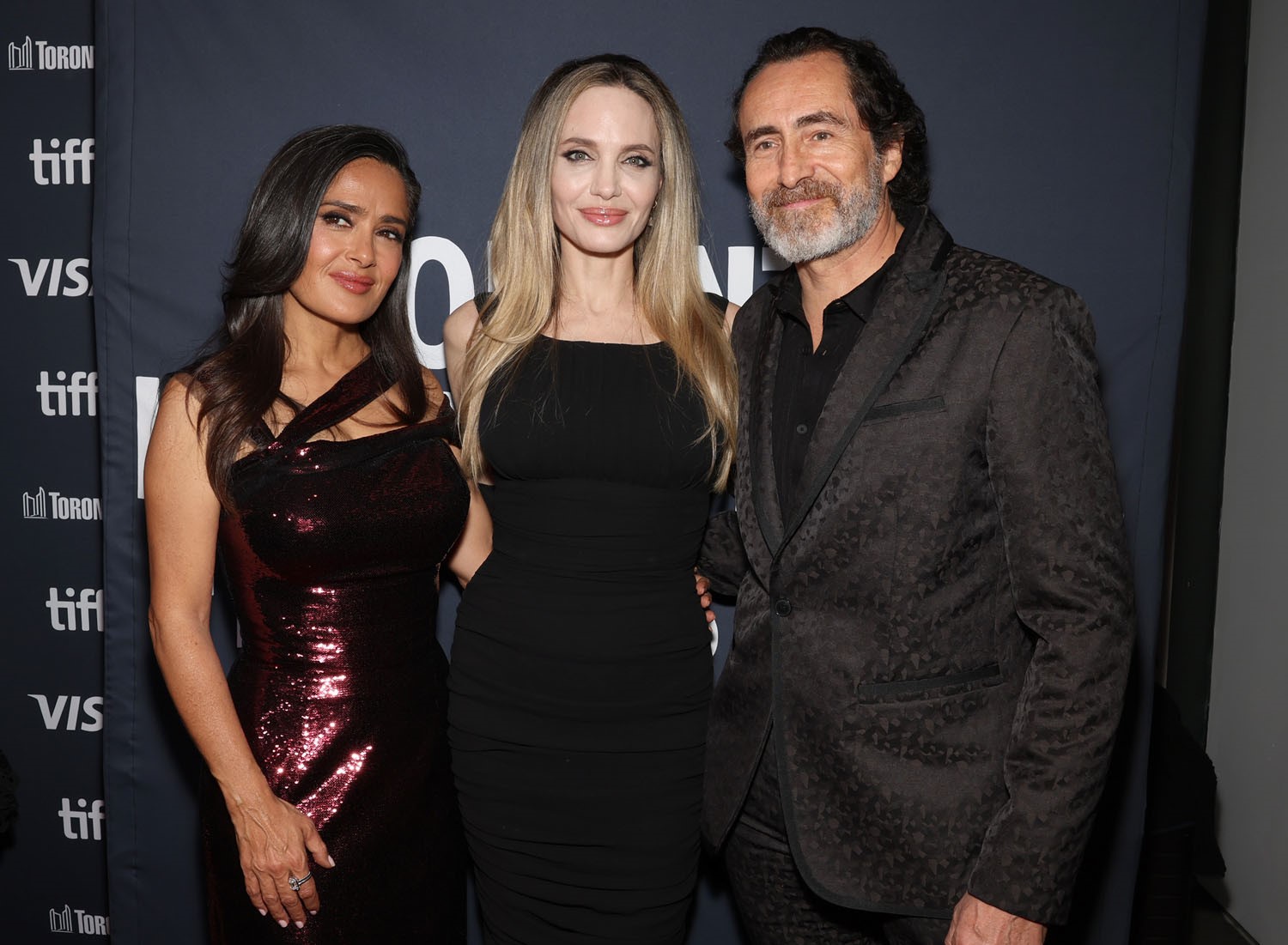
Angelina Jolie is something of a frustrating filmmaker. She has no lack of technical skill, her eye is good, and she has a deft touch with actors, but her films never seem to add up to much. That is especially prevalent in her latest film, Without Blood, an adaptation of Alessandro Baricco’s novel of the same name.
Set in an indeterminate time and place that looks like mid-century Mexico (though the film was shot in Italy), the film unfolds with a then-and-now timeline that splices between a middle-aged man and woman talking over tea, and the trajectory of a young girl’s life shaped by sudden violence. Jolie adapts her own script, turning Baricco’s thin, two-chapter book into a fleet ninety-minute film. At least Without Blood doesn’t overstay its welcome.
In the split timeline, Salma Hayek Pinault stars as Nina, a middle-aged woman who entices a man who runs a news kiosk to get a drink with her. He is Tito, as played by Demián Bichir. Tito is perturbed by Nina, who seems shrouded in a veil of sorrow. They sit in a café and talk, and this is half the film. It’s very good acting done by very good actors, and there is a simple pleasure in just watching Hayek and Bichir play off each other in an emotionally wrought two-hander. Intercut with their scenes are flashbacks that show their entwined history, when Tito was part of a massacre that killed Nina’s family. We follow them as they both grow up and their paths diverge and intersect, until, finally, grown Nina arrives at Tito’s figurative doorstep for revenge.
While the acting in Without Blood is great, unfortunately, it’s not enough to overcome the inherent flaw in the premise, and that is that since Nina narrates most of the past action, we have little opportunity to invest in the past tense happenings within the film. Some of the disconnect is down to a lack of specificity taken from Baricco’s source material, as the tale of Nina and Tito is meant to be a kind of timeless warning about violence and revenge. But they keep mentioning a war and it naturally begs the question, what war? When? A world war? Which one? The realism of the setting and era certainly make it seem like the events of Without Blood are happening in a specific time and place, which makes the lack of narrative detail confusing. If the point is to tell a timeless story, then give the film a more timeless look.
Beyond that, though, this film suffers from the same structural problem as Without Time. Jumping around the timeline means there is no opportunity for momentum to develop, which is compounded here because the younger versions of Nina never speak, and the adult version of Nina doesn’t do anything except sit at a table and talk. Apparently, Nina was selectively mute for a period of her life—understandable, given her trauma—but even so, we keep cutting away from Angelica Pisilli, who plays Nina through the teenaged and younger adult portions of her life, rather than letting her silent performance build into an interesting portrait of Nina during that time. The past-present structure may work for a book, but it’s much harder to make it work on film in a way that doesn’t shortchange either side of the narrative, and Jolie doesn’t find her way through.
Many elements of Without Blood are very good. It looks great, courtesy cinematographer Seamus McGarvey; the score by Rutger Hoedemaekers is haunting and effective; and despite the back-and-forth structure, we never get lost in the narrative thanks to the editing of Xavier Box. And the acting, as previously mentioned, is great across the board, but most especially by Hayek and Bichir (their scenes are a masterclass of letting tone and expression do all the work). It just doesn’t come together in a compelling way, in large part because the structure of the film itself does no favors for the narrative. The film tries to split the difference between showing and telling, but the structure results in too much telling. It’s like a mid-movie exposition sequence stretched to feature length. As a timeless tale of war, violence, and revenge, it falls flat, and however handsomely Angelina Jolie directs the film, Without Blood is less than the sum of its parts.