TIFF Review: Chloe Zhao’s Hamnet

– 5 min read

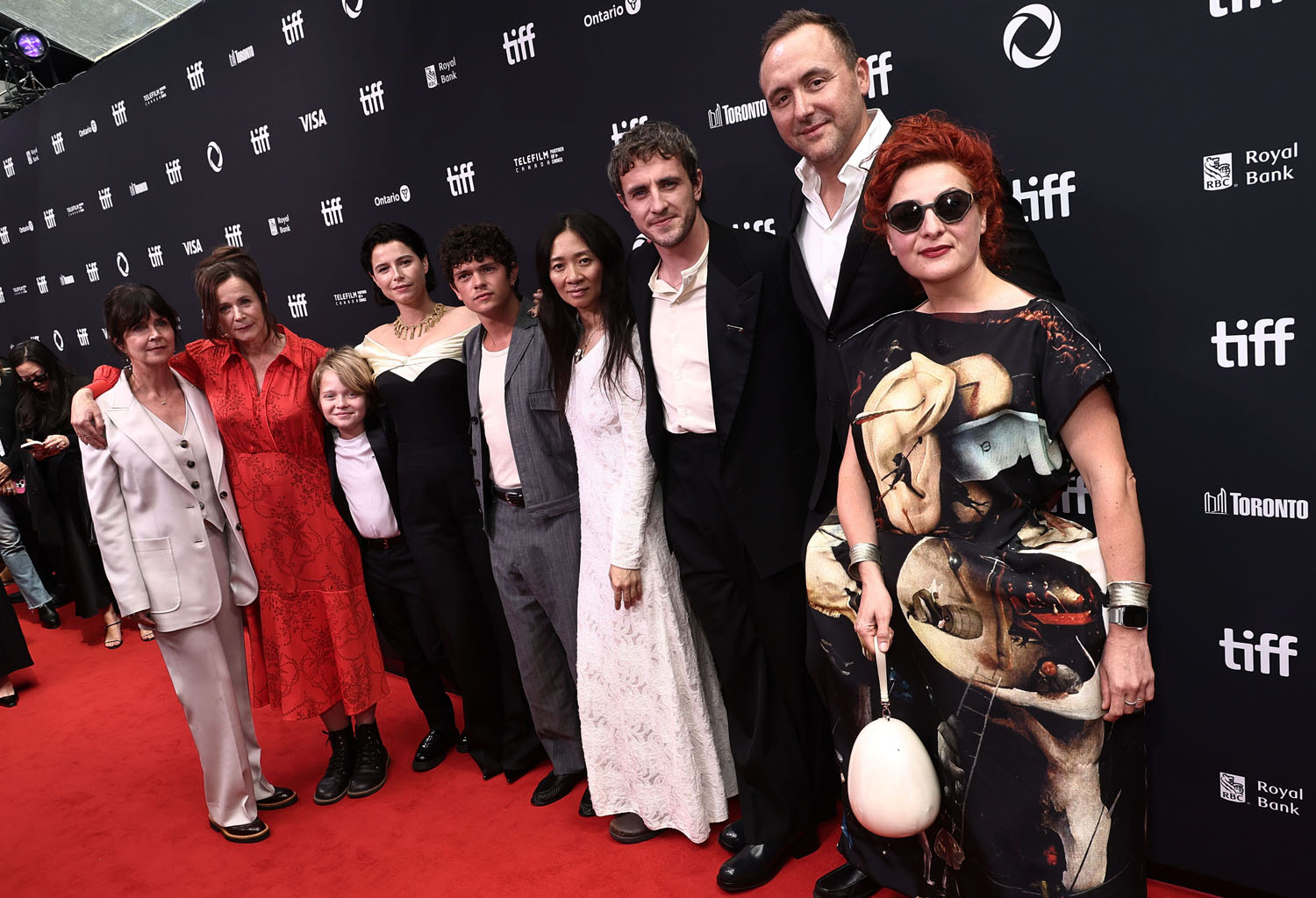
In her 1929 essay A Room of One’s Own, Virginia Woolf imagines a sister of William Shakespeare called Judith, every bit as creative and talented as her brother, to illustrate how gender historically limited opportunities for women. Denied education and opportunity, the imaginary Judith dies in obscurity and is forgotten while her brother becomes one of the most luminous figures in English literature. Maggie O’Farrell’s novel Hamnet, and the film it is based upon, takes Woolf’s conceit one step further and asks: what if Anne Hathaway Shakespeare was actually really cool and interesting, and not just “Shakespeare’s wife”?
Adapted by O’Farrell and director Chloe Zhao, Hamnet centers on Agnes Hathaway, a witchy woman who spends most of her time in the primeval forest that lies alongside Stratford-upon-Avon. She communes with her tame hawk, collects fauna for her remedies, stares into the void made by the gaping roots of an ancient tree, and she can see a person’s future by gripping their hand palm to palm. Spotting her from a window while tutoring her younger half-brothers in Latin, local boy William Shakespeare is immediately smitten with the intriguing Agnes. He mistakes her for a servant girl, someone more aligned with his own station as an indebted tradesman’s son, but when he discovers Agnes is the daughter of a prominent family, he pursues her anyway.
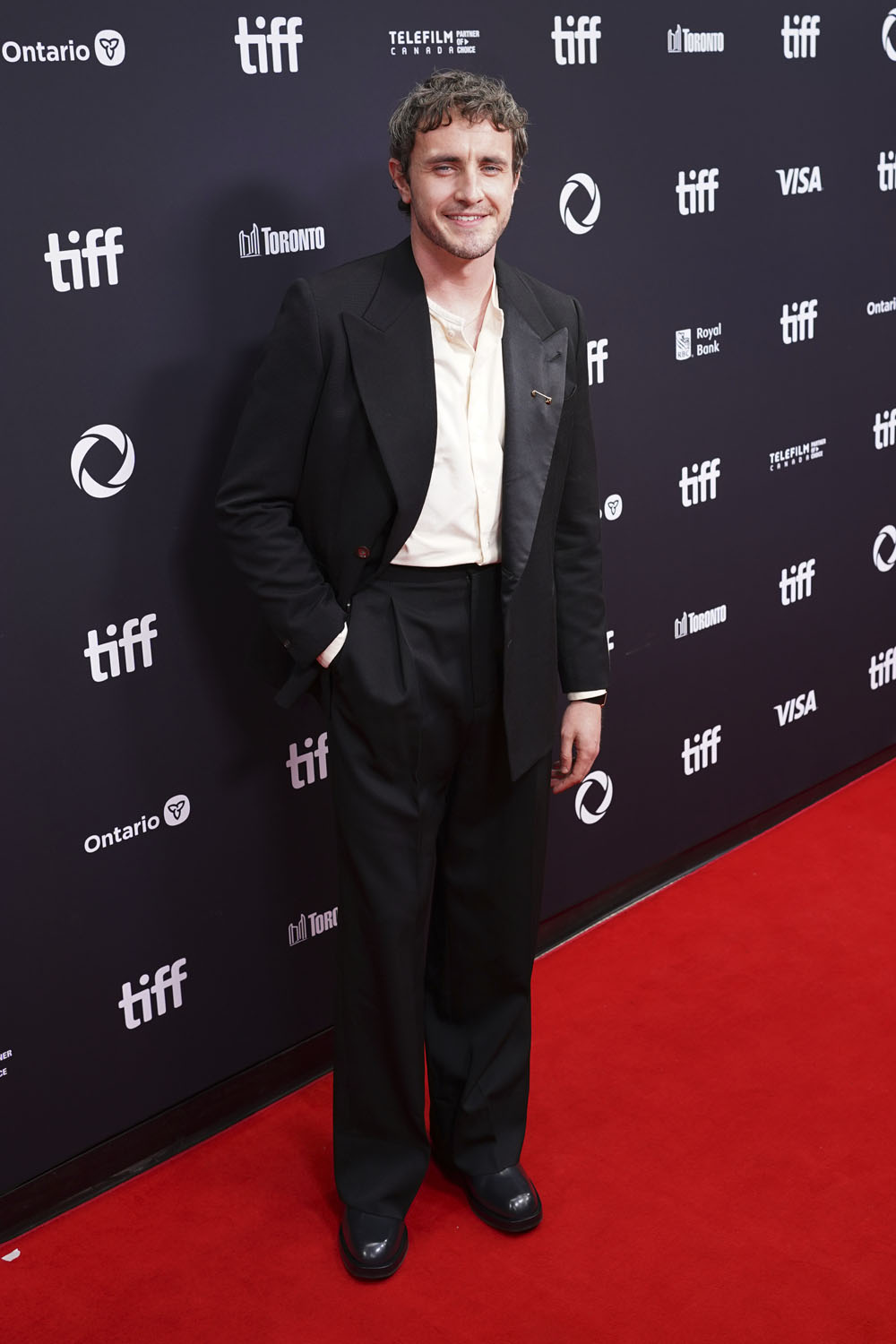
Jessie Buckley is simply astonishing as Agnes, capturing a woman who both knows she is too smart for the little life affords her, and yet is not bitter by her lack of opportunity. Agnes keeps alive the lessons of her mother—all the women in her mother’s family “come from the forest”—and she sees in Will, played with gloomy romanticism by Paul Mescal, the light of genius that only just flickers inside him, and is in danger of being extinguished entirely by their provincial town. There is a duality in Agnes that Buckley embodies effortlessly, Agnes’s whimsy and practicality are inseparable. A hundred years earlier she’d be burned at the stake, and at times Agnes seems to dare those around her to try it.
Agnes and Will marry and quickly produce a daughter, Susanna (Bodhi Rae Breathnach). She takes after Agnes, learning about plants and healing from her mother. A few years later, the Shakespeares have twins, daughter Judith (Olivia Lynes) and son Hamnet (Jacobi Jupe). There’s only one problem: Agnes has always predicted she would have two children at her deathbed. Among her three children, it is the fragile Judith she clings to hardest, but it is instead sturdy Hamnet who succumbs to the plague, offering to “switch places” with Judith when Death comes to their house.
While the idea of William Shakespeare’s home life being full of witches is singularly rad—and a tacitly fun nod to the strong presence of magic in his works—Hamnet is utterly, entirely, completely devastating. Agnes’s knowing gaze suggests she has seen the heartbreak that lies ahead yet marries Will anyway, and Buckley’s guttural screams during three birthing scenes are wrenching. Just as wrenching is her scream when Hamnet dies, the same as she uttered when he entered the world. The film is rife with grief, annihilating and inescapable, and Agnes shrinks into herself in the wake of Hamnet’s loss. Will is also devastated, though by this time his writing career has taken off and he is now the preeminent playwright in England. His son is dead, but he also has to go back to work.
And so the play Hamlet emerges. Thinking he was working on another comedy, Agnes storms off to London to see Will when she learns he is instead mounting a tragedy named after their son (Hamlet and Hamnet were interchangeable). There, she sees the first ever performance of Hamlet. Buckley is equal parts funny, talking back to the actors, scolding them for invoking her son’s name, and heartbreaking as she begins to see Will’s grief expressed in his writing. Indeed, Hamnet stages the Ghost’s soliloquy in which he charges Hamlet with avenging his death, but rather than follow standard practice and focus on the revenge angle Zhao reframes the speech as a farewell—the goodbye Will never got to say to Hamnet.
Similarly, “To be or not to be” is less a meditation of mettle and more about Hamlet contemplating dying young and everything he’ll leave behind, untouched and undone. Through Hamnet Zhao gets to play with what we know about Shakespeare, recasting some of his most famous passages in the shape of grief, the specter of Hamnet looming over his work just as Hamnet’s loss looms over Agnes back at home. And it is Agnes’s grief that gives shape to this narrative, her anger giving way to morose depression and finally a delicate acceptance. She will never be the same after losing a child, but she can let Hamnet go at last, his memory ensconced in Will’s play.
To call Hamnet devastating barely scratches the surface of Buckley’s extraordinary performance. She is desolating in the completeness of her expression of loss and grief. Mescal is equally good, though he is a secondary character, with Will absent from home so much. It’s Buckley that has to carry the weight of Hamnet and she does so flawlessly. This is the kind of film that prompts audiences to ugly sobs, but Buckley’s performance is so grounded and honest that Hamnet never feels manipulative. Between Chloe Zhao’s deeply empathetic framing and Jessie Buckley’s encompassing performance, Hamnet does what great drama has always done—give voice to our deepest fears and catharsis for our worst imaginings. Hamnet is an exorcism of loss and mourning, a purging of the soul as complete as anything Shakespeare ever wrote.
Hamnet will play exclusively in theaters from November 27, 2025.