Ethan Hawke in Blue Moon

– 5 min read
If “theater kid” was personified as a film, it would be Richard Linklater’s Blue Moon, a very theatrical imagining of a real moment in time and the conversations that may have been had between people who definitely knew each other. It’s March 31, 1943, the opening night of the new Broadway musical Oklahoma!. It’s the first collaboration between two accomplished artists, composer Richard Rodgers and lyricist and librettist Oscar Hammerstein II. Oklahoma! is received by a rapturous audience, and Rodgers & Hammerstein are cemented as a new Broadway power couple, creatively speaking.
In the audience, though, is Lorenz Hart, Richard Rodgers’ former creative partner. Through the 1920s and 1930s they dominated Broadway and wrote a chunk of the American songbook, cranking out hits like “My Funny Valentine”, “Bewitched, Bothered and Bewildered”, “The Lady Is a Tramp”, and the mega-hit “Blue Moon”. But by 1943 alcoholism made Lorenz Hart unreliable, and Richard Rodgers moved on to a new partner—less flashy, maybe a little less gifted, but certainly more dependable. In the bar of Broadway mainstay Sardi’s, Lorenz Hart holds court after the opening, reflecting on life, love, music, and writing. Ethan Hawke stars as Hart, assailing vast quantities of dialogue with loquacious gusto, rendering Hart as an irresistibly charming drunk trying to smile through the pain for one night.
But for a brief street scene, the film is set entirely inside Sardi’s, with most of the action taking place in the bar. With its single setting and the conspicuous entrances and exits of actors, it’s easy to imagine Blue Moon performed as a stage play, but that is a feature, not a bug, of a film about theater people. Though the cast includes Andrew Scott as Richard Rodgers; Bobby Cannavale as Sardi’s affable bartender, Eddie; Patrick Kennedy as fellow writer E.B. White—on the brink of making a career change to children’s literature—and Margaret Qualley as dashing co-ed Elizabeth, Blue Moon rests entirely on Hawke’s shoulders. He is in every frame and delivers at least 75% of the dialogue, often in marathon monologues in which he barely seems to breathe.
Hawke isn’t entirely unrecognizable as Hart—his handsomeness defies even the best prosthetics—but he does sink into the role convincingly. Balding, with bags under his eyes and a rotund shape, Hawke’s “Larry” is dapper and verbose and latently queer in that “it’s actually illegal” midcentury way, even as he waxes poetic about his latest muse, college girl Elizabeth, a love no one is buying despite Larry’s obvious fixation. Lorenz Hart was also reportedly very short, and yes, Linklater and Hawke deploy some forced perspective trickery to bring five-ten Hawke down to five-even. Is it convincing? Not really! Did I think about Gary Oldman playing a little person in the (deeply misguided) film Tiptoes? More than once!
Fortunately, Hawke’s performance is so good that he overcomes those moments of awkwardness. This film is entirely about his performance, though Andrew Scott has a crushing scene as Rodgers, his love for Larry as potent as his weariness. Not only does Hawke have to deliver huge amounts of dialogue—he literally never stops talking—but he has to portray Larry grinning and bearing it through a personally and professionally excruciating night. It is clear from the moment he opens his mouth that Larry is crushed Rodgers is working with someone else, that he disdains Oscar Hammerstein as an inferior talent, but that he also knows he cannot let any of that show to anyone at Sardi’s. He has to pretend to be happy for Rodgers and Hammerstein, even as their success signals the death knell of his own creative partnership with Rodgers.
The saddest spectacle of all, though, isn’t Larry congratulating Hammerstein, or trying to woo Elizabeth, it’s when he invites people to a party at his apartment that you just know is not happening. Everyone knows it’s not happening, Larry knows it’s not happening, but he keeps up the pretense, promising a blowout affair to everyone he comes into contact with. The film doesn’t even need the postscript that establishes Hart dies later that year, it’s obvious in every frame his clock is winding down, and Hart seems to know it. His kinetic energy and frantic monologuing is like purging the last of his energy before he sleeps.
Blue Moon is a curio cabinet of history and references for musical theater fans, anchored by a towering performance from Ethan Hawke. Despite its singular setting, it’s not precisely an intimate film, because Larry holds people apart from himself. We are not so much invited into his inner life as we are into the spectacle of preserving his dignity and protecting that inner life on a particularly difficult night. Hawke’s Lorenz Hart is funny, sad, precocious, wise, slightly deluded and always scathing. All the world’s a stage, and Larry is determined his one-man show will be the best performance in town that fateful night. It certainly is for Ethan Hawke.
Blue Moon is now playing exclusively in theaters.
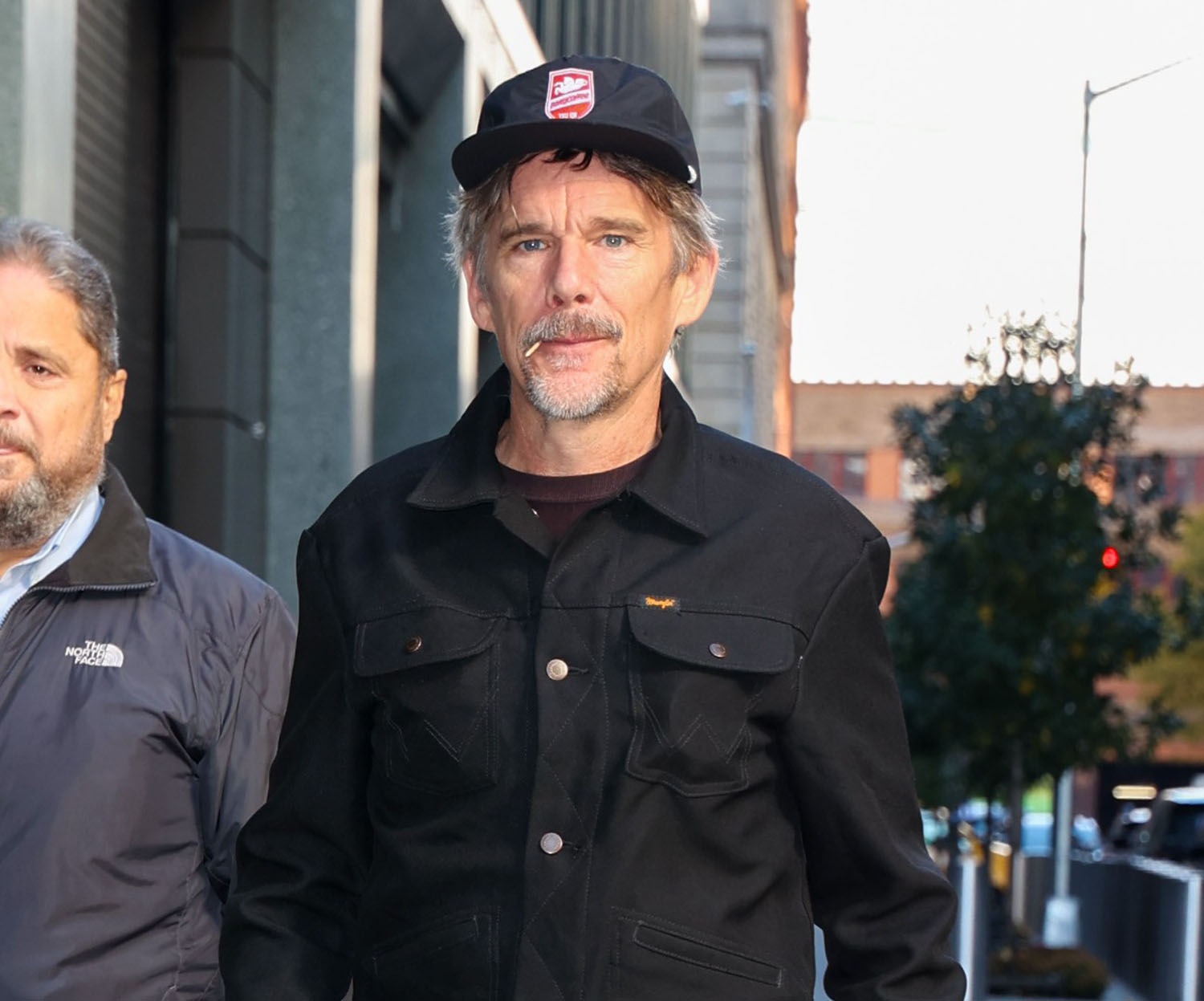
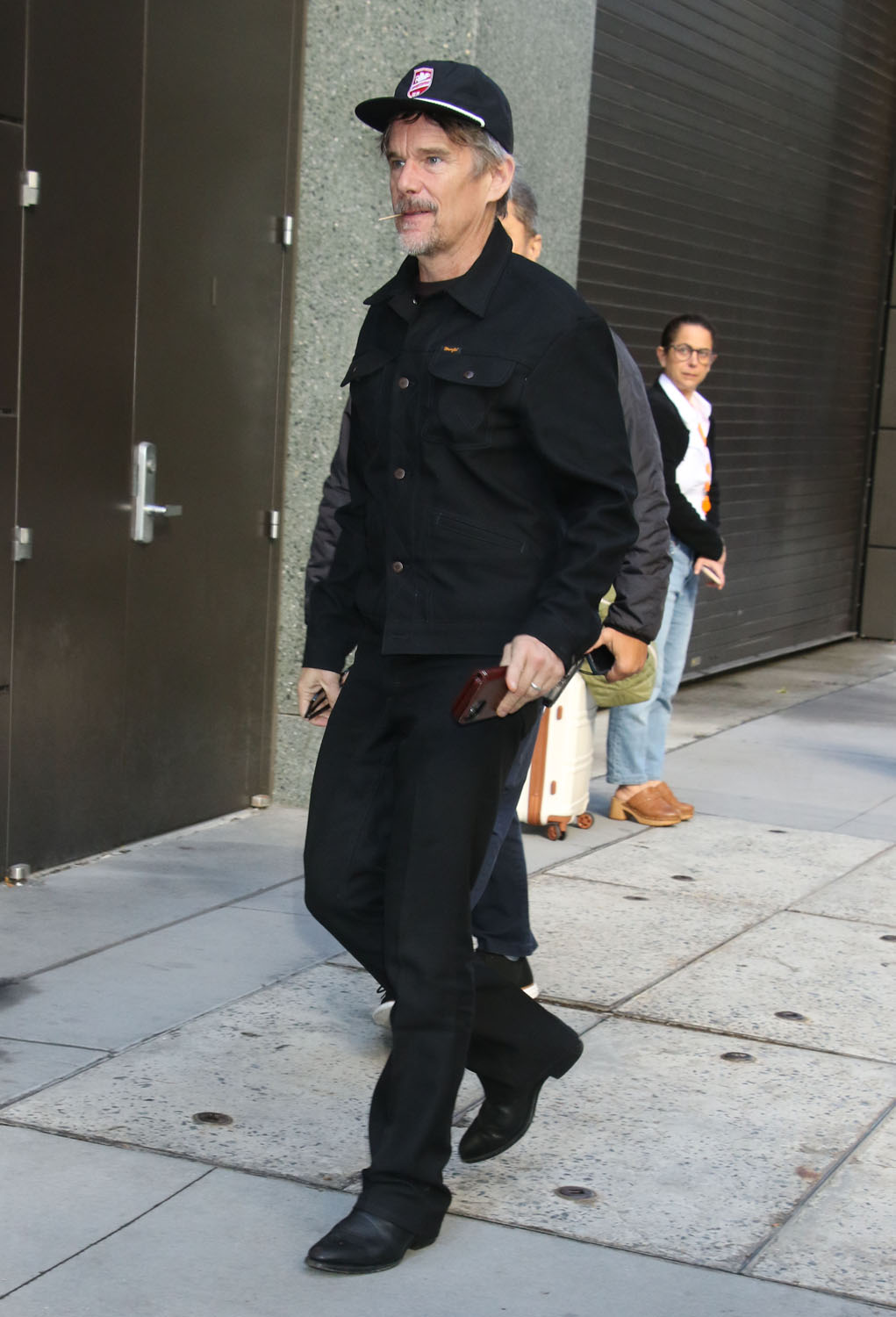
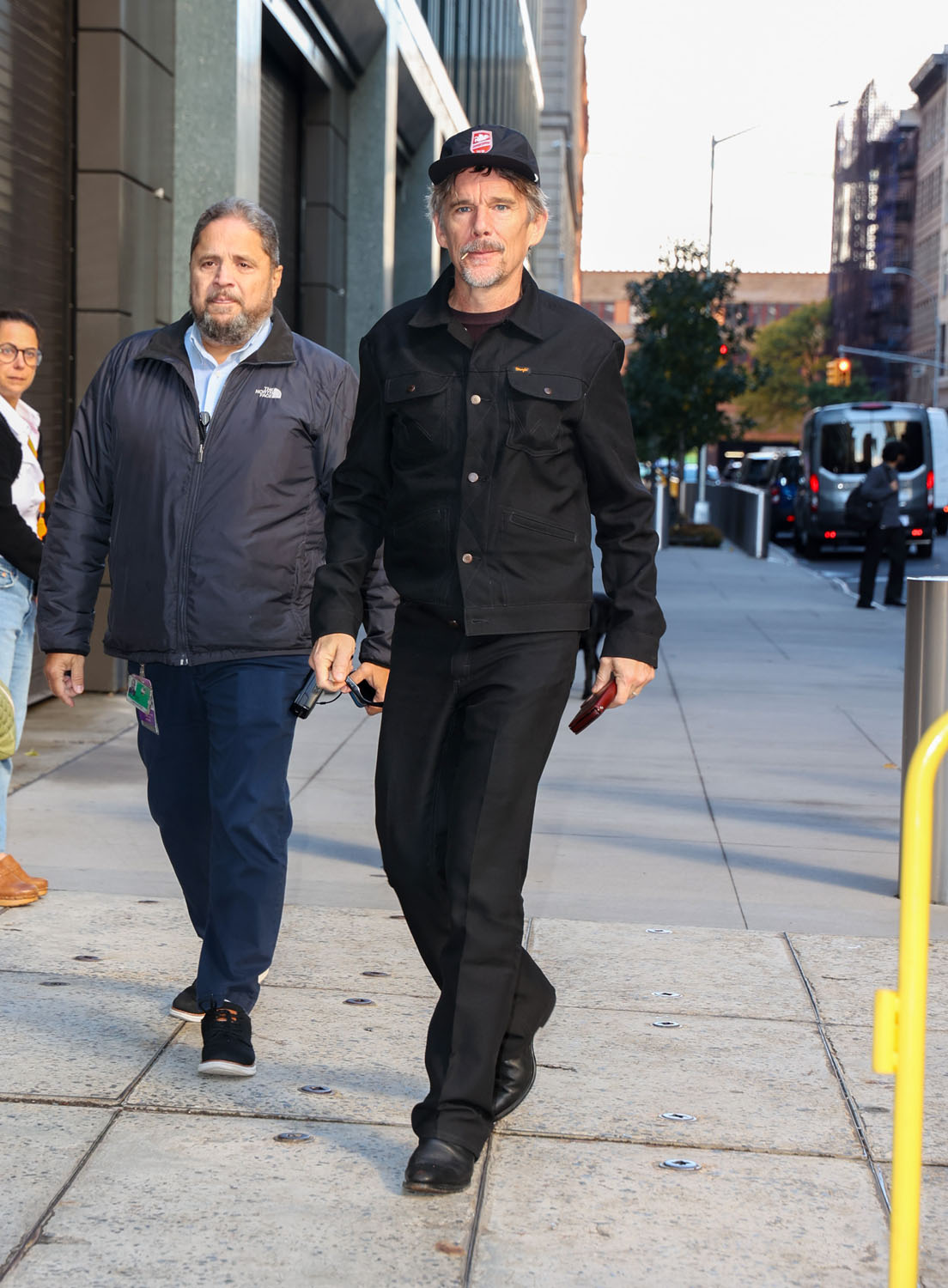
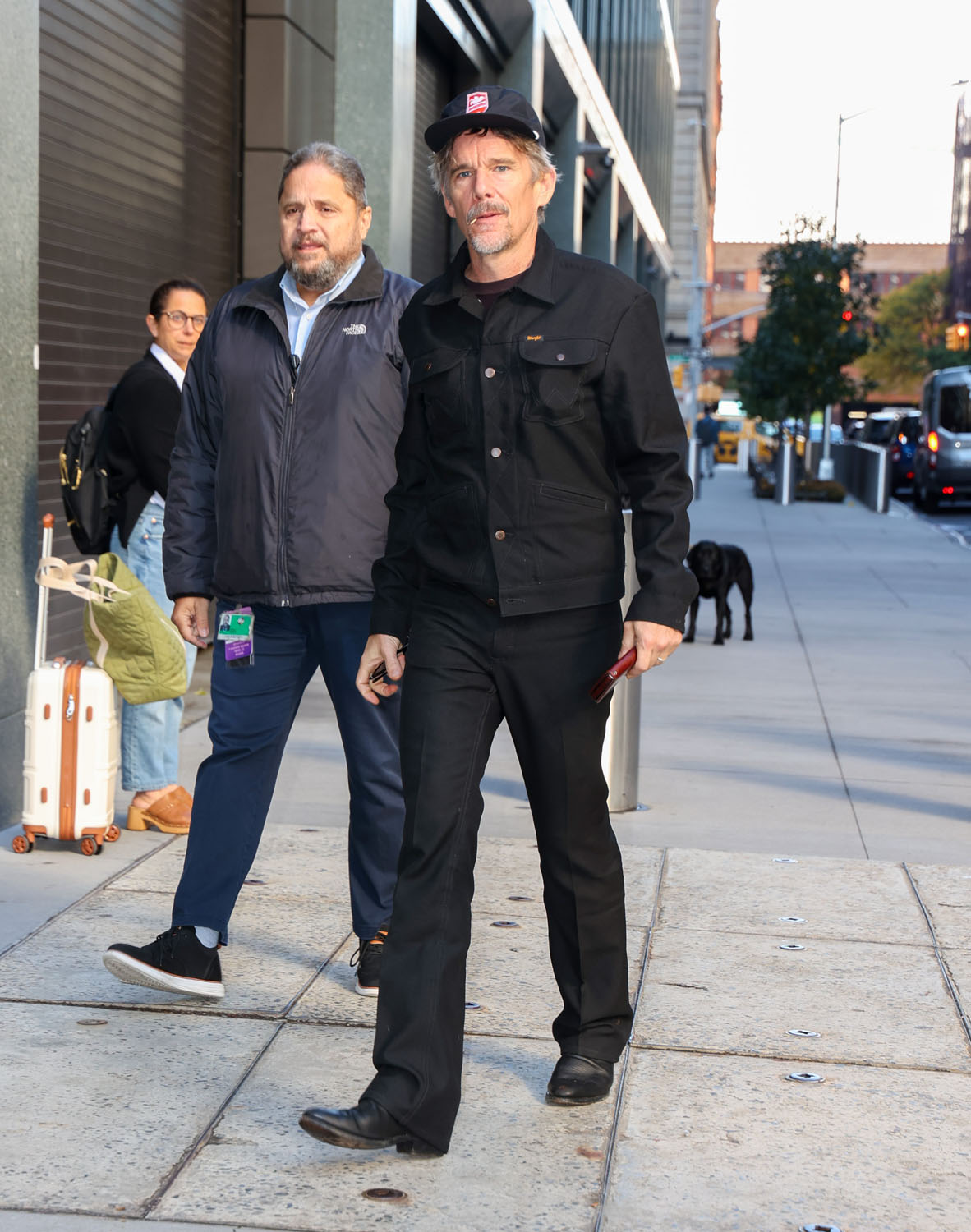
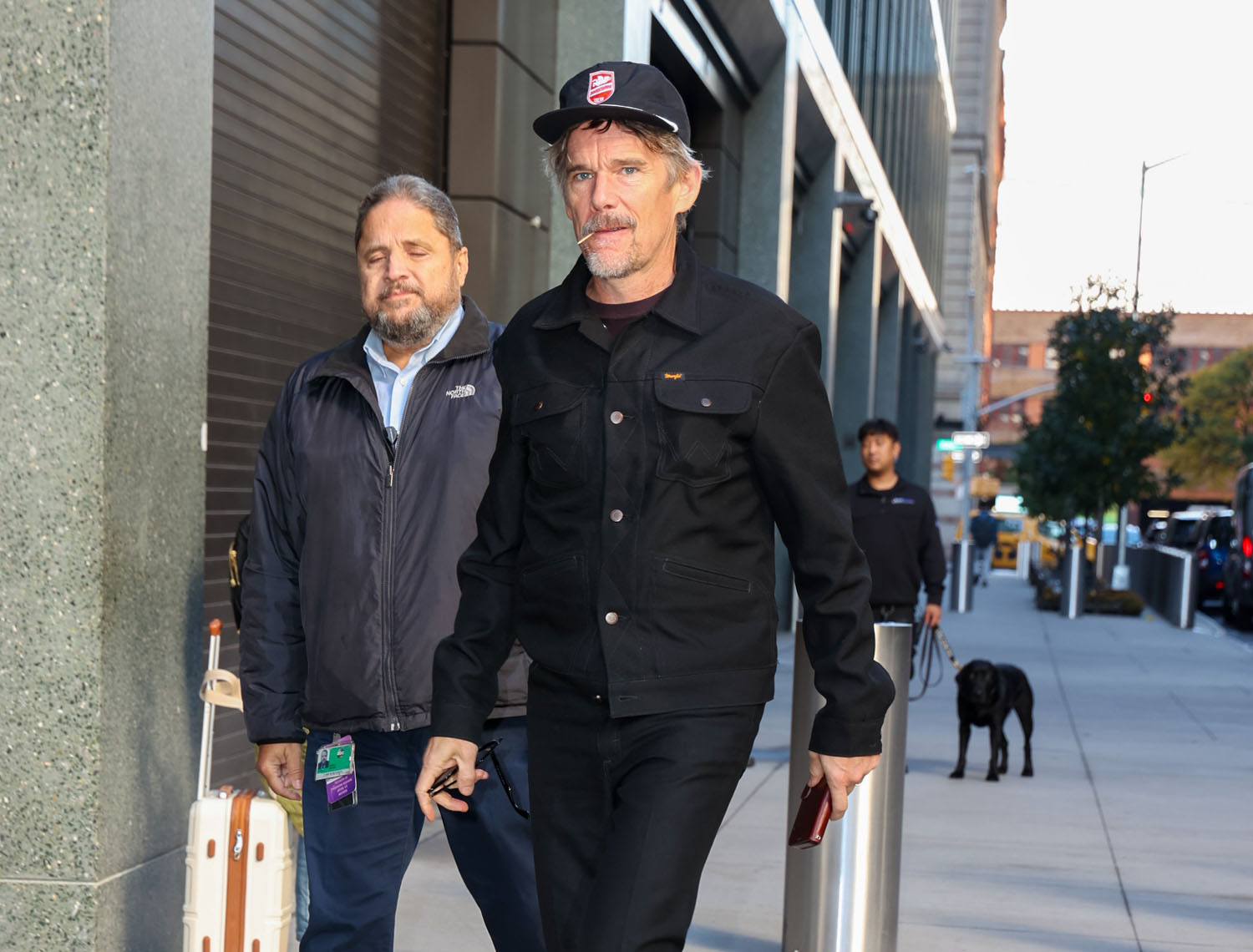
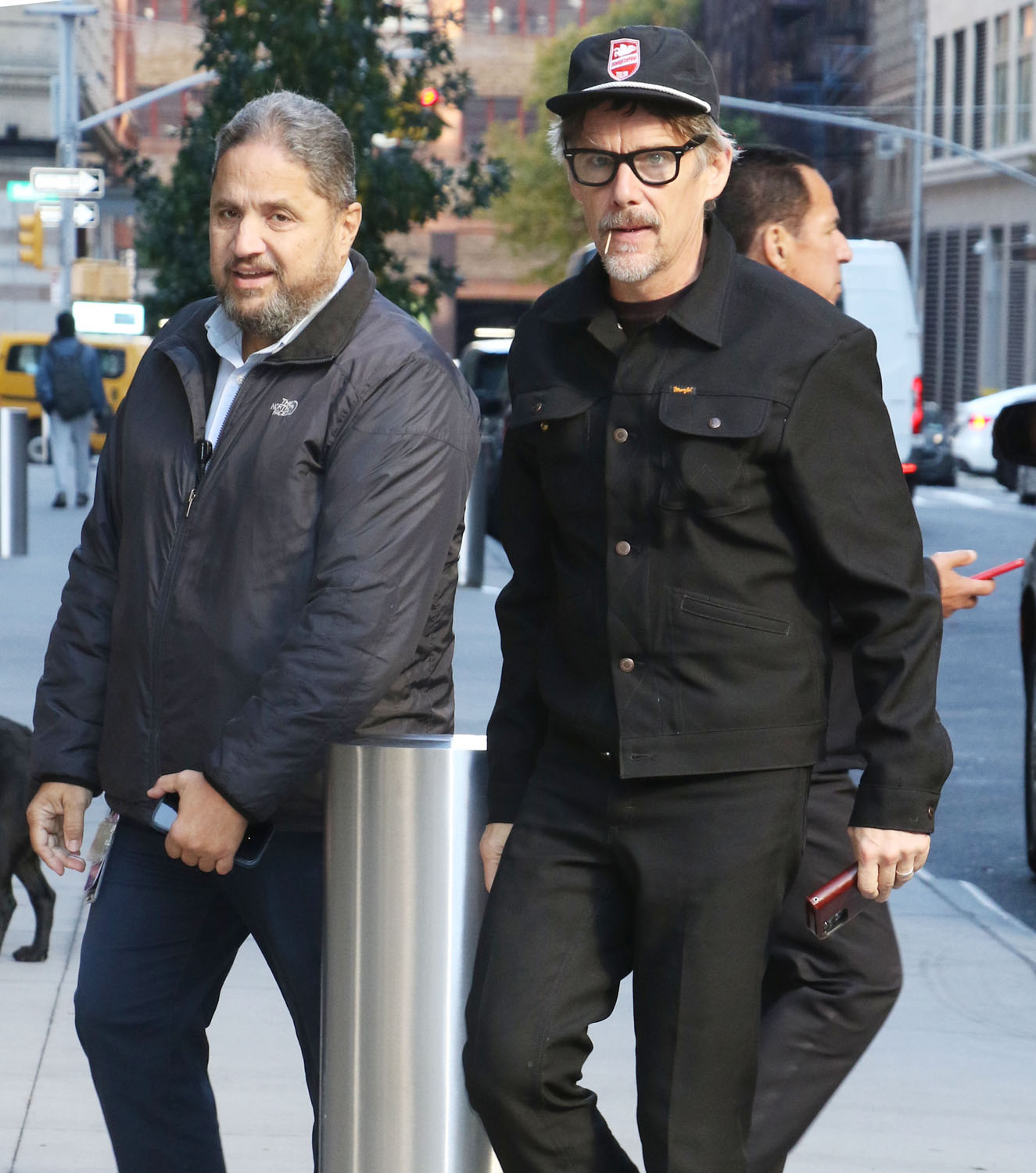
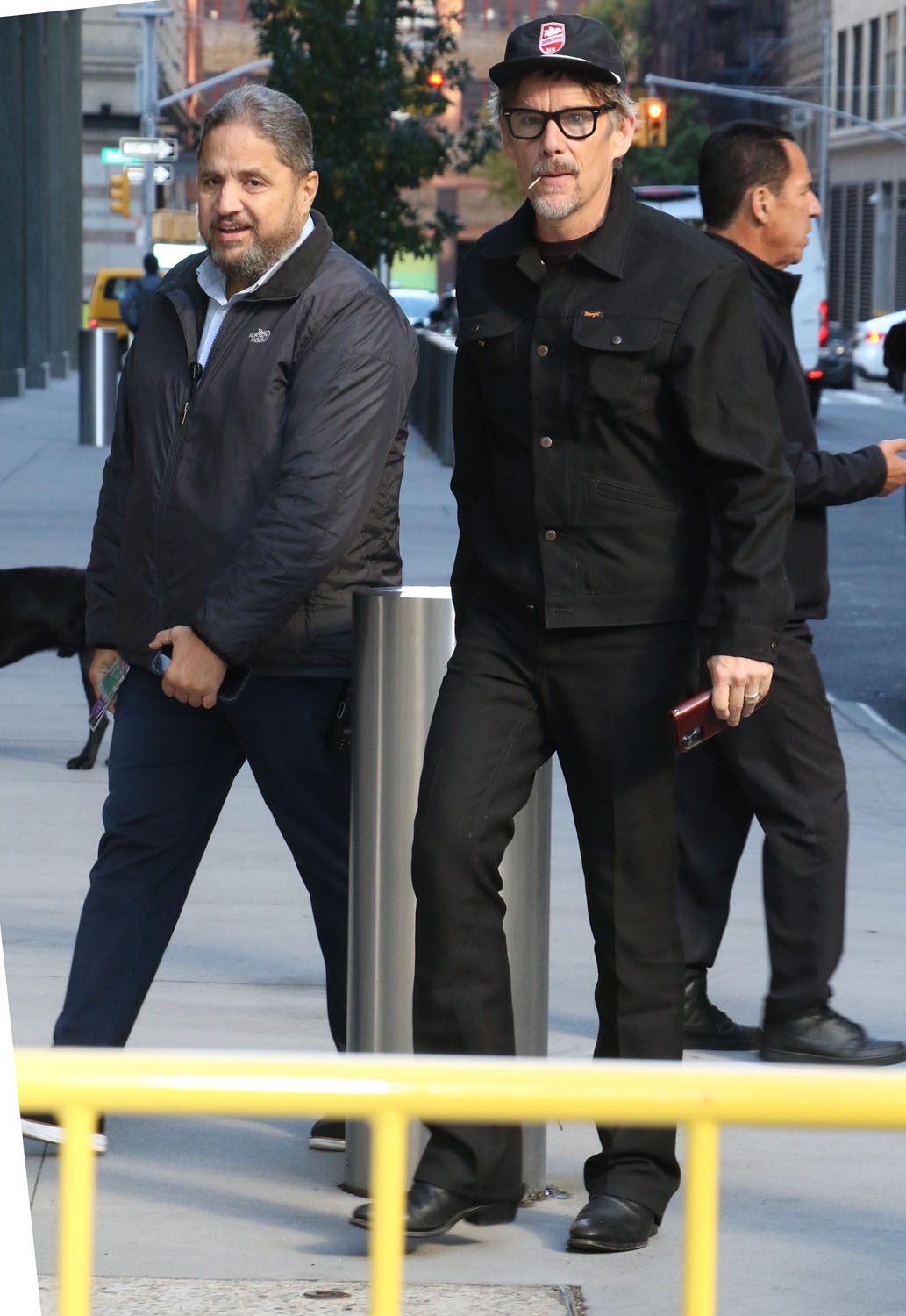
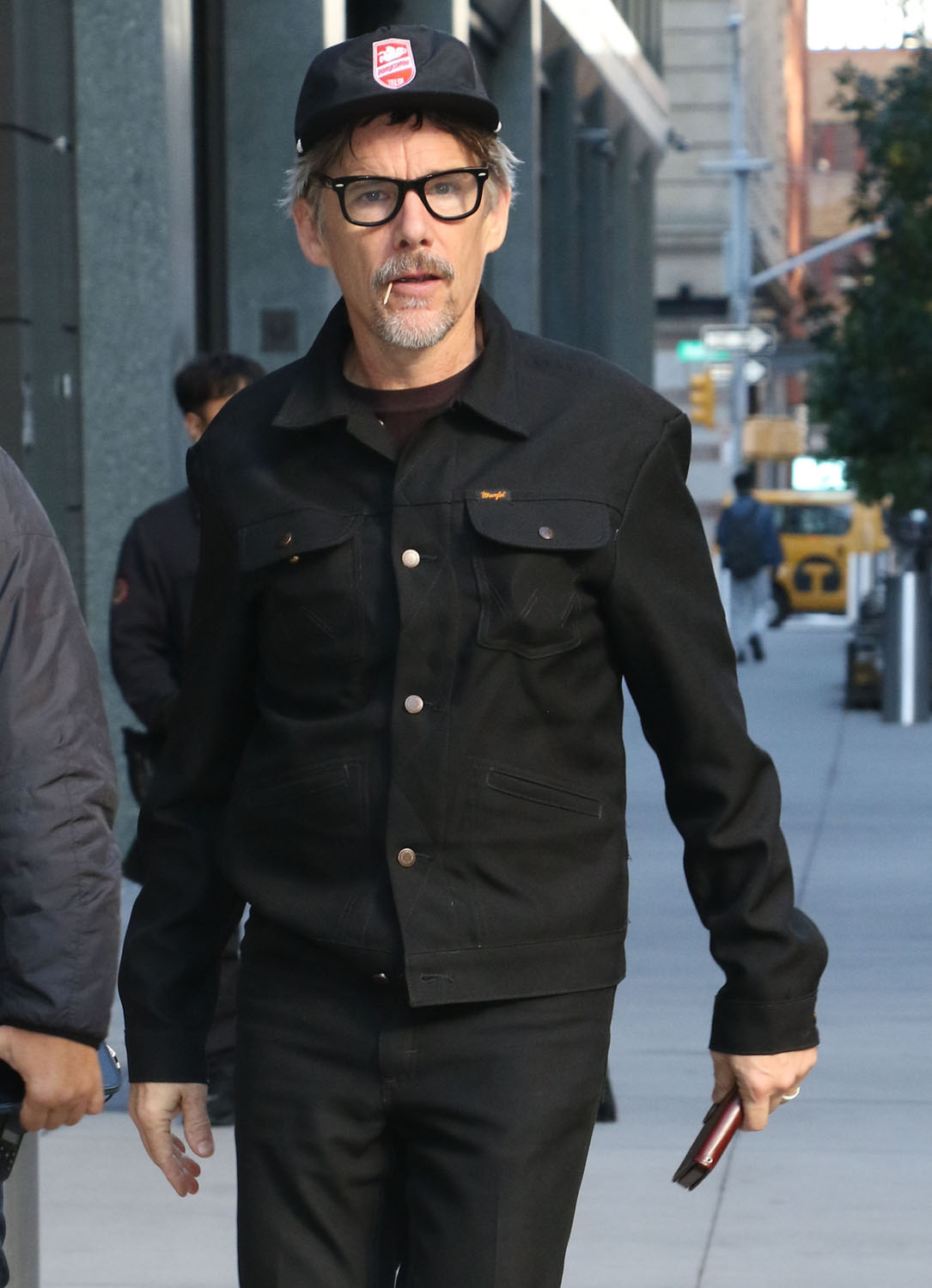
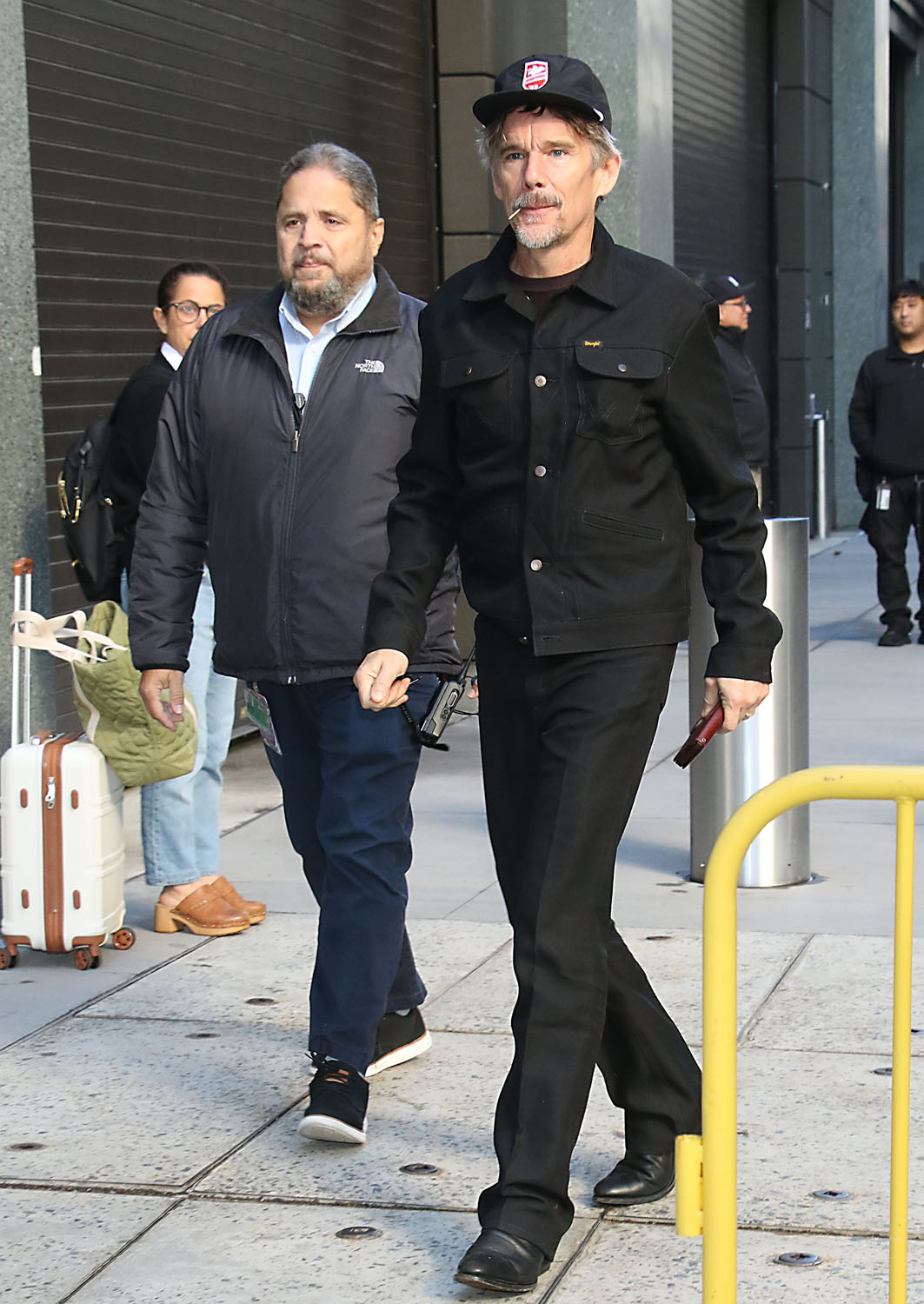
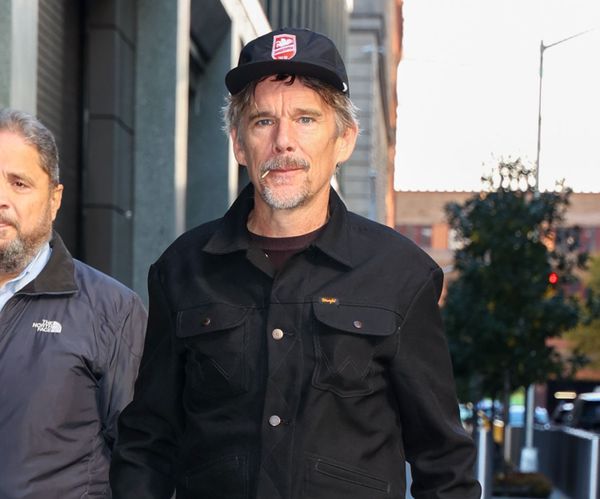
Attached- Ethan Hawke at Good Morning America this week in New York.