Tyra Banks is reality checking her reality check

– 5 min read
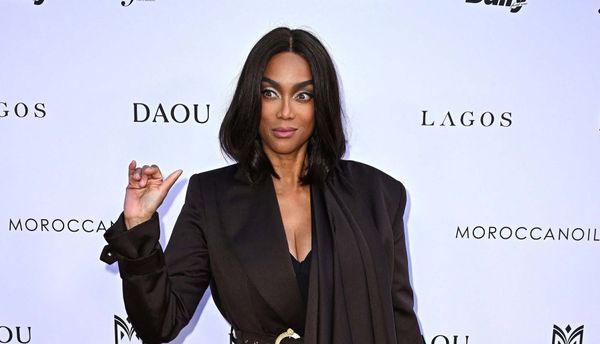
Just a few months after the bombshell documentary Reality Check: America’s Next Top Model hit Netflix, Tyra Banks, the show host and creator of the mid-2000s legendary reality TV series, has officially filed a defamation lawsuit against the streaming service. The lawsuit, filed in California, alleges that despite Tyra sitting down for a more than three-hour interview, her total speaking time ended up being just 16 minutes in the actual production, and that her portrayal was edited to support a false narrative. I first wrote about the debut of the documentary, which racked up over 14 million views in just the first week, here.
The suit also states that her participation was pitched to her under the guise of the interview being about the show’s legacy and what she might have done differently today, that her comments lacked context and proper sequencing and that the moments in which she took accountability did not make it into the final cut.
Though the news of the lawsuit doesn’t necessarily come as a surprise to most people who have even the slightest bit of familiarity with the level of diva there is in Tyra, the question on everyone’s mind is whether the lawsuit has got any legs. Could Netflix actually be on the hook for defamation?
I think one of the things making this lawsuit filing a bit egregious, at least in part, is the fact that Tyra participated in the documentary. It seems a lot more likely that a production you had no role in might have been defamatory. But in this case, Tyra was receptive enough to the production and the team behind it to sit down and be interviewed for over three hours, only to claim that she wasn’t content with her final portrayal.
And to be honest, I think that’s what her lawsuit is actually about. It’s an expression of disappointment in her portrayal more than it is an actual rooted and believable allegation of defamation. Unfortunately for Tyra, there’s no legal action you can take for production not going to plan, your plan, anyway. And so she’s filed this defamation suit to try to regain control of the narrative that’s out in the public.
According to the suit, Tyra did not put any limitations on the documentary crew in their line of questioning. They were allowed to ask her just about anything as it pertained to the show’s ground-breaking history. But she was gravely disappointed by what the lawsuit refers to as the “surgical manipulation” of her interview and the cutting and clipping of her interview segments to support the narrative not only being formed by the other interviewees, but by the literal footage that we saw, both when the show aired and again during the documentary.
I can’t be the only person wondering how someone with such an extensive background in television could have possibly assumed that in a three-part documentary series featuring commentary and interviews with over a dozen key players, that her voice would be the dominant one. I mean, what was she expecting? That they would just base the entire documentary off of her recounting of events? Particularly when they had actual footage to rely on? Anecdotes from the cast of the different seasons?
I also can’t be the only one marvelling at the irony of all of this. One of the biggest complaints from past show participants was about the predatory nature of production. About how they were poorly portrayed on the show and had their entire storylines based off of traumatic experiences they had in their lives. This was the exact sentiment of the reaction shared by season one winner, Adrianne Curry, who had this to say in response to the lawsuit filing:
“I read that Tyra Banks is suing Netflix because she didn't like being edited. Bitch, for real, girl? Welcome to the party, pal,” she said in a video posted to Instagram.
Adrianne also tossed the idea out that this could be some sort of publicity stunt, setting the stage for perhaps another production, or “something new” as she referred to it, by Tyra and her team. Which could very well be the case, despite the lack of confirmation at this time.
Adrianne’s criticism of Tyra is especially interesting because, despite her being critical and not participating in the documentary, she has been open about professing her respect for Tyra. In a video posted to Instagram the same month the documentary was released, she had this to say:
"She is not sorry. She is not apologizing to you. That bitch is not effing sorry. She will not bend the knee. And I respect that. You want her to lie? Lie and say how bad she feels?" she said. "Everyone's coming to me like, 'None of the judges are sorry.' Why should they be? They're all loaded...but mad respect for Tyra because that's hard to push back on that many people trying to struggle session you. She's just like, 'F-ck you, I do what I want.' And I gotta respect that."
So clearly, Adrianne isn’t necessarily coming from the same place other women who spent time on the show might be, people who were deeply hurt or felt jilted by her. People like Angelea Preston, who believes her winning title was stripped over her involvement in the sex work industry. Or women like Shandi Sullivan, who shared a horrifying experience of an alleged sexual assault taking place during filming. Or Ebony Haith, whose awful and marginalizing experience I wrote about in my first piece. Adrianne gives Tyra credit where credit is due but demands that she be more realistic. And more importantly, fair.
Speaking of fairness, Tyra is calling for her full three-and-a-half hour interview to be made public. And to be honest, I don’t think that’s an unfair ask. It could easily be made into an extended or director’s cut and put on YouTube or Netflix for the masses to see. But again, I think that’s just Tyra wanting to regain control of the narrative. She is so skilled at editorializing and wording her way out of things – which is probably why she was willing to be featured in the documentary in the first place. Because she was banking on her ability to talk her way out of some of the questions that came up. But she couldn’t do that if her wordsmithing didn’t make it to air, which is why she’s calling for the release of the full-length interview.
Tyra’s need for control will forever be her weakness. Her desire to look angelic against the backdrop of a hellscape she created is likely rooted in a deep insecurity, which makes sense given the industry she came up in. And perhaps leaning more into that narrative, about how modelling might have created the monster we saw at many points in time throughout ANTM and The Tyra Banks Show, without being overly dependent on it as a means of wiping her hands clean of accountability, would help her be even a bit more trustworthy in the eye of the public.
The only way out of having her reputation and legacy tarnished even further is to embrace and take full accountability for what she put so many women through. And until she does that without citing “defamation” and “false narratives” when her story isn’t told the way she demands it to be, she will continue to be an unreliable narrator and an untrustworthy voice in perhaps one of the most important conversations to ever have in the reality TV space.