Sandra Bullock, caregiver

– 4 min read

In celebrity reporting, the phrase “breaks their silence” is overused and often misapplied. They often refer to someone breaking their silence one day after a mega headline/situation. Or use it to describe someone who basically livestreams every day.
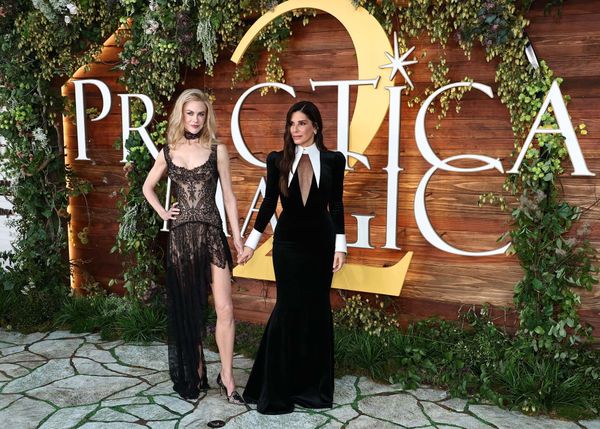
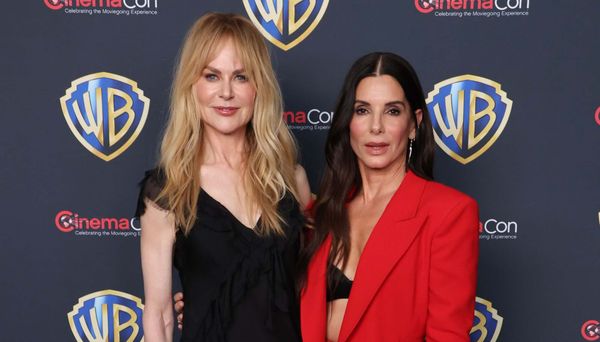
But in Sandra Bullock’s case right now, everyone talking about her “breaking her silence” is correct. It’s been three years since Sandra’s partner, Bryan Randall, died of ALS. And she has talked about her experience for the first time on the Smartless podcast. This makes sense as a safe space to do it as she promotes Practical Magic 2, the reason why she’s doing media at all since, obviously, Sandy would not be out here thirsting for a microphone if it wasn’t in service of the work. Jason Bateman’s wife, Amanda Anka, is one of Sandra’s closest friends – as evidenced by the fact that she was one of the only people Sandy confided in during Bryan’s illness. Same goes for Jennifer Aniston but other than Sandra’s sister, Gesine, no one else knew what was happening in their home: that Sandy was caregiving pretty much fulltime behind closed doors.
I’ve not yet listened to the episode and I’m not sure I’ll be able to because of my own experiences as a caregiver; reading what Sandra says about it is hard enough. But I do very, very, very much appreciate and respect her for sharing. There are more than eight million caregivers in Canada, more than half of them are women, and almost half of them financially strained. If it was tough for Sandy, it’s obviously that much tougher for non-celebrities. Caregivers are at risk of burnout, they are often caregiving for multiple demographics, their aging parents or a spouse or sibling, but also young children. Many have to balance paid employment with unpaid caregiving, and limited to no resources on either side.
Sure, Sandra Bullock has money, a lot of money, but that still didn’t protect her from the trauma and the heartbreak, and in ways that are not talked about enough – which is why it’s so important that she’s talking about it.
One of the biggest revelations is that Bryan wanted her to keep his diagnosis a secret, so in addition to the stress and the worry, out of respect for him, she had no emotional outlets. She was also, during that time, raising the kids and trying to make their childhoods as joyous and uncomplicated as possible. Life is sh-ttier the older you get, any parent would understand another parent’s desire to extend their child’s innocence, free from heartbreak, loss, and pain.
So with Bryan and the kids as the priority, Sandy’s needs weren’t high on the list at her place. Yes, I repeat, even with her wealth – wealth doesn’t insulate anyone from the onset of disease, and the chaos that results from it. Wealth is not armour against deterioration and eventual death. And Sandra is candid about the effects of Bryan’s physical deterioration, the impact that had on his mental health and therefore their relationship, explaining on Smartless that:
“When the physical illness was then coupled with the mental health aspect of things — and it’s something that people don’t talk about… it was a trifecta that was pretty dark.”
I felt this hard when I read it because it’s so honest, SO true. People who are sick aren’t always nice. And that’s OK, they don’t have to be nice, they’re in pain, they’re suffering, it’s understandable that they’re not always giving you their best side. But when you’re on the receiving end of that pain and suffering, when you are the target of the moods, as a caregiver you have empathy, and the empathy takes precedence over your own feelings. This is HARD. This is also pain, it is also suffering … and the caregiver, as Sandra says, has to endure it quietly.
To be clear, because there are f-cking assholes all over the place waiting to ragebait on anything, she’s not complaining, she is illuminating a caregiving reality that a lot of people can relate to and those of us who’ve been there probably appreciate the shoutout. They might also appreciate what she says about grieving, and how it doesn’t follow a standard formula – per PEOPLE:
“I started grieving Bryan four years before he passed, he was ill for half of our relationship. My person left a lot earlier than the body left. I don’t think I ever dealt with that until after he passed, because you’re just on this treadmill, you know?”
This might be the most authentic high-profile account of caregiving I’ve read. High profile because she’s so famous, so beloved, and authentic because she goes beyond the usual descriptions of grief. The farewell is not linear, and the farewell isn’t like a storybook – the farewell itself can be a messy thing, especially with degenerative illness because the person you love disappears in stages. And, frankly, the person you love might become someone you don’t even like before they die.
It’s a brave thing to share since, in my opinion, we are not taught to understand the nuances of love and loss – there’s a black and whiteness about how we talk about love, like it’s just love all the time, even when love is being challenged by an undefeatable obstacle. And especially for caregivers who are expected to love continuously, faithfully, blindly, and selflessly.
So this conversation that Sandra’s having, it’s doing a lot to help caregivers feel seen when most of their entire experience is in the shadows.