Sandra Bullock’s Parenting Reality Gets Very Real

– 5 min read


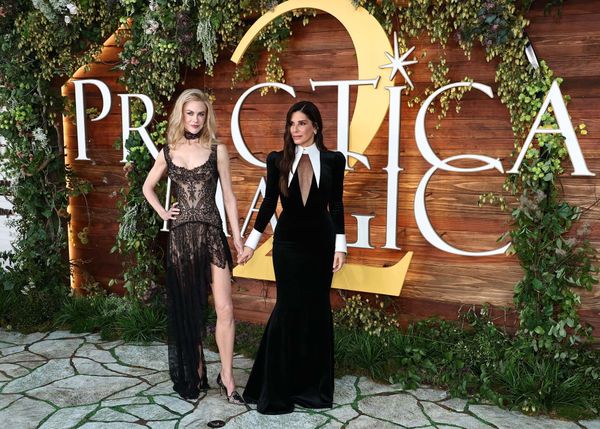
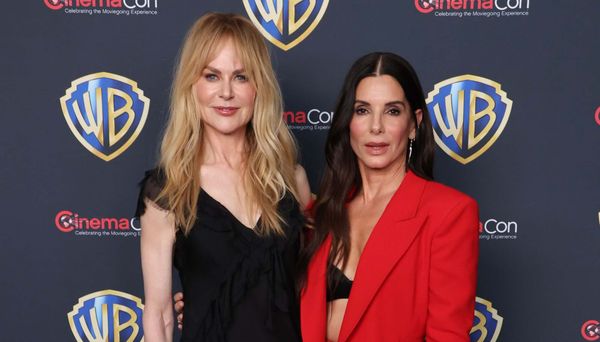
Sandra Bullock is consistently open and candid in interviews, but took it to a new level in a TODAY show interview this week with Hoda Kotb, while promoting Practical Magic 2 with Nicole Kidman, when she revealed she’s ‘uber paranoid’ about her kids when they leave home, for depressingly obvious reasons.
“I’m uber paranoid, and they will tell you. They’re like, ‘Mom, it’s gonna be fine.’ I’m like, ‘It’s not fine. It’s not fine outside.’ The energy that is floating around our country and our world again,”
She acknowledges that though they’re her children and obviously have privilege as a result, the protective label of “Sandra Bullock’s Children” isn’t immediately obvious when they’re out in the world without her as Black teenagers – a situation she’s dealing with more now that they’re 16 and 13.
“They’re my babies, they’re my life, but no one knows that when they leave my house…So that is always in the forefront of my mind. I’m now learning to trust them. Where they are now is extraordinary.”
Sandra admitted some of this is on her, too:
“As a white parent who loves her children more than life itself, I’m scared of everything. I know I’m laying all kinds of existential anxiety on them. And I have to think about what they’re gonna experience leaving the home. They’re gonna have my fear, but how can I make sure that my anxiety is accurate, protective?”
I actually think what she’s asking is a fair question – as a parent, how do I channel my anxiety into something that will result in greater protection for my kids? It’s a tough but necessary line to toe, trying to determine just how much of your own anxiety your kids should adopt and carry with them as they move through the world.
But her vulnerability and candor was an excuse for Megyn Kelly to blast her on yesterday’s episode of The Megyn Kelly Show, saying, among other things, that Sandra’s claims have ‘no basis in reality’.
"She wants you to believe, just like Lebron James said that Black men are being hunted in the streets of America…that [her kids] are being hunted in the streets of America.”
Of course, anyone paying attention to the news knows Sandra and Lebron are correct. Research from the Center for Gun Violence Solutions found over 300 juveniles were shot by police between 2015-2020, and of those victims, more than half were Black. The study also found that Black kids were six times more likely to be shot to death by police than white kids. All this is easily searchable, which means Megyn’s next sentence is preposterous and, dare I say, gaslighting.
"Trust me when I tell you, her children are not in danger….Why is she pretending that she lives in the Jim Crow South?"
What’s important about Sandra’s point is she knows she’s got privilege on privilege, being white, famous and wealthy. But she also knows that without immediate proximity and association to her, those privileges do not extend to her children. More importantly, this level of awareness and acknowledgement is crucial for any white parent who is parenting, in any capacity, a Black child.
Sandra’s been very clear that she knows this reality, and in a 2021 appearance on Red Table Talk, she told the panel she knows her son Louis (and daughter Laila) needs to understand it very clearly:
“I’ve been schooling Lou since he was 6 years old. He popped that hoodie on his head and I said, ‘Ah… let me just explain…I let him see everything. I let him see everything on television. I let him process it. He knows how the world works. He knows how cruel it is. He knows how unfair it is and now Laila knows it.”
These are the exact conversations going on in Black families, which begs the question of why they wouldn’t need to be had in families where the children are Black but the parent is not!?
In fact, in families like Sandra’s, where the parent is white, wealthy or famous, these conversations are even more nuanced, because you can be exposed to multiple conflicting narratives about societal treatment when you have a wealthy, white parent. It makes it easier not to see certain realities that become very apparent the minute you navigate the world without a parent like Sandra around.
Megyn’s comments point to an (arguably deliberate) ignorance about how differently people who do not look like her experience the world. That ignorance can be lethal for Black children. And though Sandra admitted, in the same interview, that she’s constantly panicked, which as a parent, I totally understand:
“I panic at everything. I think they’re gonna die all the time. When I get up at night, I walk by their rooms to make sure they’re breathing.”
..it’s clear she’s committed to the reality of parenting Black children, including carrying that persistent fear – which is exacerbated when your kids get to the age where they want to be independent and hang out with their friends without parental supervision. Implicit there is that regular teen nonsense may ensue – but add to that the terrifying reality of the numbers and statistics I mentioned above floating around in the back of your mind. Or to Sandra’s point, the forefront of hers.
This is what parents of children of colour live with everyday. And I don’t think the impact is looked at nearly enough. This weight carries immense consequences on your ability to move through life at peace. According to the National Library of Medicine, parenting Black children means constantly dealing with racial bias, systemic racism, and exposure to community or media violence, which can place Black youth at a higher risk for anxiety, depression, and behavioral challenges.
This can lead to something called ‘the spillover effect’, characterized in studies that show race-related stress experienced by parents can cascade into the household, sometimes heightening parent-child conflict if not actively managed. Research exploring profiles of youth facing adversity highlights that supportive environments build deep social competencies like resilience and affability. Even if that support sometimes means scaring your children, because that’s a parent’s job. As she told the Red Table:
“With Lou being a young Black man, at one point, sweet, funny Lou is gonna be a young man and the minute he leaves my home, I can’t follow him everywhere, though I will try. I’m joking, but I’m not. I don’t know what I will do, but I pray, I pray, I pray that I’ve done a good enough job, scared them sufficiently,”
All of this suggests that Sandra is doing the exact thing she needs to be doing, which is having honest, real and supportive conversations with her kids, preparing them and trusting them to find their way in the world, with and without her.