Karamo Brown expands on Queer Eye’s messy dynamics

– 5 min read

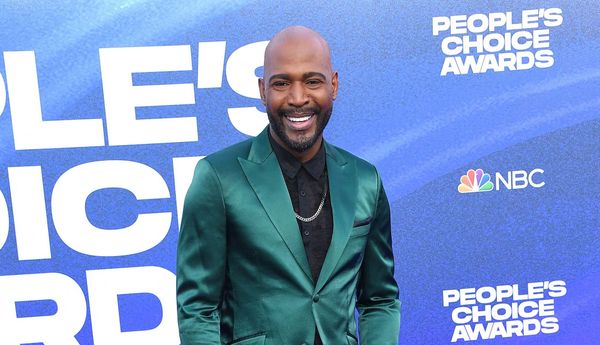
Six months after refusing to participate in the press tour for the final season Queer Eye, Karamo Brown, the sole Black cast member, is reflecting on his choice to sit out the interviews, citing ‘years of toxic dynamics’ within the group. I first wrote about him skipping out on the press tour here.
In his recent cover story and tell-all with PEOPLE, he says he’s done a 180, referring to his current state as a ‘new chapter’. He says he’s spent the last year and a half working on himself. He reflected on his time on the show, revealing that one of the things that first started a massive divide in the cast was a sexual harassment complaint.
Karamo revealed that he and another castmate had a ‘fun and flirty relationship’ during the show’s casting phase. He says this ultimately led to a complaint being filed against him. He assumed it was the castmate who launched the complaint but later found out it was an anonymous third party. Despite being cleared of any wrongdoing, he says this ‘broke’ the group.
Karamo reflected on the dichotomy between helping people change their lives as the show’s culture and lifestyle expert, but off-camera, enduring true struggle himself. He says he was experiencing depression and shame.
“It felt shameful because I was teaching people that they could be better, but in my own life I was trapped,” he told the outlet.
When his castmates started promoting the show in January, Karamo made the decision to sit out from press appearances, at the time, only revealing minor and cryptic details about possible reasons for his absence.
In a statement to CBS Mornings at the time, he said:
“I hope everyone remembers the main theme I have tried to teach them over the past decade, which is to focus on and to protect their mental health/peace from people... who seek to destroy it,” which led to a lot of confusion and chatter not only among his castmates, but from fans as well. Well, some fans. Others were able to pick up what he was putting down, drawing inferences and likening his experiences to the ones they might have had at some point in their own careers.
In a video clip of his interview with PEOPLE, Karamo shared a heartbreaking experience he had with someone involved with the show.
“Someone who was involved with the show came up to me in front of people and said, ‘You are not a star, you are nothing. You will get replaced tomorrow. These are our stars and you are not it.’ What are you supposed to do with that? Are you supposed to fight back? I guess. But when it’s your first opportunity, your first big break, you’re so thankful to be there, you just go along with it. But does that play in the back of your head constantly? That people don’t see value in you? Every single day. Every single day.”
The comment section of this clip is filled with supportive fans, affirming Karamo by saying they ‘believe him’ because they can ‘see the hurt in his eyes’. Others are saying he was the only star on the show. And many, many others say they stopped watching after he revealed he wouldn’t be doing press to promote the final season. But there’s one particular comment that highlights a lot of the nuance in this particular situation – and it’s this one:
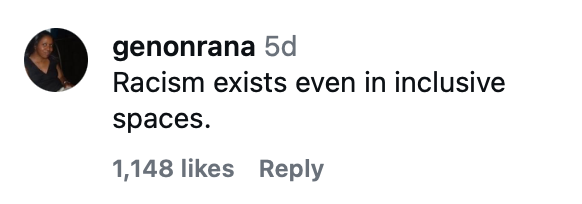
First, the experience he’s describing of being blatantly told he is not a star and is not valued is one that many people of colour can relate to. So often, we’re just happy to have a seat at the table in the workplace. So even when that means abandoning parts of ourselves or tolerating poor treatment in order to maintain our position there, we stay, with the lines blurring between what’s okay and fair and what isn’t. We often assume that struggle is part of the process because for so long, it has been. And I think leading up to the final season, Karamo was starting to realize that he was suffering more than he was thriving, which contradicted the main theme of the show.
That was a huge part of the reason Karamo’s absence from the press tour was so powerful. Because it was a bit of a protest. Sometimes the only way to truly demonstrate your value is to remove it and see how the people or thing you’ve left behind fares without you. And without him, it revealed something to be true about the cast, which was that at its core, it was a cliquey group riddled with drama – as is the case for any reality show on any network. But more importantly, it revealed that just because they are all members of a marginalized group did not mean they couldn’t marginalize others within their group, which I wrote about when I first covered this. Karamo was putting that front and centre for all to see.
The responses from his castmates, first to his initial statement, were off-putting. Jeremiah Brent highlighting the safety he felt (as a white man) in the group and within the production of a show is dismissive of the very point Karamo is making – which is the value he felt (and was told) he lacked as a cast member.
Antoni Porowski almost hinted at having something thoughtful, something more to say when he said “two things can be true at once”, but never really got back to what those two truths were, which is that people like Jeremiah can have had a wonderful experience filming, but there still could have been blind spots for people like Karamo.
And while the rest of the cast is busy doing…things (Antoni Porowski has a new travel show that is not getting good reviews), it was an OG cast member that had the most to say about Karamo’s tell-all. Jai Rodriguez made a TikTok, saying that Karamo gave the most honest account of what happens within Fab Five.
“I think it’s important to share that unless you worked on the show as a Fab Five member, you’ll never know the actual story and, to date, none of us have ever written a tell-all or told our stories as honestly as Karamo did. It just hasn’t happened. And, um, I have the utmost respect for Karamo sharing his truth.”
He went on to predict that in the coming days, weeks and months, former Fab Five stars may reveal their own accounts of what it was like being within the group.
He also went on to laud the group, which he likened to a ‘dysfunctional family’ for their ability to come together to ensure ‘that all the folks that we made over were seen, respected and elevated and loved and cared for.’ And while it’s great they were able to do that, it makes it a touch more sad that they couldn’t ensure that was also the case and the experience each of their cast members were having.