Tracee Ellis Ross questions why Girlfriends was ignored

– 4 min read

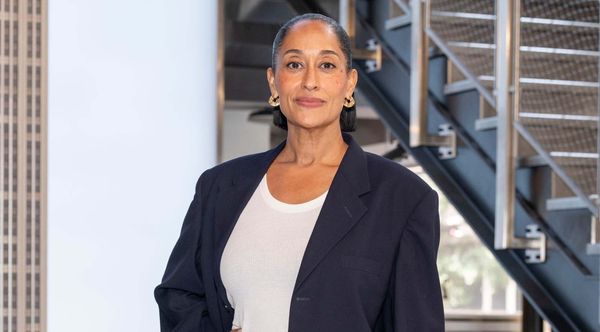
Tracee Ellis Ross was a recent guest on Trevor Noah’s What Now? podcast. While the pair had a fascinating conversation that covered everything from the pressure women face in society to the reality of aging, it was Tracee’s pointed question about the late night snub of her hit show Girlfriends that has come into the spotlight.
During her conversation with Trevor, the pair explored why neither she, nor any of her costars, who included the likes of Golden Brooks, Persia White and Jill Marie Jones, were never able to land an invitation onto shows like The Tonight Show or The Late Night Show with David Letterman. And the direct question she asked was whether this was, at its core, about racism.
It's a fair question to ask, considering the show, which aired from 2000-2008, had strong ratings and even won an Emmy for cinematography. But despite this, no one from the show ever landed a spot in the coveted seat next to Jay Leno or David Letterman. So what could possibly explain not landing even one guest appearance on either show during the eight-year run of one of the most revered Black shows to ever exist?
At the time, and even long thereafter, many people have compared Girlfriends to Sex and the City. Each show followed the life and dating adventures of four women living the city life. And despite each show holding its own when it came to ratings and viewership, there was one key difference – one cast was white, and one was Black. And that would impact everything from the audience each show attracted to the network that would air each show. Sex and the City became one of HBO’s heavy hitters while Girlfriends became a staple on UPN.
I’ve always been incredibly interested in what makes a show palatable – especially in the realm of sitcoms and evening watches. For years, TV shows on mainstream networks in the primetime slots tended to feature Black or other racialized characters only in a tokenizing capacity. Think Wilmer Valderrama in That 70s Show, Yvette Nicole Brown in Community, Leslie David Baker in The Office and Lamorne Morris in New Girl. Shows with mostly white casts were easy to justify being on mainstream networks. Shows with mostly Black, casts, however, ended up on networks like BET, UPN and Peachtree.
Perhaps this is at least one piece of the puzzle – the demographic disconnect. In the early aughts, late night TV showrunners were notoriously chasing the “industry standard”, which was the 18-49 age range. Jay Leno was far more capable of attracting this demographic than David Letterman was. But it begs the question that goes beyond the age breakdown, prompting one to look at what the racial breakdown might have been.
With Jay and Dave being in competition to capture the late night audience, I imagine every editorial decision carried a lot of weight. By that same token, though, it’s saying a lot that Tracee and her costars were omitted in the process of that competition. And the remark Tracee revealed as being made to her by Jay Leno’s team in response to the success of her show at one point, is quizzical, to say the least:
“We love Tracee. Call us when she gets something.”
But Tracee says she definitely had something. During her conversation with Trevor, she revealed her lack of understanding about this remark, considering Girlfriends was already a ratings success at this point. So why was it not enough for the late night circuit?
Tracee also cited that Tony Shalhoub’s Monk, which aired on USA Network and failed to amass the ratings that Girlfriends did, was still able to snag repeated appearances on late night TV, which is one of the things that led Tracee to believe that this was, in fact, about race.
I think what this shows us is that even when the numbers speak for themselves, there are assumptions and implicit biases about audiences that are clearly not based on data, but instead, preconceived notions about an audience’s ability to connect with a certain guest. And the teams behind Jay and Dave obviously didn’t believe Tracee had what it took, at least at the time, to hold court on late night TV.
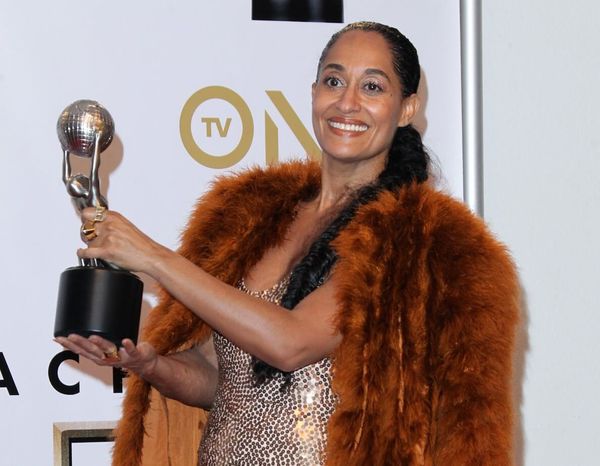
Part of me wonders if they’re all kicking themselves in the ass now, considering the success Tracee has gone on to amass. I mean, she’s gone on to receive multiple Emmy nominations for her subsequent show, Black-ish. Five of those were for outstanding lead actress in a comedy series. Plus, she went on to land a swath of different roles in a variety of different productions, ranging from Black Mirror to a Drake music video. She ultimately landed on Broadway earlier this year and scored a Prime Video series called Solo Travelling – which totally aligns with her personal brand.
I’ve often argued the importance of separating Black art from white art given the lack of appreciation for it in predominantly white spaces. Think Black country artists like Lil Nas X, Shaboozey, and even Beyonce, and the disrespect they’ve had to put up with navigating their country music careers. And I think that this is an example of why that’s important. Because for a woman like Tracee Ellis Ross, even long before she entered into her prime, to not be recognized for the star she has always been, feels like a slight.
It's great that we’ve seen more advancement and representation in the late night TV space with more Black show hosts (think Trevor Noah, Josh Johnson and Amber Ruffin, to name a few) coming into the fold in some capacity in more recent years. And it’s also great that we’re seeing more Black-led shows taking up space in primetime TV, and not being reserved for predominantly Black networks. Look at the success of Quinta Brunson’s Abbott Elementary. That show has won tons of awards including historic wins for Quinta, Sheryl Lee Ralph and Tyler James Williams. And even beyond their individual wins, the show itself has been recognized as the best television series and the best comedy series. And that’s accurate.
As is so often the case, its taken everyone else some time to catch up – to truly recognize the genius, to truly recognize the artistry. And it’s both a relief and a shame that Tracee is even asking the question, not shying away from a devastating phenomenon that, despite showing improvement, has undoubtedly had an impact on the lives of so many people who never had a seat at the late night table. Not when it mattered, anyway.