

Dear Gossips,
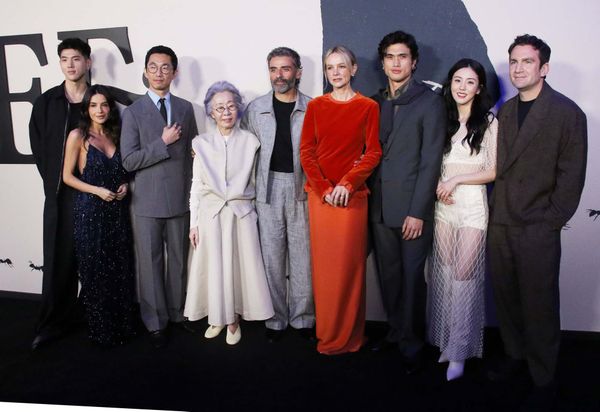
You know an entertainment story broke containment when my octogenarian father calls me to read a news article to me over the phone. That happened this week with Bloomberg’s report about Netflix’s season-two problem. The report identifies a trend in which viewers “abandon” Netflix shows, even very big hits, in droves by season two. Hit shows like The Night Agent and The Diplomat lost as much as 40% of their season-one viewership by season two, while shows like A Man on the Inside saw a 50% decline, and Beef saw a 63% drop.
The obvious culprit everyone is blaming is the interminable length between seasons, with shows like Bridgerton taking up to two years between seasons, but Bridgerton defies the trend, it grew 13% in season two (the drop from season three to four was in the 10-12% range, so it has shed some viewers but not so many as to be worrisome). Meanwhile, A Man on the Inside, Michael Schur’s follow-up to The Good Place starring Ted Danson as an unlikely PI, had only one year between its two seasons and it saw a 50% loss in viewership for season two. And, of course, despite increasingly long waits between seasons, Stranger Things remained a phenomenon for a decade.
So it can’t all be about the length of time between seasons. I do think that is a factor, as it causes a loss of momentum as people move on to new things, but I don’t think it’s the ONLY factor. No, I think this season-two problem is tied to a longer-term issue with Netflix that we’ve known about for years now, and that is their tendency to cancel everything by three seasons. We’ve known about this for a long time, and it’s probably a way to get out of renegotiating talent deals and/or paying royalties to creators.
My personal anecdote is that after the triple whammy of Netflix cancelling Santa Clarita Diet (three seasons), Mindhunter (two seasons), and GLOW (three seasons) between 2019-2020, I vowed to simply stop investing in Netflix series. I’ll watch their movies and their limited series, but I am deeply mistrustful of their series. And when I have broken my vow not to get invested in a Netflix series, I have been burned anew, such as with The Residence, cancelled after one charming season.
Now, we’re six years deep into the 2020s, and I barely watch Netflix series. The Residence was the last time I gave a Netflix series a shot, and they f-cking cancelled it immediately. Which just refreshed my vow not to get involved in Netflix series, and I cannot be the only person who feels this way. (I should note that I watch some stuff for review purposes that I would not otherwise watch, like Wednesday and, I must admit, Bridgerton).
But other streaming platforms have shows that take time between seasons, too. Apple TV+, for instance, is relaunching Ted Lasso after a three-year break, and no one doubts season four will be popular. But Apple TV+ also nurtures their shows. Like HBO did in the old days, they’ll keep something around and give it time to grow, like Sugar. And then there is Severance, a show with a three-year gap between seasons one and two, growing in the fallow years to become a legit smash hit in season two. Meanwhile, they’re sending their latest hit, Widow’s Bay, to Comic Con to give the fans a hit of dopamine while waiting for season two. They’re cultivating Widow’s Bay’s audience, building trust that they support the show and it might stick around for a while.
It’s about trust and taste. Despite containing some very fine programming, like GLOW and Mindhunter, Netflix is best known as a kind of digital bargain bin, where everything is disposable. It’s hard to invest in their original series when you know there is a good chance that they’ll just cancel it tomorrow anyway, so people don’t invest in Netflix, period. Obviously, they do have hit shows, like Stranger Things and Bridgerton, never mind “middle brow” fare like The Lincoln Lawyer (fifth and final season coming soon) and Virgin River (seven seasons and counting), but they have far more one-season wonders and three-season heartbreaks. People just don’t trust them, and so they check out. When you treat television like forgettable content, people will just…forget it.
Live long and gossip,
Sarah
Newer