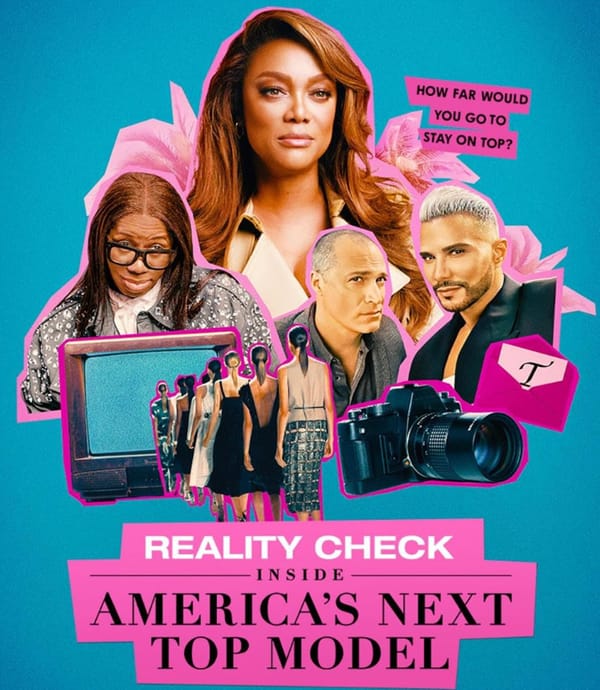

This week, the trailer for a documentary coming to Netflix next month dropped, and the mere trailer incited more of a reaction online than some entire, full-length documentaries have. And that’s because of the subject matter. The trailer was for a documentary called Reality Check: Inside America’s Next Top Model, which hits the streaming service on February 16.
Though Netflix has done a great deal of work to cement its position as the home for documentaries, be it quick-hit docs or the work of art that was the four-part series on Diddy, which I wrote about here, this latest addition is of special interest to so many due to the sheer magnitude of the show and the role it has long played in pop culture.
America’s Next Top Model is one of the most divisive reality shows that there has ever been – and that’s saying something, considering how divisive reality TV can be. That’s why this particular show is revisited so frequently in online spaces. And while there have been podcasts that offer a look back and investigation into the show and its many scandals, there has yet to be a documentary on this scale. I mean, they brought the whole gang back. Former judges Jay Manuel, Nigel Barker and the iconic J. Alexander all appear in the series to reflect on their time as creative director, photographer and runway coach, respectively.
But people seemed shocked that Tyra Banks herself, who famously hosted the show and was responsible for pitching it to networks, was also featured in the documentary. And there is concern over her misrepresentation of the narrative, which is already evident in the trailer.
Tyra can be heard in the trailer saying things like, “I wanted to fight against the fashion industry.” Judging by the online reaction, a lot of people agree that she did want to fight against the fashion industry. But intent doesn’t negate impact – so others seem to wonder whether she was just another proxy for the industry, which kind of contradicts her statement of wanting to fight against it.
But the remark she made in the trailer that seems to have people most up in arms is this:
“You guys were demanding it and so we kept pushing.”
Essentially, she’s implying that the audience, which at its height was about 100 million people, is to blame for some of the conduct we saw on the show, which, as we now know had extreme psychological effects on the former cast members and models.
Part of the reason people are torn over Tyra’s involvement in the documentary is because they think it waters it down. It’s self-serving. And her simple explanation of “well, you wanted it, you got it” to summarize such a massive series of events is a prime example of that. The absence of the nuance necessary for what might have led to some of what we saw is crucial to this documentary offering some sort of clarity, explanation and most importantly, healing, for the people who were impacted.
The concern some expressed online is that people are less inclined to share their whole truth if they’re cast alongside the person who inflicted a lot of the trauma they experienced on the show. And that’s a beyond fair concern to have considering several alum were also invited to join the documentary. Can you speak freely if you’re essentially speaking alongside your aggressor?
Former cast members Whitney Thompson, Giselle Samson, Shannon Stewart, Shandi Sullivan, Dani Evans, and Keenyah Hill all appeared in the documentary. And not all expressed the horrors we might assume. Whitney, who is a plus-sized model that snagged the winning title in cycle 10 in 2008 said:
“The only reason the door was opened to me was because of Tyra,” she’s heard saying to cameras.
But Whitney is white. And Whitney won. So again, there needs to be nuance.
Tyra’s treatment of plus-sized models is still hotly debated online all these years later. Following the release of the trailer, there have been a series of comments highlighting Tyra’s advocacy for women like Toccara, another plus-sized model that appeared on the show. Tyra once went head-to-head with Janice Dickinson over remarks she made about Toccara’s body and there being ‘a lot of flesh’. And there are actually quite a few examples of Tyra standing up for and advocating for bodies we didn’t often see in the modelling industry. Not in that era, anyway.
That’s one of the reasons this show has become so polarizing over the years. We’re watching it now, applying today’s standards and ethics to a show that started filming in the early 2000s. There have been massive changes to the lens in which we’re watching, especially for millennials who have gone off to pursue higher education and have taken women’s studies classes, watched the #MeToo movement unfold. So we’ve changed, but the content hasn’t. So many of the things that happened on the show were actually status quo for the modelling industry, and we were just seeing it up close and personal for the first time because of the show.
But there were a lot of things that were not status quo, like Keenyah Hill doing a photoshoot with male models, one of whom began caressing her leg inappropriately with no one coming in to stop it from happening. At 19 years old, it was Keenyah who bravely spoke up and expressed her discomfort. Even before the days of there being intimacy coordinators on the set of scripted shows to ensure comfort and consent, this was inexcusable and no participant in the show should have ever had to deal with that.
Then there were the makeovers. Some women recall undergoing actual medical procedures in order to facilitate their new looks. And some of the themes of photoshoots were extremely problematic, like the one where the models were asked to swap ethnicities, FFS.
The podcast Curse of America’s Next Top Model outlines, in great detail, more of the torment that the women faced off-camera. From incredibly inappropriate and in-depth psych evaluations, the iron-clad contracts and essentially being blacklisted from the modelling industry upon their affiliation with ANTM being known, it’s clear that this show was very predatory. And whether that was deliberate or not, again, intent does not negate impact.
Overall, it looks like the messaging of this documentary, especially with Tyra’s involvement in it, is going to be that two things can be true at the same time. Because in retrospect, maybe two things were true at the same time. Tyra did want to fight back against the fashion industry. She did advocate for bigger sized women like Toccara and Whitney. But creating a show, the end goal of which was to funnel women into the belly of the beast, was no match for the issues that plagued the industry, the very industry she said she wanted to fight back against. And that meant the women, hungry for modelling careers, were collateral. So let’s hope that this documentary brings some sort of clarity, some sort of explanation and most importantly, healing for those who need it the most.
Newer
Charli XCX’s Brontë Era
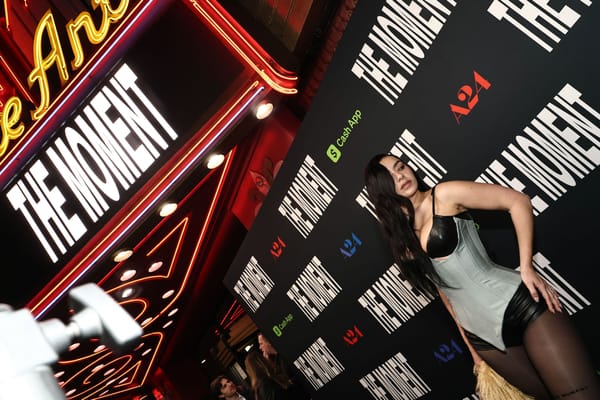
Following its Sundance premiere, the Charli XCX mockumentary The Moment hits theaters this weekend. There was another premiere last night in Los Angeles, well attended because everyone is in town for the Grammys. Charli showed up with Kylie Jenner, which I’m sure a lot of people have big feelingsOlder