Intro for July 16, 2026

– 3 min read
Dear Gossips,
It’s a random Thursday so let’s try something different: good news! After years of delays and uncertainty and losses, the theatrical box office actually seems to be bouncing back in a big way. 2026 is only half over and is shaping up to be the biggest box office year since the pandemic brought everything to a halt in 2020. The domestic box office tally for the year currently stands at $5.1 billion, with The Odyssey opening this Friday and with more blockbusters coming with Spider-Man: Brand New Day, Avengers: Doomsday, and Dune: Part Three.
But it’s not just blockbusters driving success this year. The 2010s were a box office high, with box office earnings routinely topping $11 billion per year through the back half of that decade, but even as grosses went up, the number of movies generating those profits went down. As blockbusters and IP-driven filmmaking took over Hollywood, fewer and fewer films carried those dizzying tallies. This year, though, it’s practically an old-fashioned smorgasbord at the cinema, with a little bit of something for everyone.
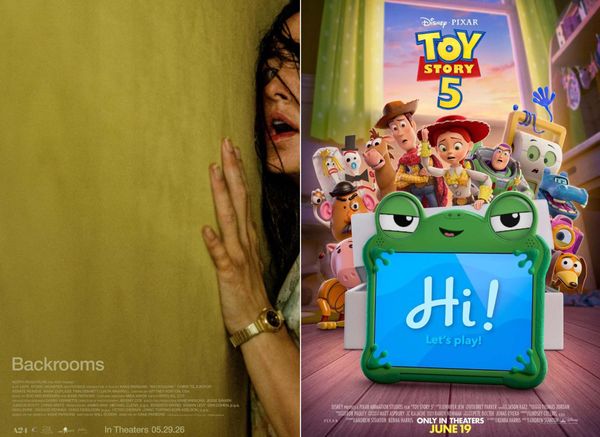
2026’s box office is certainly boosted by big movies, with Project Hail Mary and Toy Story 5 carrying nine-figure grosses—Toy Story 5 is poised to top $1 billion and potentially become the highest-grossing film in the franchise—but there is also The Super Mario Bros. Galaxy Movie, a kids’ movie, The Devil Wears Prada 2 a comedy, and the twin horror phenoms of Obsession and Backrooms contributing to the tally this year.
In a story from Variety about 2026’s blockbuster box office, Alamo Drafthouse CEO Michael Kustermanm said, “There’s not just a good pipeline of content, but a diverse balance within the slate. That’s what we’ve been missing.”
Yes! It’s only what I’ve been saying for years! Make a bunch of different movies—not all of which have to cost $200 million—and people will turn up for them! Something for everyone! We have rediscovered the winning formula for audience satisfaction just in time for Hollywood studios to collapse entirely! Okay, so I wouldn’t be me if I wasn’t a little bit cynical.
But for anyone with power in the industry, anyone who can greenlight and/or bankroll projects and isn’t doing some kind of fascist project with media companies, the proof is in the pudding—serve everyone, and everyone will eat. Make a big movie, sure, but make small ones, too. Give established filmmakers like Christopher Nolan and Denis Villeneueve huge sums of money to make their dream projects but take a chance on a twenty-something nerd who taught himself filmmaking with a MacBook and Youtube. Make comedies, make dramas, make horror, make fantasy, make sci-fi, make family films, spread the money around to as many genres as you can, and you will hook someone to see your film.
We knew this thirty years ago. We forgot it in the era of Big IP, blinded at least in part by those dazzling Marvel returns year over year for a solid decade. But even by the end of the 2010s, it was clear Marvel’s formula wasn’t going to work for anyone else—it isn’t even working for Marvel right now—yet there was resistance to returning to a model of filmmaking in which studios hedge against their one or two big bets a year with a sea of mid-size and low-budget projects.
Perhaps now, with films like The Devil Wears Prada 2, Obsession, and Backrooms contributing to the pile, executives will remember it is just good business to diversify the slate. I certainly hope we don’t learn the wrong lesson, though, and just start rubber stamping movies based on memes without any thought to how they’ll translate to feature-length narrative just because Backrooms was a hit. Oh, what’s that you say? A Siren Head movie? But that’s just a weird photoshop. Doesn’t anyone remember how bad the Slenderman movie was? No? Oh great. Here we go again.
Live long and gossip,
Sarah