Intro for May 29, 2026

– 3 min read

Dear Gossips,
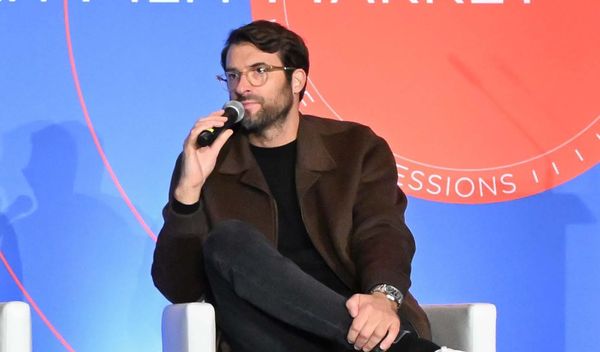
This week The Wrap published an op-ed from Tobias Queisser, the co-founder and CEO of The Cinelytic Group, a “provider of decision intelligence solutions” aimed at Hollywood. In his op-ed, Tobias Queisser argues that the problems facing Hollywood—mega-mergers, mass lay-offs, uneven box office results, all the uncertainty plaguing the industry—isn’t the result of Netflix-cum-streaming disrupting the industry, but of the industry’s fear of embracing business technology to assist in making decisions. It’s an interesting argument, but Quessier’s point rests on comparing Hollywood to other industries like aviation, retail, and finance, but Hollywood isn’t like those industries. Hollywood is horse racing.
First, we must always take an op-ed like this with a grain of salt because Tobias Queisser is selling the very technology he says Hollywood is afraid of embracing, he has a vested interest in convincing Hollywood to buy his “decision technology” (I hate all these buzzwords). Second, Queisser makes some good points, especially that Hollywood had always embraced new technologies in filmmaking, but has been slow to change decision-making based on evolving tech, and that there is a fear of more data because more data makes it easier to point fingers when something goes wrong and the top bosses need a fall guy. None of that is incorrect.
But I can’t shake the horse race of it all. I have always compared Hollywood to horse racing, because in both industries, it does not matter how much data you have, you can never predict the freak of nature. I’m going full horse girl, follow me on this journey.
You can breed the fastest stallion and fastest mare and get a colt who hates to run. You can breed two absolute lead-footed grass gremlins and get a colt who never slows down. You can breed two horses expecting average results and then get a giant red freak with an unusually large respiratory system with increased lung capacity that allows that red freak to intake and process more oxygen faster than any other horse in the field, and that horse turns out to be Secretariat.
If horses have taught me anything, it’s that bones mend and you cannot account for the freaks of nature. When I started working as a script reader for a development executive, a childhood spent with horses served me well, because I was never looking for the odds-on favorite in the script pile. I was looking for the red freak with huge lungs. In his op-ed, Queisser suggest using AI to “read” scripts by the hundred, rather than have a human read a few dozen at a time—like I used to do—because AI is more efficient and will identify trends popular with audiences faster than a person.
But I was never looking for trends popular with audiences. I was looking for POTENTIAL. That was the thing no one could predict about Secretariat, his potential didn’t show until he started running. When I read scripts, there was always one script, imperfect and unpolished but creative in a way nothing else was, the script with huge lungs that could turn into something special, something you can’t predict. It’s “want vs need”, and while technology can tell you what you want, it can’t tell you what you NEED.
I don’t think Tobias Queisser is entirely wrong, or even mostly wrong. I agree with a lot of what he says, about fear and risk-aversion ruling Hollywood to its own detriment. But his solution is to winnow away potential, to trade risk-aversion for analytics that remove that unpredictable quality when something truly great rises from seemingly average circumstances (something that has failed before, remember Ryan Kavanaugh’s algorithm-driven movie studio?).
Part of Hollywood’s problem is executives who are already trying to outguess audiences and changing tastes. Maybe they’re not using Queisser’s products, but that behavior already exists—and there are already plenty of algorithms in use in the industry. What we need are executives and producers with taste, the ones who are more interested in finding something new, in showing audiences what they never knew they needed until it’s in front of them. We need decision makers who aren’t looking at numbers but at potential, the ones who can see the huge lungs in a crazy idea.
Live long and gossip,
Sarah